How to pronounce The /d/ as in DEN /d/ in American English
One of the most common consonants in American English. Hear it in do, dog, day, desk.
The /d/ consonant, the sound at the start of dog, day, and desk, is a voiced stop. The tip of your tongue presses against the bumpy ridge just behind your top teeth, holds the air back for a split second, and then drops to let it pop out while your vocal cords are buzzing. It uses the exact same mouth position as the crisp American /t/, just with your voice turned on. In casual American speech, /d/ shifts shape a lot depending on where it lands in a word.
Three small adjustments.
Get them right and the sound takes care of itself.
Touch the tip of your tongue to the roof of your mouth just behind your teeth. Add vocal cord vibration as you release.
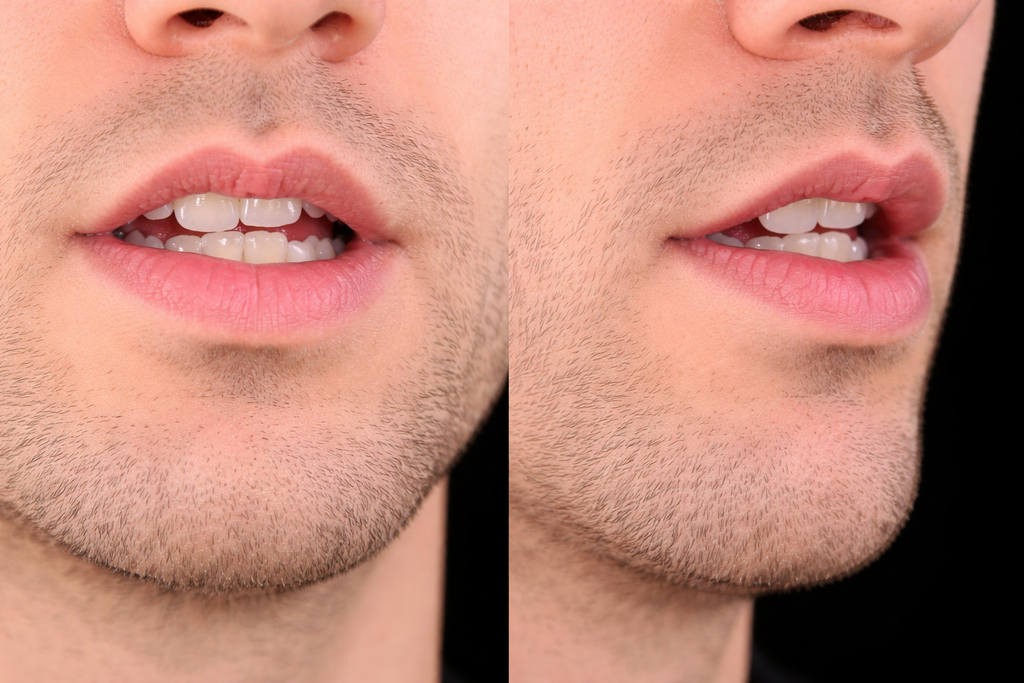
Mouth shape
/d/ as in do
Tongue
The tip of the tongue rises to the roof of the mouth, touching the alveolar ridge just behind the upper front teeth.
Lips
Part for the release.
Two things to remember.
Keep your tongue off your front teeth. In many languages (like Spanish and French), /d/ is made by pressing against the back of the teeth. In American English, the tongue must reach higher to touch the bumpy ridge just behind them. If your tongue touches your teeth, your /d/ will sound mushy or heavy to American ears.
Same mouth position as T (/t/) but with vocal cord vibration.
16 everyday words.
Tap any word for its full breakdown — every reduction, every flap-T.
In real conversation.
5 short sentences where this sound shows up. Tap to play; click the title for the full breakdown.
Connected-speech rules involving /d/.
Each rule has its own page with examples and practice tips.
Flap T
/t/ or /d/ becomes a quick tap [ɾ] — sounds like a soft D. The tongue briefly taps the ridge behind the upper teeth.
Rule 06DR Sounds Like JR
/d/ shifts toward /dʒ/ ("j"), so DR sounds like "jr".
Rule 11Unreleased Stops
Air stops but there's no release burst — the articulators hold position.
Rule 15Y-Merging (gotcha, didja)
The two sounds merge: T+Y → CH, D+Y → J, S+Y → SH, Z+Y → ZH.
Rule 16Flap T Across Words
Same flap as within-word (R1) but spanning two words.
Common questions about /d/.
What is the difference between the D and T sounds?
Why do Americans sometimes drop the D at the end of a word?
Does the D sound change in the middle of a word?

Practice /d/ with an AI coach.
SayWaader is the AI pronunciation coach for American English. Practice 5 minutes a day. Get a 5-axes accent assessment. Sound like you live here.