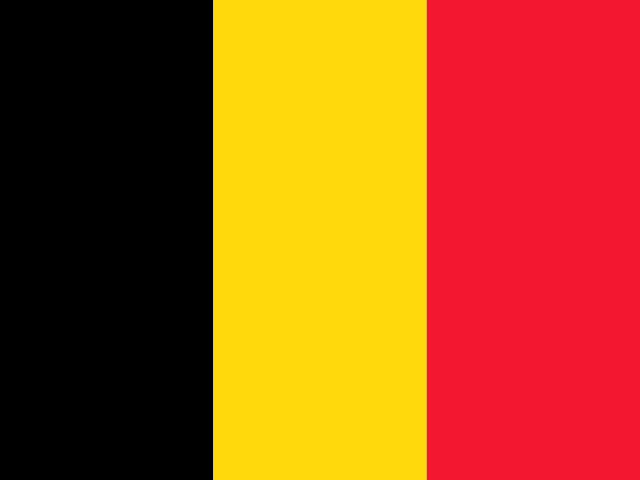
 NATION
How to pronounce
Belgium
BEHL·juhm
American /ˈbɛl.dʒəm/
Sound by sound
2 little beats. BIG = the stressed part.
- BEHL the ‘eh’ in bed — say this beat loudest
- juhm the relaxed ‘uh’ in sofa
Talking about Belgium
The words that trip people up — what to call the team, the people, and the language.
- One person
- a Belgian
- The people / the team
- Belgians (the team: the Red Devils)
- As an adjective
- Belgian
Belgium has three official languages — Dutch (in Flanders), French (in Wallonia) and German — so there is no single “Belgian language”. Everyone is still simply a Belgian. The team is the Red Devils (in French les Diables Rouges).
Don’t say…
- BEHL-jee-uhm
- BEHL-gee-uhm (hard G)
- BEHL·juhm — stress on BEHL
Where the name comes from
Belgium takes its name from the Belgae, the fierce tribes Julius Caesar described as the bravest of all Gaul. Rome organised their territory into the province of Gallia Belgica, and when the modern country gained independence in 1830 it revived the ancient name. The tribal name itself may come from a Celtic root meaning “to swell” — as in swelling with battle-rage.
- Capital
- Brussels
- Confederation
- UEFA
- Best finish
- Third place (2018)
Hear it for real
Say it out loud — and check it.
SayWaader listens to your pronunciation and tells you exactly what to fix, syllable by syllable.
Practice in the appFAQ
How do you pronounce Belgium?
Belgium is pronounced BEHL·juhm in American English — 2 beats, with the stress on BEHL.
Where does the name Belgium come from?
Belgium takes its name from the <em>Belgae</em>, the fierce tribes Julius Caesar described as the bravest of all Gaul. Rome organised their territory into the province of <em>Gallia Belgica</em>, and when the modern country gained independence in 1830 it revived the ancient name. The tribal name itself may come from a Celtic root meaning “to swell” — as in swelling with battle-rage.
What language do Belgians speak?
Three official ones: Dutch in the north (Flanders), French in the south (Wallonia), and German in a small eastern region. There is no language called “Belgian” — but a person from any part is still a Belgian.