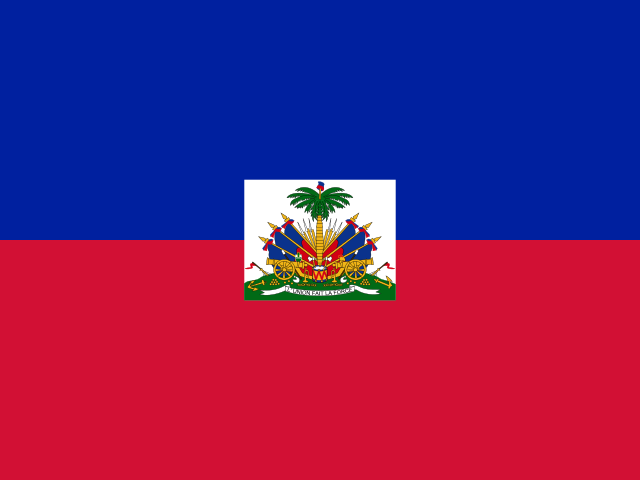
 NATION
How to pronounce
Haiti
HAY·tee
Native [a.iti] → American /ˈheɪ.ti/
Sound by sound
2 little beats. BIG = the stressed part.
- HAY the ‘ay’ in day — say this beat loudest
- tee the ‘ee’ in see
Talking about Haiti
The words that trip people up — what to call the team, the people, and the language.
- One person
- a Haitian
- The people / the team
- Haitians (the team: <em>Les Grenadiers</em>)
- As an adjective
- Haitian
- The language
- Haitian Creole (and French)
Both French and Haitian Creole are official languages, and almost everyone speaks Creole day-to-day. In French the country is Haïti (ah-ee-TEE); in Creole it is Ayiti, spelled with no “h”.
Like a local vs like an American
Don’t say…
- HAHY-tee
- hah-EE-tee
- HAY-shuh
- HAY·tee — stress on HAY
Where the name comes from
Haiti comes from Ayiti, the Indigenous Taíno name for the whole island, usually translated “land of high mountains”. When the country won its independence in 1804 — the first free Black republic, born of a successful slave revolt — its leaders revived the original Taíno name rather than the colonial one.
- Capital
- Port-au-Prince
- Confederation
- CONCACAF
- World Cup appearances
- 2 (first in 1974)
Hear it for real
Say it out loud — and check it.
SayWaader listens to your pronunciation and tells you exactly what to fix, syllable by syllable.
Practice in the appFAQ
How do you pronounce Haiti?
Haiti is pronounced HAY·tee in American English — 2 beats, with the stress on HAY.
Where does the name Haiti come from?
Haiti comes from <em>Ayiti</em>, the Indigenous Taíno name for the whole island, usually translated “land of high mountains”. When the country won its independence in 1804 — the first free Black republic, born of a successful slave revolt — its leaders revived the original Taíno name rather than the colonial one.
Why is Haiti spelled with two dots in “Haïti”?
That’s the French spelling. The two dots (a diaeresis, on the “ï”) tell you the “a” and “i” are said as two separate vowels — ah-ee — not blended into one. English drops the dots but keeps the idea: HAY-tee.