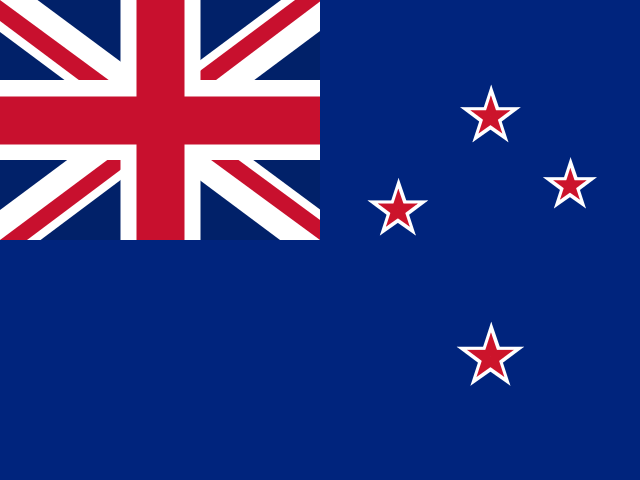
 NATION
How to pronounce
New Zealand
nooZEE·luhnd
American /ˌnuː ˈziː.lənd/
Sound by sound
3 little beats. BIG = the stressed part.
- noo the ‘oo’ in food
- ZEE the ‘ee’ in see — say this beat loudest
- luhnd the relaxed ‘uh’ in sofa
Talking about New Zealand
The words that trip people up — what to call the team, the people, and the language.
- One person
- a New Zealander (informally, a Kiwi)
- The people / the team
- New Zealanders (the team: the All Whites)
- As an adjective
- New Zealand (e.g. “a New Zealand player”)
A New Zealander is affectionately a Kiwi, after the country’s native flightless bird — it’s a point of pride, not a slight. The men’s football team is the All Whites (a play on the famous rugby All Blacks).
Get it right
- noo ZEE·luhnd — stress on ZEE
Where the name comes from
New Zealand is a Dutch legacy. After Abel Tasman sighted the islands in 1642, Dutch cartographers named them Nova Zeelandia, after the Dutch maritime province of Zeeland (“sea-land”); English later smoothed it to “New Zealand”. The Māori name is Aotearoa, usually translated “land of the long white cloud”.
- Capital
- Wellington
- Confederation
- OFC (Oceania)
- World Cup pedigree
- 3rd appearance (1982, 2010, 2026)
Hear it for real
Say it out loud — and check it.
SayWaader listens to your pronunciation and tells you exactly what to fix, syllable by syllable.
Practice in the appFAQ
How do you pronounce New Zealand?
New Zealand is pronounced noo ZEE·luhnd in American English — 3 beats, with the stress on ZEE.
Where does the name Zealand come from?
New Zealand is a Dutch legacy. After Abel Tasman sighted the islands in 1642, Dutch cartographers named them <em>Nova Zeelandia</em>, after the Dutch maritime province of <em>Zeeland</em> (“sea-land”); English later smoothed it to “New Zealand”. The Māori name is <em>Aotearoa</em>, usually translated “land of the long white cloud”.
Are New Zealanders really called Kiwis?
Yes, and they embrace it. The nickname comes from the kiwi, New Zealand’s native flightless bird; it was applied to New Zealand soldiers in World War I and stuck for everyone. It refers to the people, not the kiwifruit.