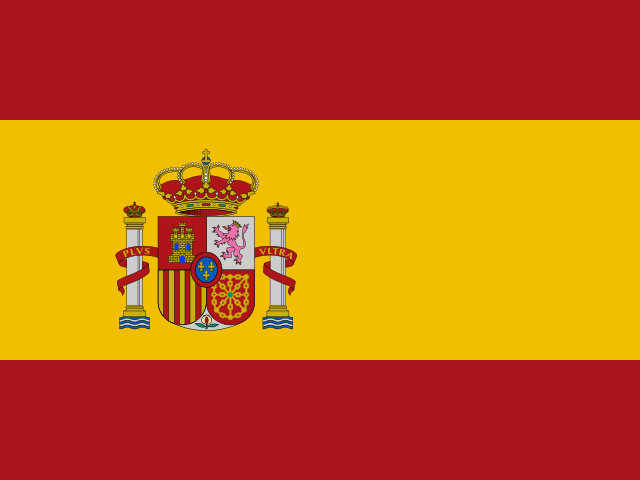
 NATION
How to pronounce
Spain
SPAYN
Native [esˈpaɲa] → American /speɪn/
Sound by sound
1 little beat. BIG = the stressed part.
- SPAYN the ‘ay’ in day — say this beat loudest
Talking about Spain
The words that trip people up — what to call the team, the people, and the language.
- One person
- a Spaniard
- The people / the team
- the Spanish (the team: La Roja)
- As an adjective
- Spanish
One person is a Spaniard — not “a Spanish”. The team’s nickname is La Roja (lah ROH-hah), “the red one”, after the red shirt. In Spanish the country is España (es-PAH-nyah).
Like a local vs like an American
Don’t say…
- SPAYN-uh
- es-PAHN-yah (that’s the Spanish “España”)
- SPAYN — stress on SPAYN
Where the name comes from
Spain comes from the Roman name Hispania, which the Romans inherited from the Phoenicians who traded there centuries earlier. The leading theory is that the Phoenician name meant “land of hyraxes” — the Phoenicians mistook Iberia’s many rabbits for the hyraxes of their homeland. Roman coins of Hispania were even minted showing a rabbit at her feet.
- Capital
- Madrid
- Confederation
- UEFA
- World Cups won
- 1 (2010)
Hear it for real
Say it out loud — and check it.
SayWaader listens to your pronunciation and tells you exactly what to fix, syllable by syllable.
Practice in the appFAQ
How do you pronounce Spain?
Spain is pronounced SPAYN in American English — 1 beat, with the stress on SPAYN.
Where does the name Spain come from?
Spain comes from the Roman name <em>Hispania</em>, which the Romans inherited from the Phoenicians who traded there centuries earlier. The leading theory is that the Phoenician name meant “land of hyraxes” — the Phoenicians mistook Iberia’s many rabbits for the hyraxes of their homeland. Roman coins of <em>Hispania</em> were even minted showing a rabbit at her feet.
Why is Spain called España in Spanish?
They’re the same name down different roads from Latin Hispania. English smoothed it to “Spain”; Spanish kept the fuller España (es-PAH-nyah), with the “ñ” giving that “ny” sound as in “canyon”.