How to pronounce The BIRD R-Vowel /ɜr/ in American English
One of the most common r-vowels in American English. Hear it in bird, her, turn, nurse.
The /ɜr/ R-vowel, the bird sound, is the heavy continuous R American English uses for words like her, turn, earth, nurse. It isn't a vowel followed by a separate R; it's a single fused shape where the body of the tongue lifts toward the center of the roof of your mouth, the sides of the tongue brace against the upper back teeth, and the lips flare slightly outward. Get this one right and your accent jumps closer to American almost overnight; miss it and the rest doesn't quite land.
Three small adjustments.
Get them right and the sound takes care of itself.
Flare your lips and push them away from the face. Lift the middle of your tongue toward the roof of the mouth.
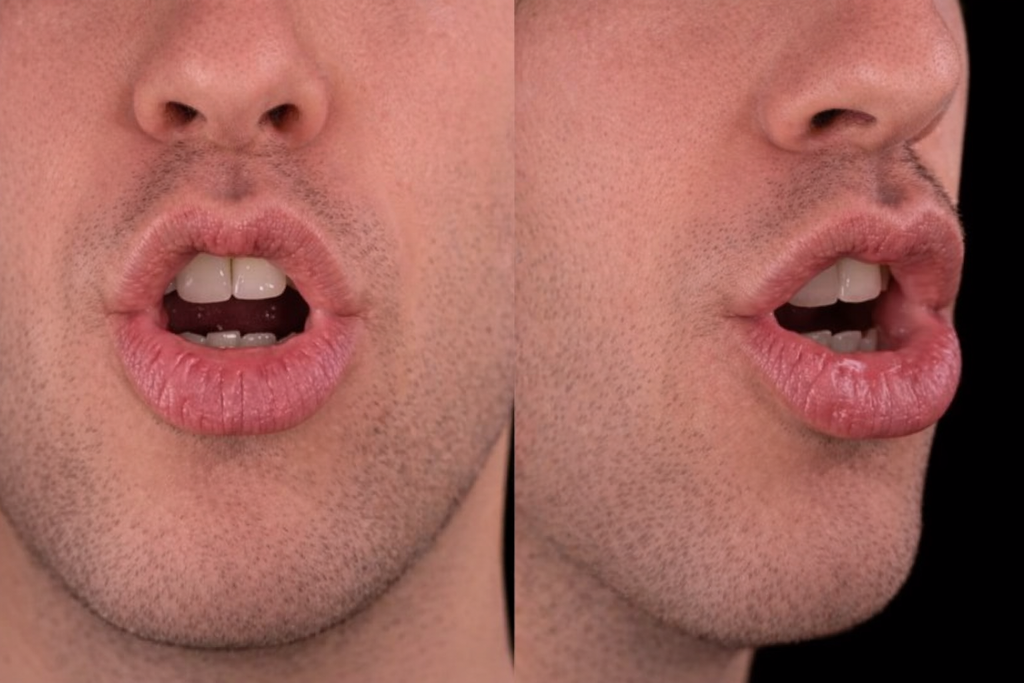
Mouth shape
/ɜr/ as in bird
Jaw
Some drop, but not a lot.
Tongue
The middle part lifts towards the roof of the mouth in the center. The sides of your tongue must press firmly against the insides of your upper back teeth to anchor the sound. The front hangs down but is drawn back, not touching anything. Note: many Americans instead curl the tongue tip up and back (a retroflex R). Both shapes produce the exact same sound, so use whichever feels easier.
Lips
Corners come in, pushing lips away from the face, and this lip position hides the tongue.
Two things to remember.
In spelling, the written vowel is almost always followed by the letter R. But in pronunciation, they fuse into a single continuous sound with no separation.
Don't rely on a mirror. The flared lips hide your tongue, so you have to learn this sound by feel rather than sight. Focus on the sensation of the middle of your tongue lifting and the sides bracing against your upper back teeth.
Compare with similar sounds.
If your sound is sliding into a neighbor, here's how to tell them apart.
16 everyday words.
Tap any word for its full breakdown — every reduction, every flap-T.
In real conversation.
5 short sentences where this sound shows up. Tap to play; click the title for the full breakdown.
Common questions about /ɜr/.
What is the exact mouth position for the /ɜr/ vowel in American English?
How is the American "bird" vowel different from the British pronunciation?
Why do "bird", "her", and "turn" all have the exact same vowel sound?

Practice /ɜr/ with an AI coach.
SayWaader is the AI pronunciation coach for American English. Practice 5 minutes a day. Get a 5-axes accent assessment. Sound like you live here.