How to pronounce The /dʒ/ as in JOB /dʒ/ in American English
One of the most common consonants in American English. Hear it in job, jump, jar, joy.
The /dʒ/ consonant, the job sound, is a heavy, vibrating burst that combines a D and a ZH into one smooth move. Press the flat front of your tongue to the roof of your mouth, slightly further back than where you make a normal D. Then, instead of a clean release, flare your lips and push the air out with thick vocal cord buzz. It's the same mouth shape as the crisp /tʃ/ in church, just with your voice fully on for words like judge, jump, and magic.
Three small adjustments.
Get them right and the sound takes care of itself.
Touch the front of your tongue to the roof of your mouth, then release into a 'zh' position. Add vocal cord vibration.
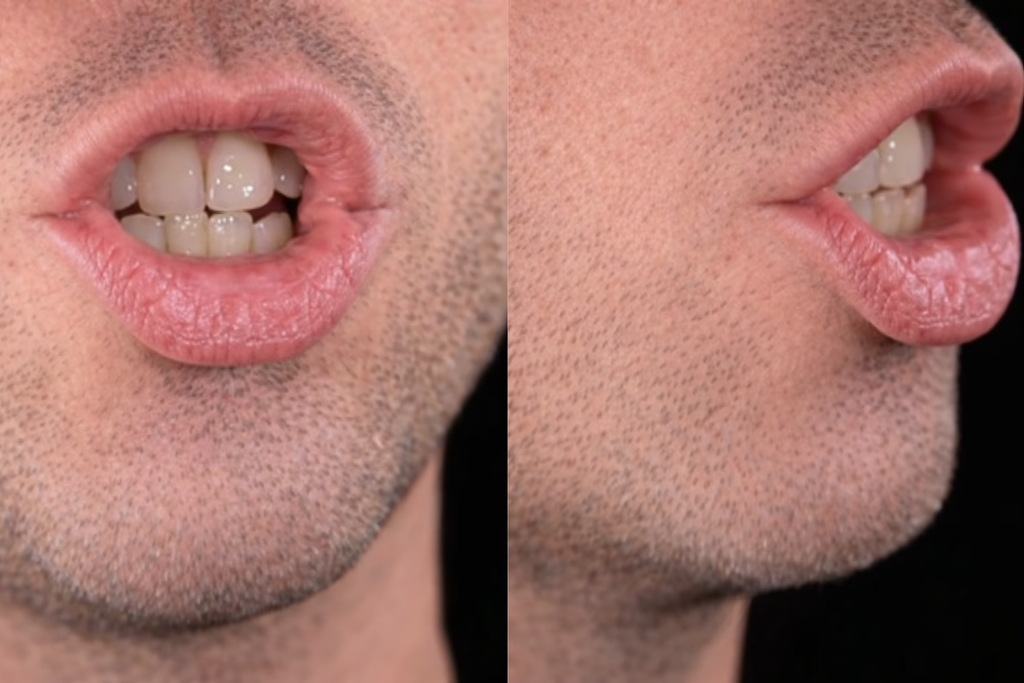
Mouth shape
/dʒ/ as in job
Tongue
Lifts so the front flat part touches the roof of the mouth, just behind the T/D position.
Lips
Corners come in and lips flare (like ZH position).
A few things to remember.
This sound combines D and ZH into one sound. The tongue blocks the air slightly further back than a normal D, while the lip position is like ZH.
Unlike pure stop consonants like D or G, the affricate J must be released into a buzzy rush of air; you can't 'hold' the sound at the end of a word like you can with a D or G.
Same mouth position as CH (/tʃ/) but with vocal cord vibration.
16 everyday words.
Tap any word for its full breakdown — every reduction, every flap-T.
In real conversation.
5 short sentences where this sound shows up. Tap to play; click the title for the full breakdown.
Common questions about /dʒ/.
Why do I mix up the J sound in "job" with the Y sound in "yes"?
What is the difference between the J in "job" and the CH in "church"?
Does the letter G ever make the /dʒ/ sound?

Practice /dʒ/ with an AI coach.
SayWaader is the AI pronunciation coach for American English. Practice 5 minutes a day. Get a 5-axes accent assessment. Sound like you live here.