How to pronounce The /j/ as in YES /j/ in American English
One of the most common consonants in American English. Hear it in yes, you, yet, year.
The /j/ consonant, the yes sound, is a smooth, voiced glide American English uses for words like you, yellow, and yard. The middle of your tongue lifts close to the roof of your mouth without quite touching it, and your tongue tip stays down behind your bottom front teeth. The voice runs continuously through that narrow opening and the whole shape slides directly into the vowel that follows. The tongue never makes hard contact. That's the line between an approximant glide (/j/) and an affricate (/dʒ/). Unlike the letter Y at the end of words like city or say (which acts as a vowel), the true /j/ consonant only happens in the first half of a syllable (the onset).
Three small adjustments.
Get them right and the sound takes care of itself.
Lift the middle of your tongue toward the roof of your mouth, but stop just short of touching. /j/ is an approximant, not a stop. The tongue tip stays down, lightly resting near the back of your bottom front teeth. Voice runs through the whole gesture, and the tongue glides smoothly down into the next vowel. The lips stay neutral or pre-shape for the upcoming vowel (rounding early for OO in youth, for example).
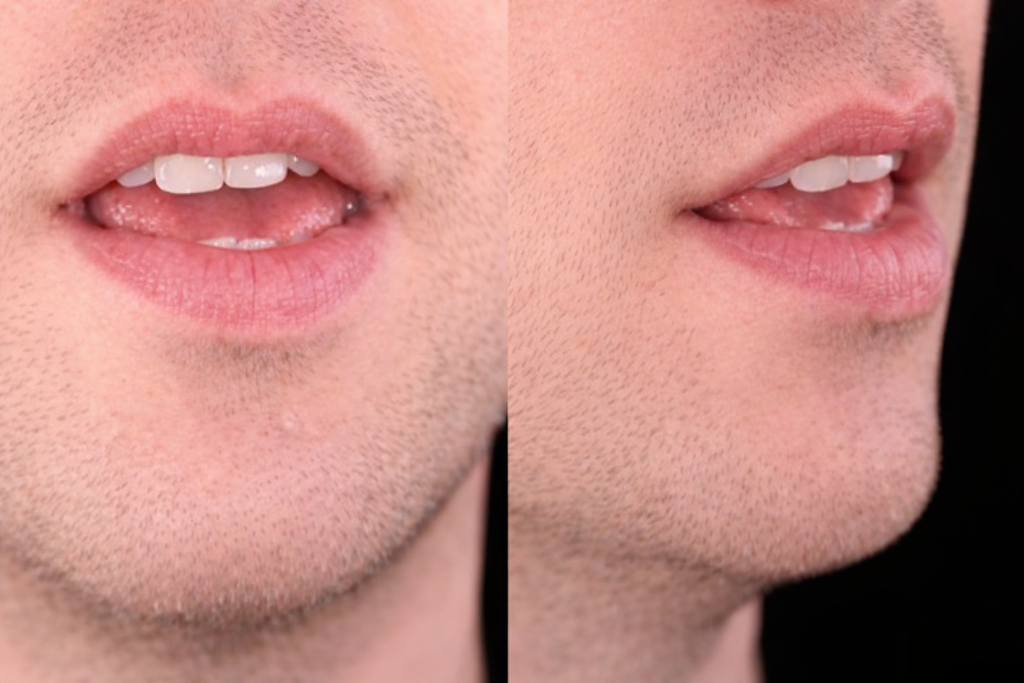
Mouth shape
/j/ as in yes
Tongue
Tip rests near the back of the bottom front teeth. The mid-front body lifts close to the roof of the mouth, narrow enough to shape the resonance, wide enough that the voiced air keeps flowing without friction. The tongue then glides smoothly into the position for the next vowel.
Lips
Neutral, or pre-shaped for the vowel that follows (rounding for OO, spreading for EE).
Jaw
Drops a little, opening the way for the upcoming vowel.
A few things to remember.
Keep the movement smooth. The /j/ is a glide, meaning you shouldn't block the airflow or build up pressure at any point before moving into the vowel.
This sound frequently appears at the beginning of words (yes, you) or in the middle before a 'u' or schwa sound (cure, popular). It never occurs at the end of a word. When the letter Y appears at the end (e.g., 'say', 'city'), it is part of a vowel sound and does not produce the Y consonant sound.
The lips can prepare for the next sound, e.g., rounding for OO in 'youth'.
16 everyday words.
Tap any word for its full breakdown — every reduction, every flap-T.
In real conversation.
5 short sentences where this sound shows up. Tap to play; click the title for the full breakdown.
Connected-speech rules involving /j/.
Each rule has its own page with examples and practice tips.
Common questions about /j/.
What's the easiest way to make the Y sound in American English?
Why do I sometimes mix up Y and J sounds, like "yellow" and "jello"?
Does the Y consonant ever happen at the end of a word?

Practice /j/ with an AI coach.
SayWaader is the AI pronunciation coach for American English. Practice 5 minutes a day. Get a 5-axes accent assessment. Sound like you live here.