How to pronounce am in American English

IPA /əm/ Syllables 1 · uhm
uhm
Start here

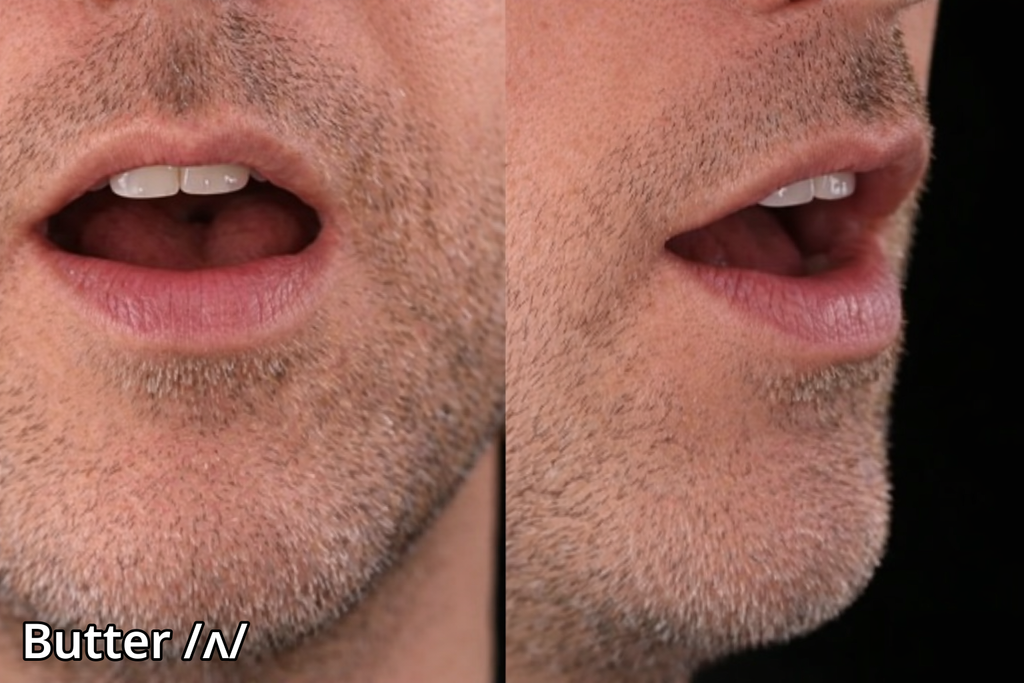
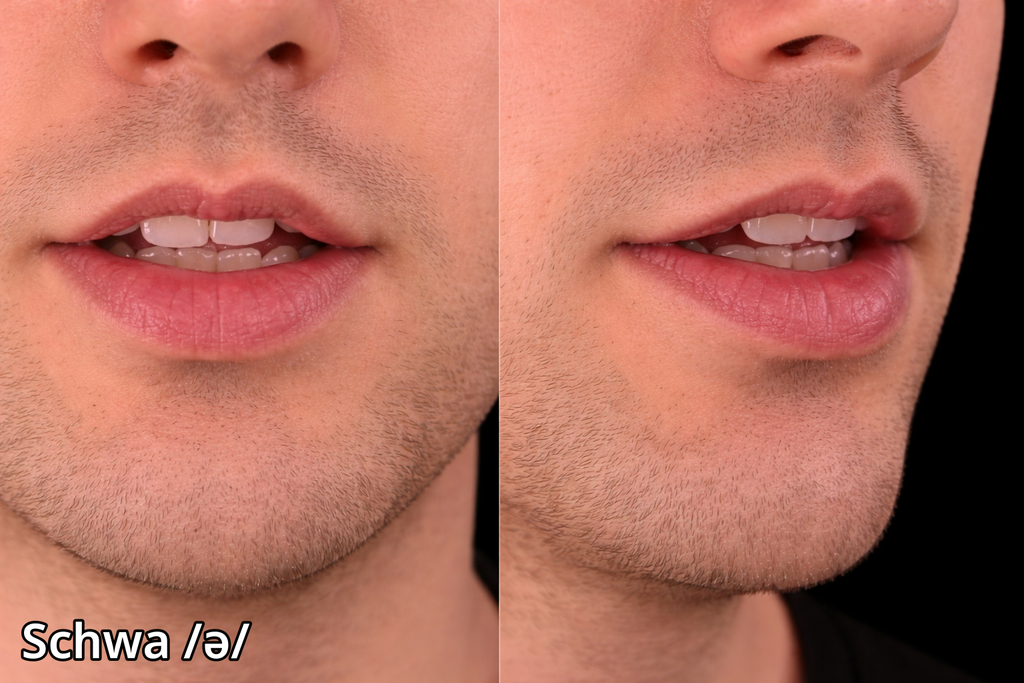
Americans pronounce am as uhm (/əm/).

Now you try.

Record yourself saying "am" and play it back. The mic stays on your device — nothing's uploaded.

Ready when you are
Tap the mic to start
Preview your accent profile

Get your accent profile and 5-axes assessment.

Sounds
75%
Clarity
68%
Stress
78%
Intonation
65%
Fluency
62%

Overall assessment

Our AI coach listens to your recording and grades 5 dimensions of pronunciation — then tells you exactly what to fix next.

72% Noticeable accent

Common mistakes

Pronouncing the vowel before M/N too pure.

In "am", the "a" vowel before M or N raises and fronts toward [eə] — the tongue pulls up and forward, breaking the vowel into a tense glide as it anticipates the nasal. The "/æ/" vowel raises and fronts before M or N — tongue pulls up and forward, producing a tense [eə] glide (between /e/ and /ə/). Not a pure /æ/.

Pronouncing the first syllable too fully.

Don't pronounce the first syllable too fully. The unstressed syllable reduces to a schwa — the lazy "uh" sound — in casual speech.

Unlock the full report in the app
Why it sounds different

Why "am" sounds like uhm.

The "" at the end of "" flows directly into the vowel starting "" — the consonant migrates to the next word with no pause between. This is called the Consonant-to-Vowel Linking, what turns word-by-word reading into actual conversation. It comes out as uhm.

In real conversation

Hear "am" in the wild.

Click any sentence to see the full breakdown — every link, every reduction, every flap-T.

"Admittedly, I was initially skeptical, but now I am completely convinced."
uhd·MIH·duhd·lee ahy wuhz ih·NIH·shuh·lee SKEHP·tuh·kuhl buht NOW ahy uhm kuhm·PLEET·lee kuhn·VIHNST
"I am afraid I need to postpone our dinner due to a prior commitment."
ahy uhm uh·FRAYD ahy NEED tuh poh·SPOHN owr DIH·ner DOO tuh uh PRAHY·er kuh·MIHT·muhnt
"I am authorized to negotiate on behalf of my organization."
ahy uhm AH·thuh·rahyzd tuh nuh·GOH·shee·ayt ahn buh·HAF uhv mahy or·guh·nuh·ZAY·shuhn
"I am available to discuss this further at your convenience."
ahy uhm uh·VAY·luh·buhl tuh duh·SKUHS dhihs FUR·dher uht yer kuhn·VEEN·yuhns
"I am cautiously hopeful that things will improve very soon."
ahy uhm KAH·shuh·slee HOHP·fuhl dhuht THIHNGZ wihl uhm·PROOV VEH·ree SOON
"I am committed to being a better friend from now on."
ahy uhm kuh·MIH·duhd tuh BEE·uhng uh BEH·der FREHND fruhm NOW AHN
Watch out

Common pronunciation mistakes in American English.

The textbook way isn't wrong — it's just not how anyone actually says it.

01

Pronouncing the vowel before M/N too pure.

In "am", the "a" vowel before M or N raises and fronts toward [eə] — the tongue pulls up and forward, breaking the vowel into a tense glide as it anticipates the nasal. The "/æ/" vowel raises and fronts before M or N — tongue pulls up and forward, producing a tense [eə] glide (between /e/ and /ə/). Not a pure /æ/.

uhmuhm
02

Pronouncing the first syllable too fully.

Don't pronounce the first syllable too fully. The unstressed syllable reduces to a schwa — the lazy "uh" sound — in casual speech.

UHMuhm
Questions

Questions people ask about this.

Is the American pronunciation of "am" different from British English?
American English uses different vowel shapes, a relaxed retroflex R, and connected-speech tricks like flap-T and glottal-stop T that British Received Pronunciation generally avoids. The respell "uhm" reflects the casual American form; British dictionaries typically print a citation form with crisper consonants and different vowel choices.

Stop reading about "am". Start saying it.

SayWaader is the AI pronunciation coach for American English. Practice 5 minutes a day. Get a 5-axes accent assessment. Sound like you live here.