How to pronounce The CAT Vowel /æ/ in American English
One of the most common vowels in American English. Hear it in cat, bad, hat, map.
The /æ/ vowel, the cat sound, is the bright, slightly nasal vowel American English uses for words like cat, hat, apple, and back. It's a low front vowel: the jaw drops noticeably, the body of the tongue stays low and forward, and the lip corners pull back slightly. Speakers of Spanish, Italian, and Mandarin often substitute the cleaner /ɑ/ in father (a low back vowel), making cat sound like cot. That bright, almost-nasal twang is the main thing that registers as American to a native listener.
Three small adjustments.
Get them right and the sound takes care of itself.
Drop the jaw noticeably. Keep the body of the tongue low and forward, and don't let the back of the tongue raise toward the soft palate. Pull the lip corners back slightly, almost a starting smile.
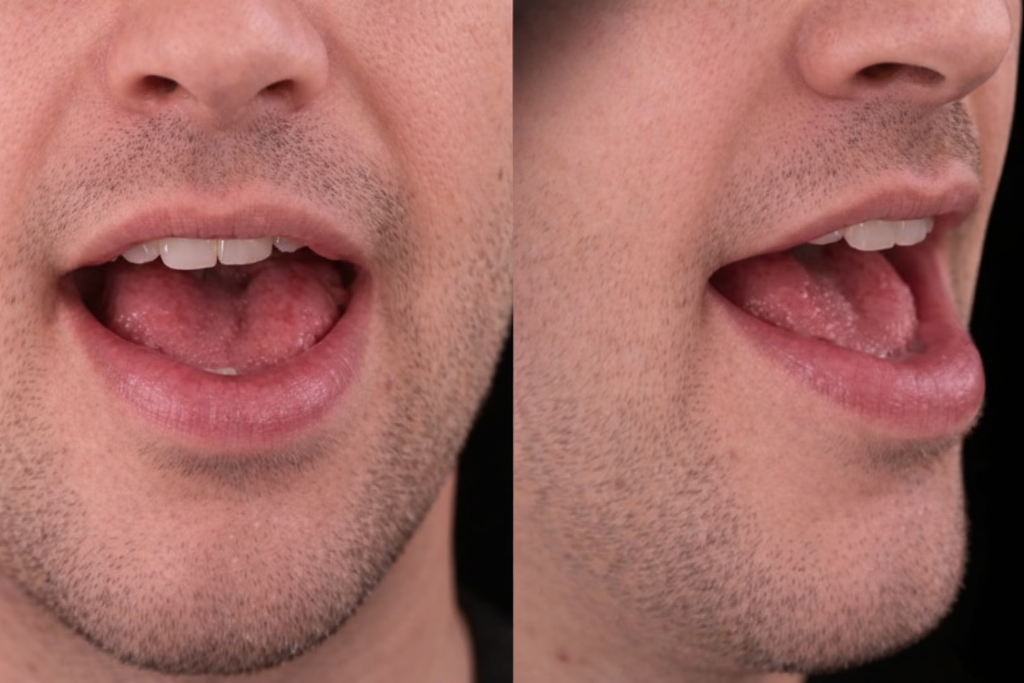
Mouth shape
/æ/ as in cat
Jaw
Drops quite a bit.
Tongue
Body stays low and forward. The tip rests near the back of the bottom front teeth. The back stays low, does NOT raise toward the soft palate.
Lips
Corners pull back and up slightly.
Two things to remember.
This is the 'flat A', different from the 'broad A' in 'father' (/ɑ/).
Many languages don't have this exact vowel, so it tends to be the hardest one for non-native speakers to nail.
Compare with similar sounds.
If your sound is sliding into a neighbor, here's how to tell them apart.
FATHER Vowel
In AH (/ɑ/), the tongue presses down in the back and you see more dark space in the mouth. In A (/æ/), the tongue shifts forward and stays low, and the corners of the lips pull back.
BED Vowel
In A (/æ/), the jaw drops more and the tongue stays lower in the front. In EH (/ɛ/), the mid/front part of the tongue stretches up, lips are relaxed and neutral, and the jaw drops less.
16 everyday words.
Tap any word for its full breakdown — every reduction, every flap-T.
In real conversation.
5 short sentences where this sound shows up. Tap to play; click the title for the full breakdown.
Connected-speech rules involving /æ/.
Each rule has its own page with examples and practice tips.
Common questions about /æ/.
What's the easiest way to make the /æ/ vowel in American English?
Why does /æ/ in "cat" sound different from the vowel in "father"?
Why does /æ/ sound different before M and N in some American accents?

Practice /æ/ with an AI coach.
SayWaader is the AI pronunciation coach for American English. Practice 5 minutes a day. Get a 5-axes accent assessment. Sound like you live here.