The vowels in mat /æ/ and met /ɛ/ are close neighbors in the mouth, but /æ/ needs a noticeably bigger jaw drop and a more forward, low tongue body. For /æ/, drop your jaw a fair amount, keep the body of the tongue low and forward (the tip stays near the back of the bottom front teeth), and pull the corners of your lips back slightly. For /ɛ/, the jaw closes a notch and the front of the tongue rises a step higher; lips relax completely. Many speakers of German, Russian, and Dutch collapse these together, turning bad into bed. In spelling, /æ/ is almost always written with the letter A (mat, bad), while /ɛ/ is usually written with an E (met, bed). Pull them apart cleanly and your American English will sound a lot more natural.
How the two sounds differ.
4 small mouth adjustments. Get any one of them wrong and the sound slides into its neighbor.
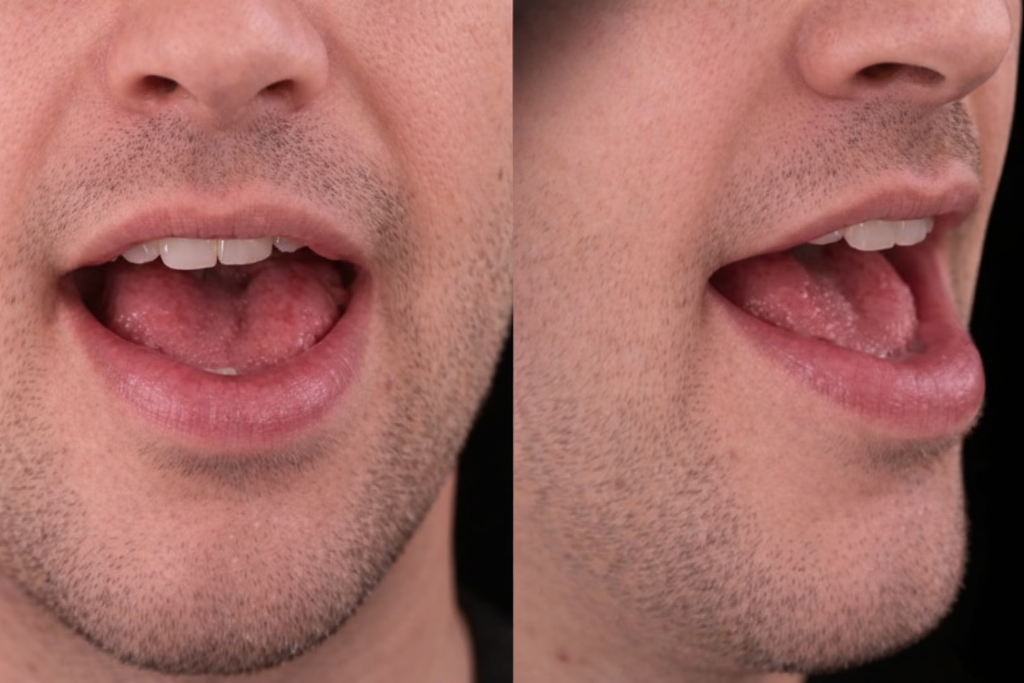
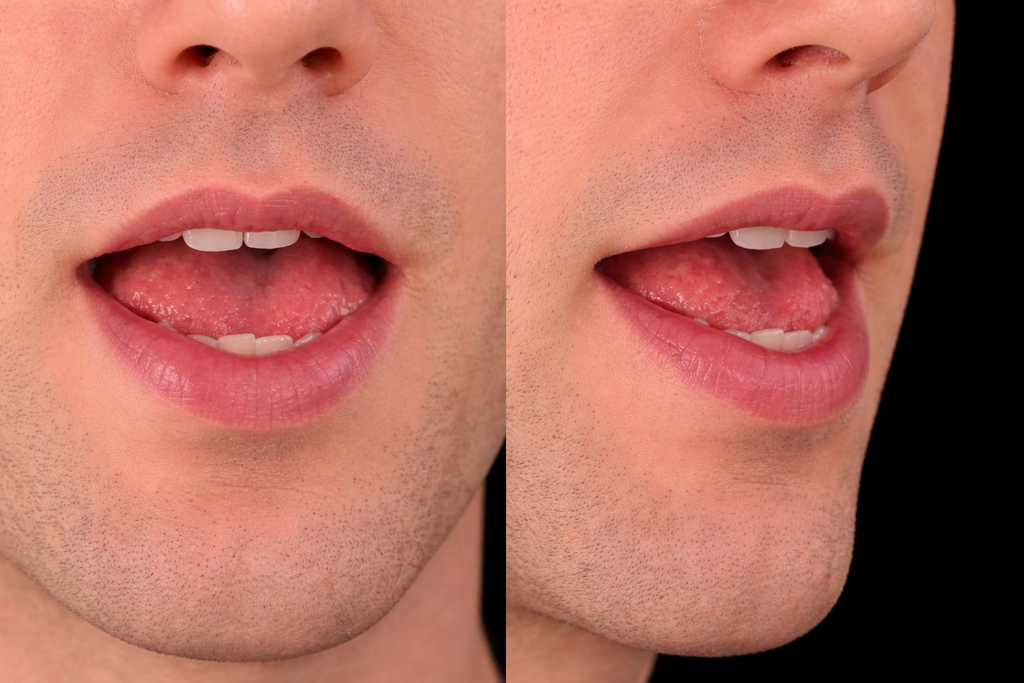
Now you try.
Record yourself saying "Mat" and "Met" a few times. Listen back — your own ear is the best feedback for nailing the contrast.
Words that change with one sound.
Every pair below differs by exactly one sound: flip /æ/ to /ɛ/ and the meaning flips with it. Tap any word for its full breakdown.
If your ear blurs them, here's why.
Languages like German, Russian, and Dutch have a standard E sound that maps cleanly onto American met /ɛ/, and they don't have a distinct vowel sitting between /ɛ/ and /ɑ/. Very few languages have the American mat /æ/ vowel, which sits awkwardly in that gap: low like /ɑ/ but front like /ɛ/. Because /æ/ isn't part of most learners' native sound system, German and Russian speakers in particular default to the closest sound they already have, which is /ɛ/. That collapses common pairs like bad/bed, pan/pen, sad/said. (Speakers of Spanish, Japanese, and other 5-vowel languages tend to default the other direction, mapping /æ/ to a central 'ah' sound like the American vowel in father; that's a different mix-up, not this one.) To fix this, you need to build a new muscle memory. Drop the jaw further than feels comfortable and pull the lip corners back to give /æ/ its own space below /ɛ/.
Train the muscle, then the ear.
4 short drills. Do them out loud: feel the change inside your mouth before you try to hear it.
Use the one-finger test: place your index finger horizontally between your teeth. That's about how far your jaw should drop for cat /æ/. For bed /ɛ/, the jaw closes a notch above that, your top teeth almost rest on the finger.
Alternate minimal pairs in front of a mirror: bad, bed, bad, bed. Watch your jaw. It should visibly drop on bad and rise slightly on bed. If your jaw isn't moving, you're using the same vowel for both.
Stretch the /æ/ out. Say bad and hold the vowel for three full seconds, feeling the lip-corner tension and the wide jaw drop. Then say bed quickly with relaxed lips. (Avoid practicing this hold on words ending in N or M, /æ/ before a nasal naturally relaxes into a glide, and a held tense /æ/ sounds unnatural there.)
Focus on the lip corners. For /ɛ/ in said, your lips should be completely loose. For /æ/ in sad, pull the corners back slightly like you're getting ready to smile.
Common questions about Mat vs Met.
Why do "bad" and "bed" sound exactly the same when I say them?
Is the "cat" vowel just a longer version of the "bed" vowel?
How do I know if I'm doing the /æ/ sound correctly?

Master Mat vs Met with an AI coach.
SayWaader is the AI pronunciation coach for American English. Practice 5 minutes a day. Get a 5-axes accent assessment. Sound like you live here.