The vowels in net /ɛ/ and not /ɑ/ ask for completely different jaw drops and tongue placements. For /ɛ/, the jaw drops moderately and the middle of the tongue lifts slightly toward the roof of the mouth. For /ɑ/, the jaw drops significantly, more than almost any other American English vowel, and the back of the tongue presses down flat. The single biggest fix is the jaw: open way wider for /ɑ/ than you do for /ɛ/, and pairs like not and net finally sound different.
How the two sounds differ.
3 small mouth adjustments. Get any one of them wrong and the sound slides into its neighbor.
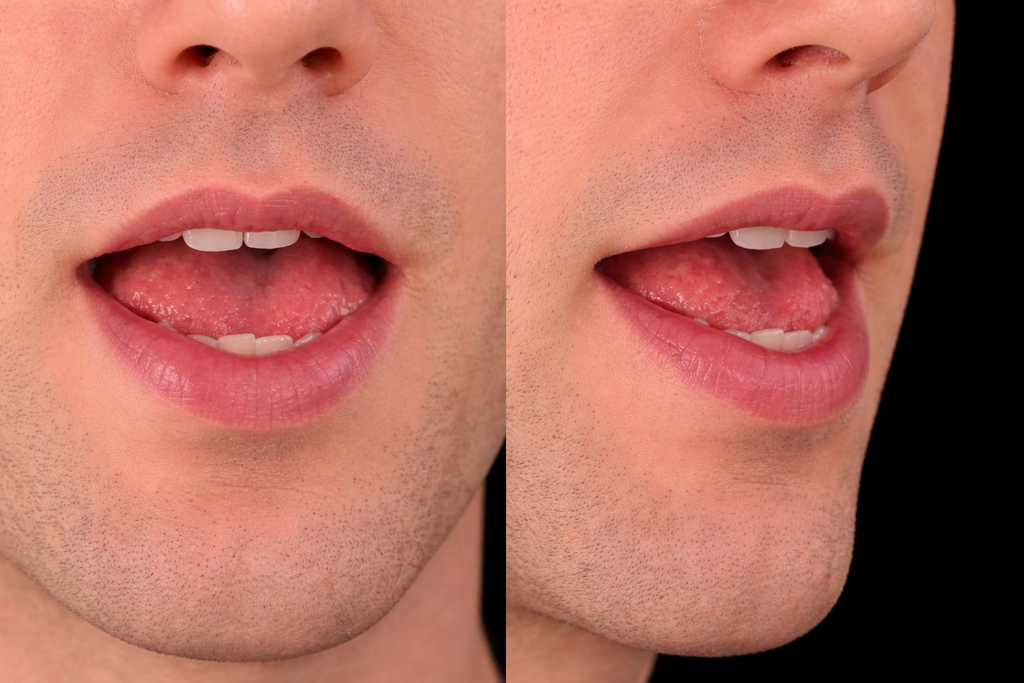
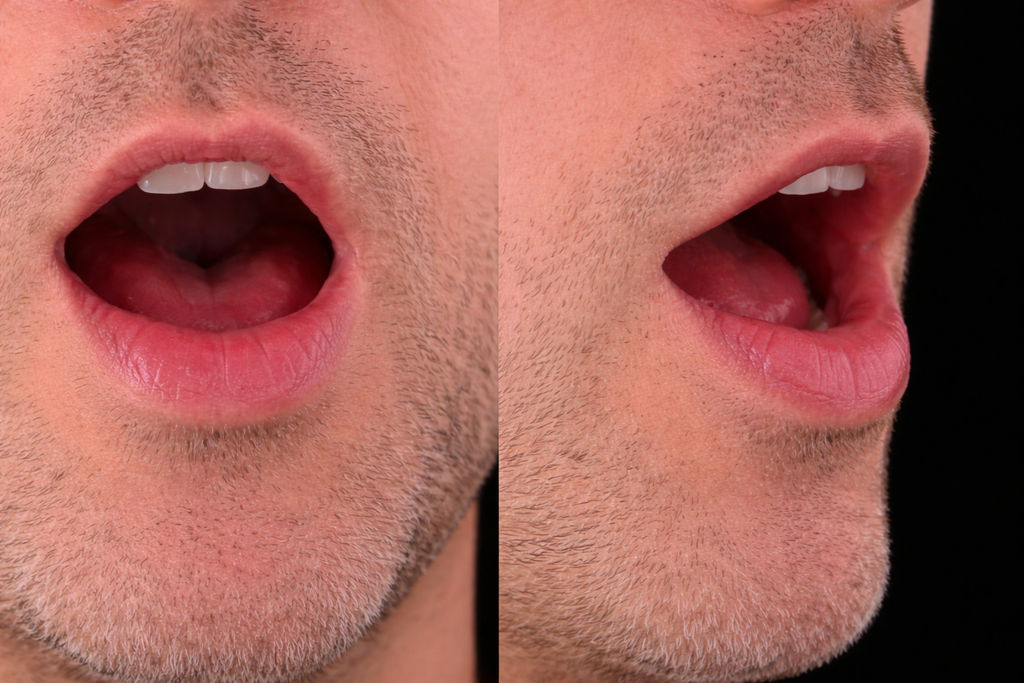
Now you try.
Record yourself saying "Net" and "Not" a few times. Listen back — your own ear is the best feedback for nailing the contrast.
Words that change with one sound.
Every pair below differs by exactly one sound: flip /ɛ/ to /ɑ/ and the meaning flips with it. Tap any word for its full breakdown.
If your ear blurs them, here's why.
Speakers of languages with simpler five-vowel systems (like Spanish or Japanese) usually have a clear 'e' and 'a' sound, but the American versions behave differently. The American not vowel /ɑ/ wants a much deeper jaw drop and a flatter tongue than the standard 'a' in most languages. When learners don't open their mouths enough for /ɑ/, or when English spelling trips them up (the letter 'o' often makes the /ɑ/ sound, as in hot or job), the vowels end up muddied and indistinct. The net vowel /ɛ/ usually goes the other way, pronounced too tightly. The fix is physical: train your jaw to open much wider for /ɑ/ while keeping the tongue pressed down and out of the way.
Train the muscle, then the ear.
3 short drills. Do them out loud: feel the change inside your mouth before you try to hear it.
Use the two-finger test: Say bed with your jaw dropped enough for one finger. Then say father and drop your jaw enough to stack two fingers between your teeth. Feel the physical stretch in your cheeks.
Alternate between the two sounds: say eh, ah, eh, ah. You should feel your jaw bouncing up and down, and your tongue moving from a slight forward lift to a flat, downward press.
Read these word pairs out loud, exaggerating the jaw drop on the second word: pet / pot, net / not, red / rod, step / stop. Let your mouth open surprisingly wide for the /ɑ/ words.
Common questions about Net vs Not.
Why do words spelled with "o" like "hot" use the "father" vowel?
Do I really need to open my mouth extremely wide for the /ɑ/ (father) vowel?
How do I keep my tongue out of the way for /ɑ/?

Master Net vs Not with an AI coach.
SayWaader is the AI pronunciation coach for American English. Practice 5 minutes a day. Get a 5-axes accent assessment. Sound like you live here.