The difference between the vowels in cup /ʌ/ and cop /ɑ/ is all about the jaw drop. /ʌ/ is the relaxed mid vowel, your jaw rests in a neutral middle position, your tongue stays loose, and the sound is quick. /ɑ/ requires a much bigger physical movement, your jaw drops open wide, the back of your tongue pushes down, and the vowel feels longer and more resonant. Many learners merge these into a single middle-ground "ah", turning cup into cop or color into collar.
How the two sounds differ.
3 small mouth adjustments. Get any one of them wrong and the sound slides into its neighbor.
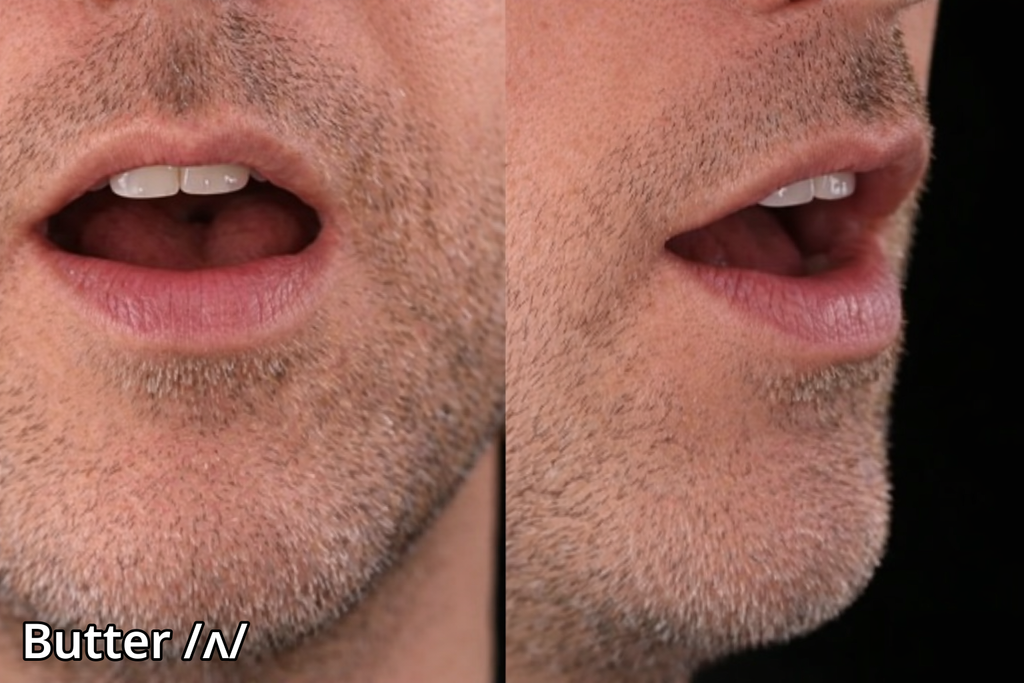
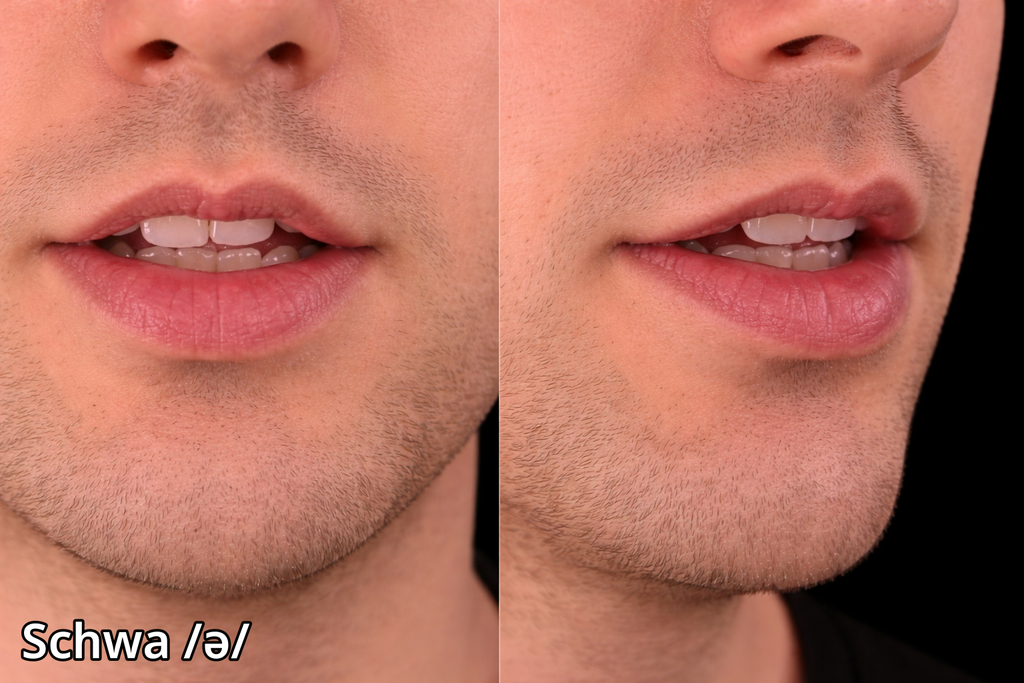
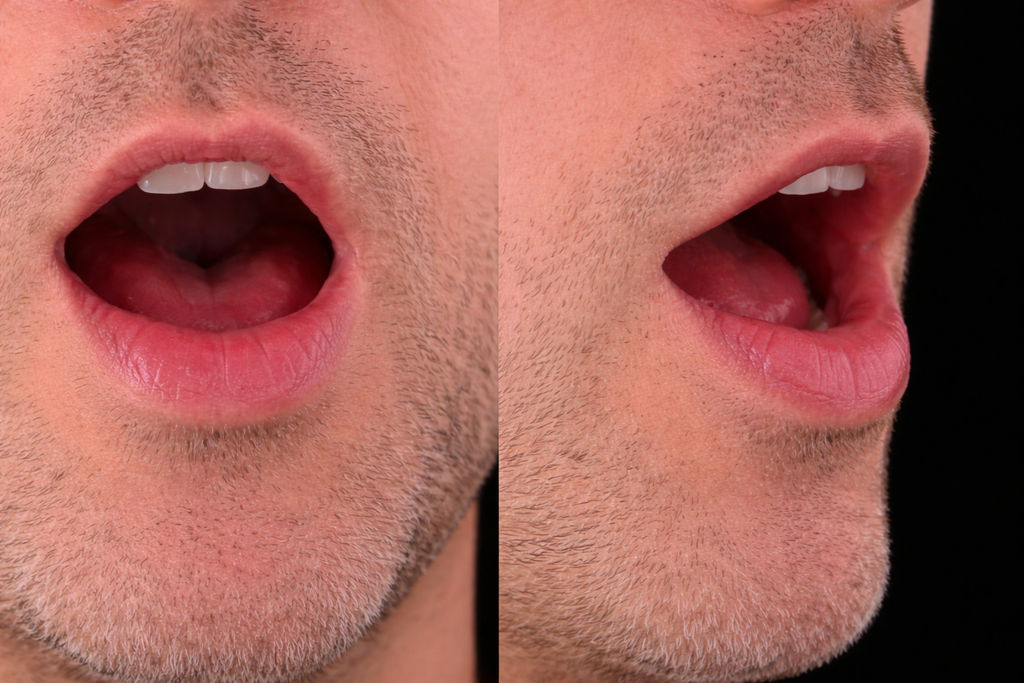
Now you try.
Record yourself saying "Cup" and "Cop" a few times. Listen back — your own ear is the best feedback for nailing the contrast.
Words that change with one sound.
Every pair below differs by exactly one sound: flip /ʌ/ to /ɑ/ and the meaning flips with it. Tap any word for its full breakdown.
If your ear blurs them, here's why.
Most languages, like Spanish, Japanese, and Italian, only have one "A-like" vowel. It usually sits right in the middle: more open than American /ʌ/, but more central (further forward in the mouth) than the deep, back American /ɑ/. When speakers of these languages learn English, their brains naturally map both cup and cop to that single native vowel. To American ears, this middle-ground vowel usually sounds like /ɑ/, which means words like nut end up sounding like not, and hut sounds like hot. To fix it, don't just focus on the sound itself, physically exaggerate the jaw difference. You have to train your mouth to use two distinct gears: the relaxed, neutral gear for /ʌ/, and the fully-dropped, wide-open gear for /ɑ/.
Train the muscle, then the ear.
3 short drills. Do them out loud: feel the change inside your mouth before you try to hear it.
Use the "two-finger test": Stack two fingers vertically and place them between your teeth. That's how far your jaw should drop for father /ɑ/. For fun /ʌ/, the jaw should rest in its natural neutral position, just enough to fit one finger comfortably.
Record yourself reading minimal pairs like cup / cop, hut / hot, and color / collar. Focus entirely on the physical jaw drop. The jaw should rest neutrally for the first word, and drop wide open for the second.
Hold the /ɑ/ vowel for a full two seconds: f-ah-ther. Then say fun as quickly and lazily as possible. Emphasizing the length difference helps your brain separate the two categories.
Common questions about Cup vs Cop.
Why do my American friends hear "cop" when I say "cup"?
Are the vowels in "fun" and "about" the same sound?
How wide do I need to open my mouth for the FATHER vowel /ɑ/?

Master Cup vs Cop with an AI coach.
SayWaader is the AI pronunciation coach for American English. Practice 5 minutes a day. Get a 5-axes accent assessment. Sound like you live here.