The vowels in cat /æ/ and cot /ɑ/ both require dropping the jaw, but they live on opposite sides of the mouth. /æ/ is a low front vowel: the body of the tongue stays low and forward, and the lip corners pull back into a slight half-smile. /ɑ/ is a low back vowel: the jaw drops further still, the lips completely relax, and the tongue body sits low and back, opening the throat. Many languages have only one A, so speakers often merge pairs like hat/hot and cap/cop. Once you split them, Americans will understand you faster.
How the two sounds differ.
3 small mouth adjustments. Get any one of them wrong and the sound slides into its neighbor.
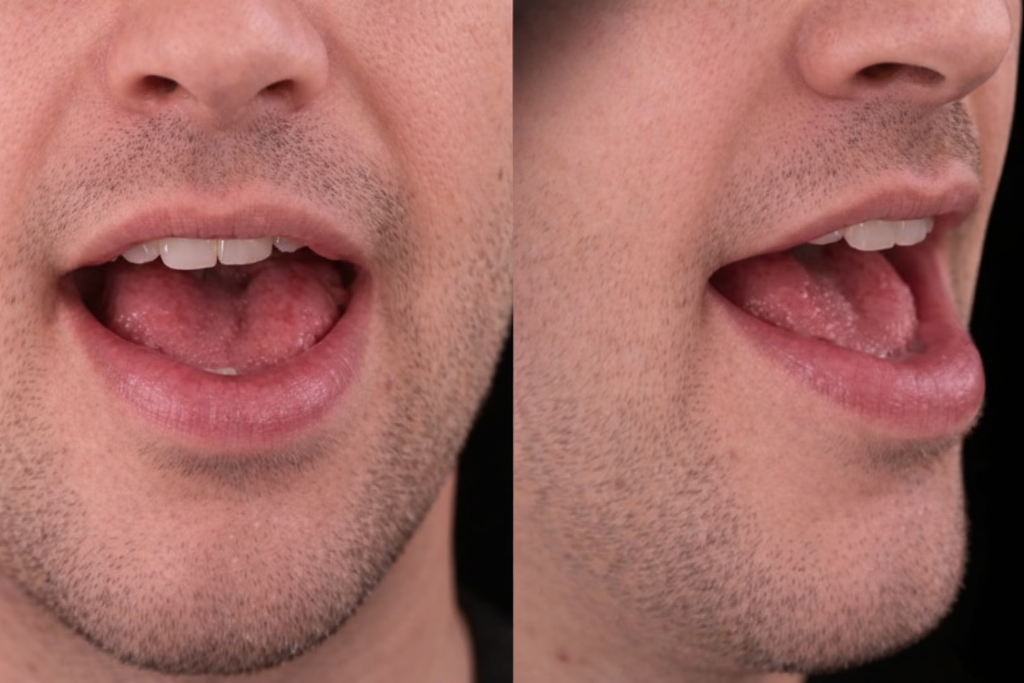
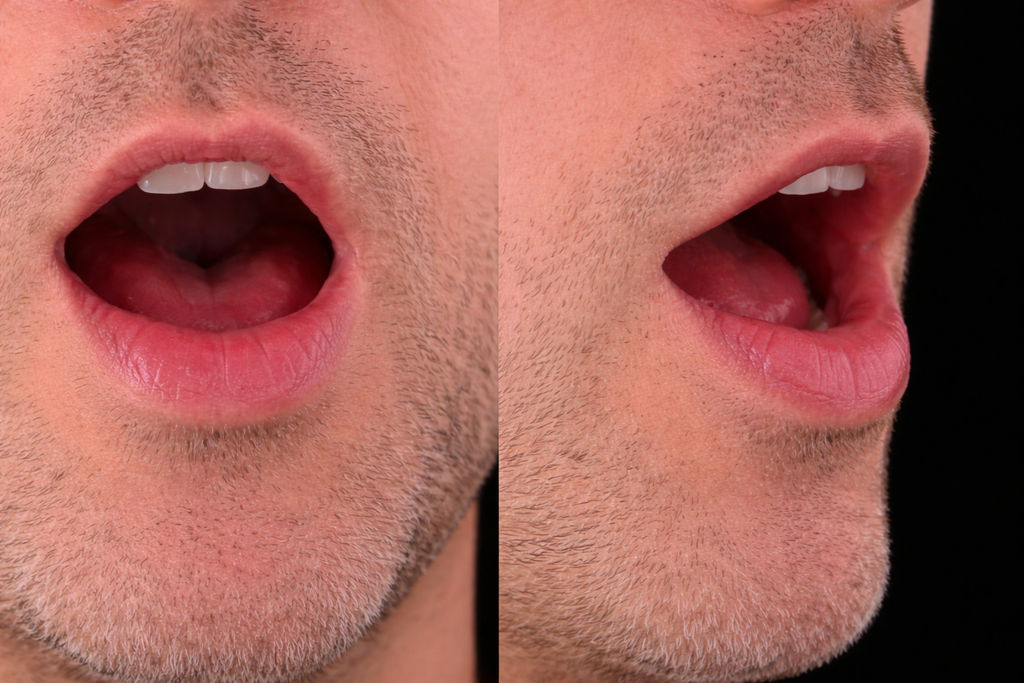
Now you try.
Record yourself saying "Cat" and "Cot" a few times. Listen back — your own ear is the best feedback for nailing the contrast.
Words that change with one sound.
Every pair below differs by exactly one sound: flip /æ/ to /ɑ/ and the meaning flips with it. Tap any word for its full breakdown.
If your ear blurs them, here's why.
Most of the world's languages, including Spanish, Italian, Japanese, and Russian, have only one A vowel. This native vowel usually sits in the middle of the mouth, halfway between the sharp, forward /æ/ of cat and the deep, open /ɑ/ of cot. Learners reach for this middle-ground vowel for both English sounds, which collapses pairs like cap/cop and lack/lock. The fix is to physically stretch the sounds apart. For /æ/, push the tongue body forward and pull the lip corners back. For /ɑ/, relax everything: drop the jaw lower than you think you need to, let the tongue body settle back, open the throat. The two vowels live at opposite ends of the mouth, front vs back, with the jaw dropped significantly for both.
Train the muscle, then the ear.
3 short drills. Do them out loud: feel the change inside your mouth before you try to hear it.
Use the smile trick for /æ/: say cat while pulling the corners of your mouth back into a slight tense smile. Now relax the lips completely, drop the jaw further, push the tongue body back, and say cot.
Pair-record yourself reading minimal pairs: hat / hot, cap / cop, lack / lock, pat / pot. If they sound identical, your tongue isn't moving from front to back between the two words.
Hold your hand under your chin. When you say cat, your chin should drop a bit. When you say hot, your chin should push your hand down noticeably more. Physical feedback helps build the habit.
Common questions about Cat vs Cot.
Why do "hat" and "hot" sound the same when I say them?
Why is the word "hot" spelled with an O but pronounced with an A?
Does the /æ/ vowel in "cat" always sound exactly the same?

Master Cat vs Cot with an AI coach.
SayWaader is the AI pronunciation coach for American English. Practice 5 minutes a day. Get a 5-axes accent assessment. Sound like you live here.