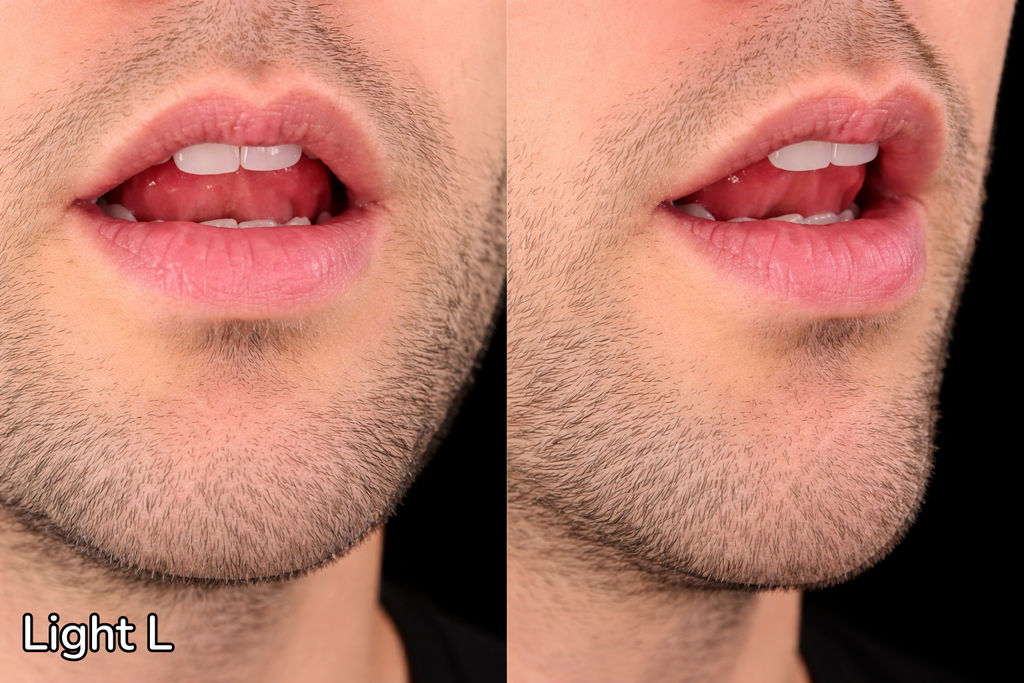
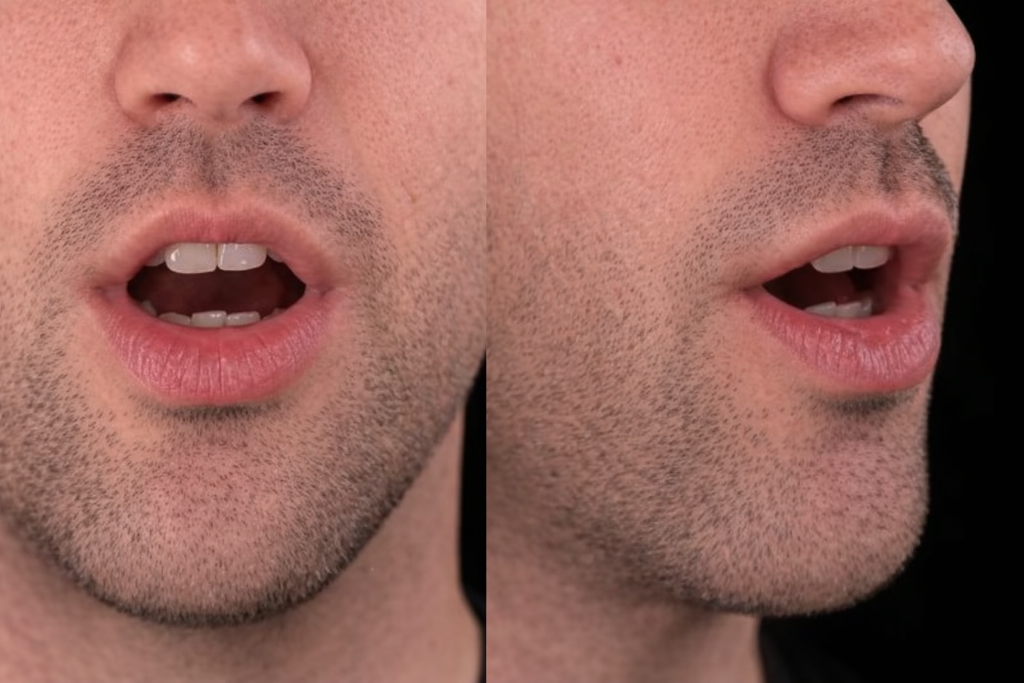
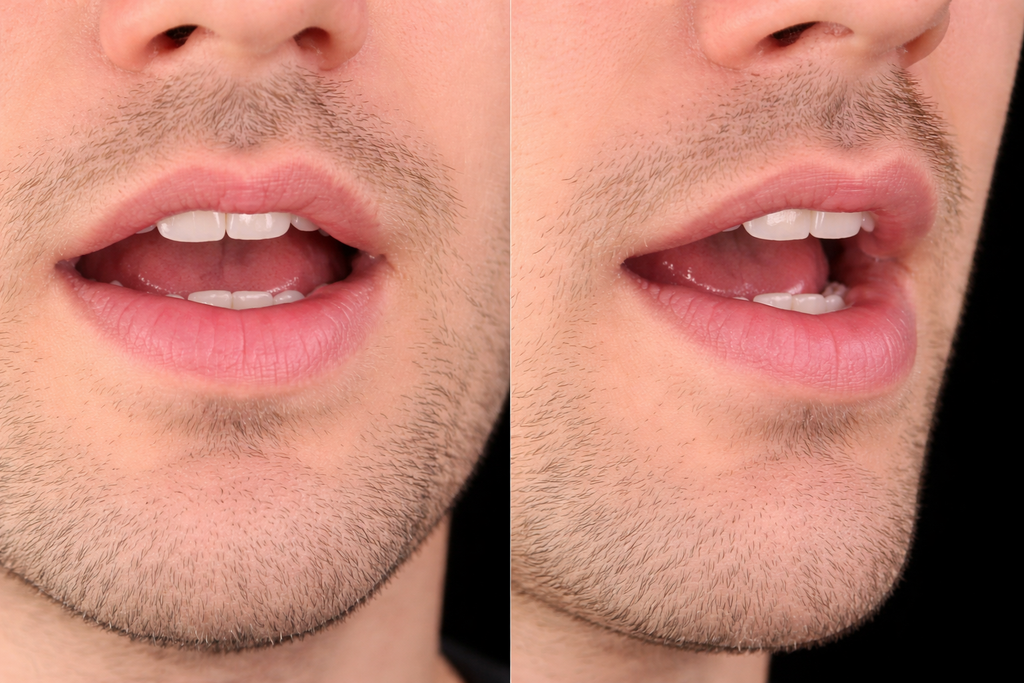
How to pronounce look in American English
LUUK
Start here
Americans pronounce look as LUUK (/lʊk/).
Now you try.
Record yourself saying "look" and play it back. The mic stays on your device — nothing's uploaded.
Why it sounds different
Why "look" sounds like LUUK.
In "look", the "" is not released — the articulators get into position but hold without the burst of air. This is called the Unreleased Stops, and it's one of the defining features of casual American English. It comes out as LUUK.
In real conversation
Hear "look" in the wild.
Click any sentence to see the full breakdown — every link, every reduction, every flap-T.
"Could you look for the book I was reading?"
kuud yuh LUUK fer dhuh BUUK ahy wuhz REE·duhng
"I look forward to hearing from you regarding this matter."
ahy LUUK FOR·werd tuh HEER·uhng fruhm yoo ruh·GAR·duhng dhihs MA·der
"I look forward to the opportunity to work together on this initiative."
ahy LUUK FOR·werd tuh dhee ah·per·TOO·nuh·tee tuh WURK tuh·GEH·dher ahn dhihs ih·NIH·shuh·tihv
"I need to look up a word in the dictionary."
ahy NEED tuh LUUK UHP uh WURD ihn dhuh DIHK·shuh·nair·ee
"I use a dictionary to look up words I do not understand."
ahy yooz uh DIHK·shuh·nair·ee tuh LUUK UHP WURDZ ahy doo NAHT uhn·der·STAND
"Let's take a look at the final draft."
LEHTS TAYK uh LUUK uht dhuh FAHY·nuhl DRAFT
Watch out
Common pronunciation mistakes in American English.
The textbook way isn't wrong — it's just not how anyone actually says it.
01
Releasing the final consonant with a puff of air.
In "look", the "" is not released — the articulators get into position but hold without the burst of air. Air stops but there's no release burst — the articulators hold position.
look→LUUK
Questions
Questions people ask about this.
Is the American pronunciation of "look" different from British English?
American English uses different vowel shapes, a relaxed retroflex R, and connected-speech tricks like flap-T and glottal-stop T that British Received Pronunciation generally avoids. The respell "LUUK" reflects the casual American form; British dictionaries typically print a citation form with crisper consonants and different vowel choices.