The difference between chip /tʃ/ and ship /ʃ/ comes down to one quick press of the tongue. Both sounds use the exact same flared lip shape, but /tʃ/ starts by firmly pressing the tongue to the roof of the mouth to block the air before releasing it in a sharp burst. For /ʃ/, the tongue never touches the roof, the air just flows continuously. Speakers of Spanish, French, and Portuguese often mix these up, either softening the burst of /tʃ/ or adding a hard stop to /ʃ/.
How the two sounds differ.
3 small mouth adjustments. Get any one of them wrong and the sound slides into its neighbor.
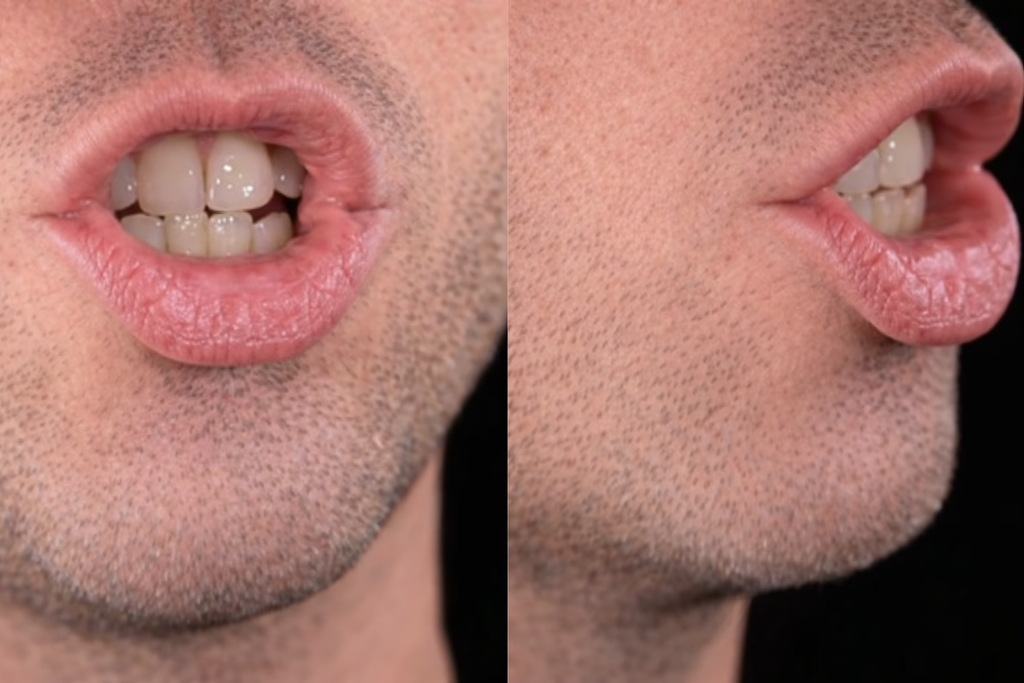
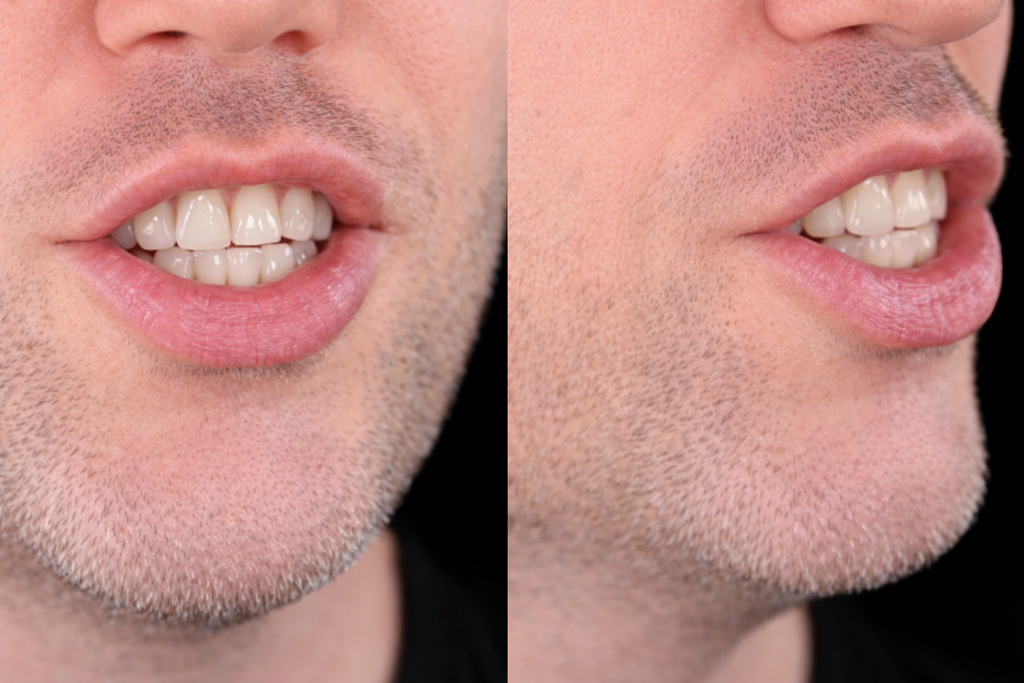
Now you try.
Record yourself saying "Chip" and "Ship" a few times. Listen back — your own ear is the best feedback for nailing the contrast.
Words that change with one sound.
Every pair below differs by exactly one sound: flip /tʃ/ to /ʃ/ and the meaning flips with it. Tap any word for its full breakdown.
If your ear blurs them, here's why.
Many languages don't use both of these sounds to separate words, causing speakers to accidentally swap them. French speakers often lack the hard /tʃ/ sound entirely, so their brains naturally substitute the smoother /ʃ/, turning chair into share. For Portuguese speakers, the issue is mostly orthographic: in Portuguese, the letters 'ch' are pronounced as /ʃ/ (as in chave), so reading English 'ch' words triggers that same /ʃ/ habit, making catch sound like cash. On the flip side, Spanish speakers typically have a strong /tʃ/ but don't have a standalone /ʃ/ in their native sound system. When trying to say shoes or shop, Spanish speakers will often add that familiar tongue contact, making it sound like choose or chop. To fix this, focus entirely on how the consonant begins. If the tongue touches the roof of your mouth first, it's a hard ch. If air flows freely from the very beginning, it's a smooth sh.
Train the muscle, then the ear.
4 short drills. Do them out loud: feel the change inside your mouth before you try to hear it.
Try the 'hold' test: Say shhhhh and hold it for three seconds. You can do this because air flows freely. Now try to hold the start of ch, you can't! It has to be a quick burst.
Add a fake 'T' to your /tʃ/ to force the tongue contact. Think of chip as t-ship. Press your tongue up hard for the T, then push the air out aggressively.
Read minimal-pair sentences to train the contrast: I want to wash the watch, She chopped wood behind the shop, Don't catch the cash. Exaggerate the smooth flow of /ʃ/ and the sharp punch of /tʃ/.
Record yourself saying shoes and choose. If they sound identical, check your tongue. For shoes, keep the tongue hovering; for choose, slam it into the roof of your mouth before speaking.
Common questions about Chip vs Ship.
Why do I say "choose" when I mean "shoes"?
Is /tʃ/ just a combination of T and SH?
Why is the 'ch' in words like "machine" and "chef" pronounced /ʃ/ instead of /tʃ/?

Master Chip vs Ship with an AI coach.
SayWaader is the AI pronunciation coach for American English. Practice 5 minutes a day. Get a 5-axes accent assessment. Sound like you live here.