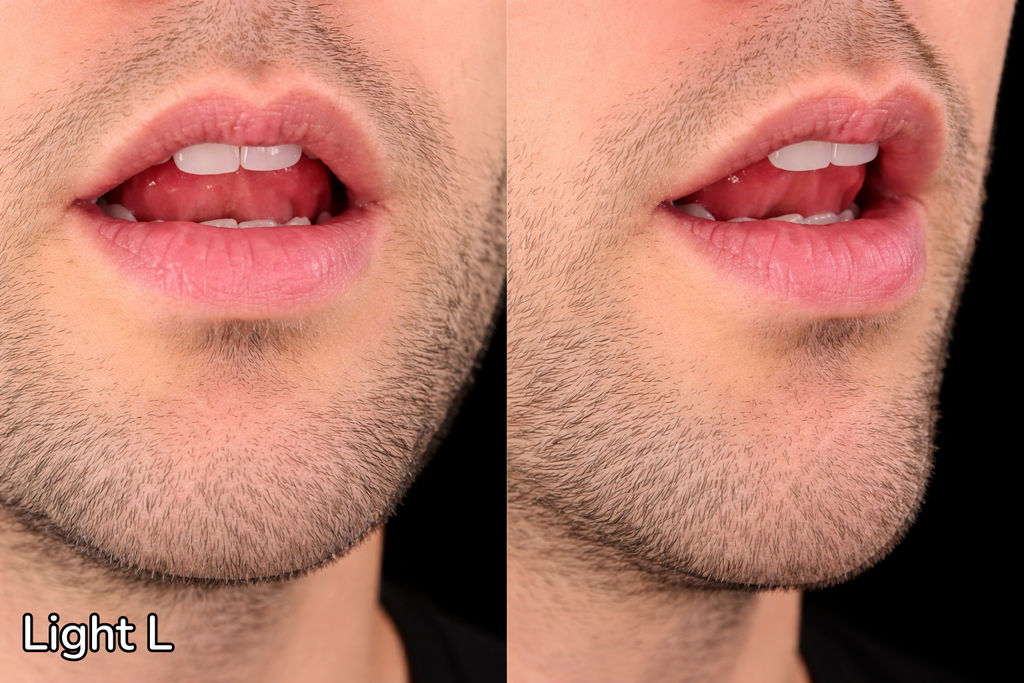
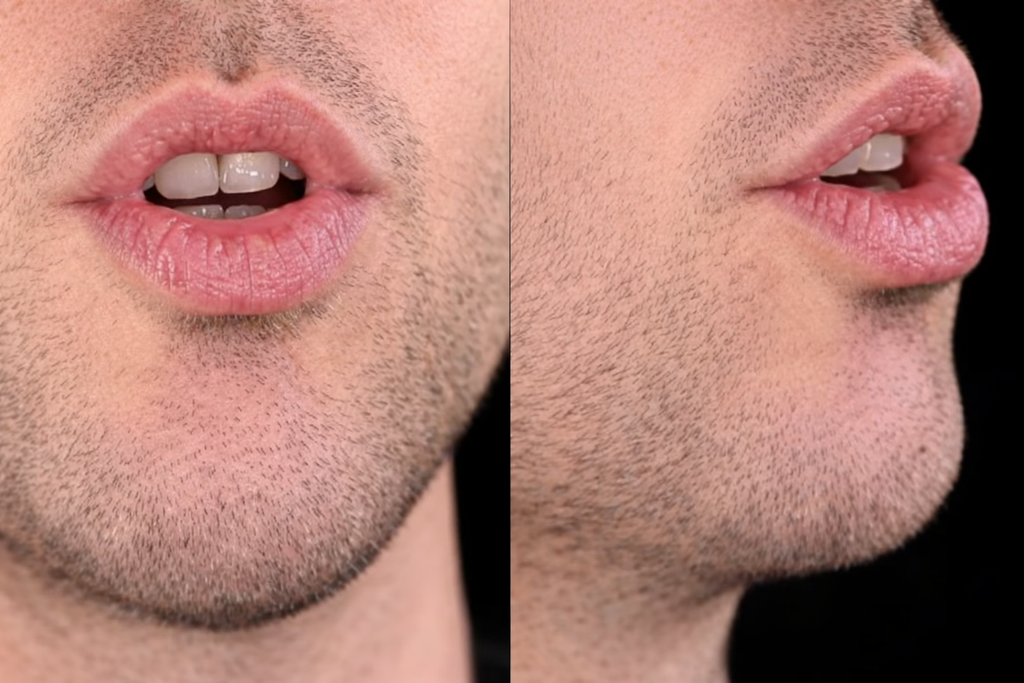
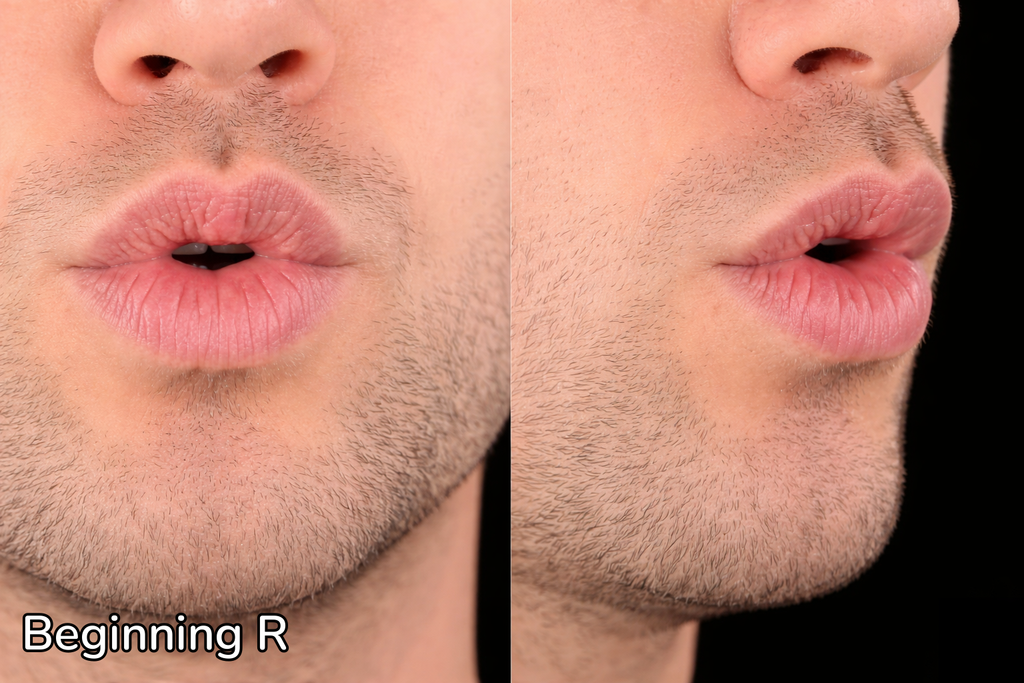
Light /l/ and right /r/ are made with completely different tongue shapes, but speakers from Japanese, Korean, and some Chinese backgrounds often hear them as the same sound. /l/ touches the alveolar ridge with the tongue tip, and air flows around the sides of the tongue. American /r/ doesn't touch anything: the tongue pulls back or bunches up without contact, and the lips round slightly. The two sounds share almost no articulation, which is why splitting them apart is one of the harder steps for East Asian learners.
How the two sounds differ.
3 small mouth adjustments. Get any one of them wrong and the sound slides into its neighbor.
Now you try.
Record yourself saying "Light" and "Right" a few times. Listen back — your own ear is the best feedback for nailing the contrast.
Words that change with one sound.
Every pair below differs by exactly one sound: flip /l/ to /r/ and the meaning flips with it. Tap any word for its full breakdown.
If your ear blurs them, here's why.
Japanese has a single liquid tap that sits somewhere between English /l/ and /r/ but isn't really either. Korean changes its liquid sound depending on where it falls in a syllable: it sounds like English /l/ at the end of a syllable but like a quick tap between vowels. Because the English distinction between /l/ and /r/ doesn't map cleanly to either of these native systems, the brain blurs the two English sounds together. (Mandarin has distinct /l/ and /r/ sounds, but speakers of some southern Chinese dialects without a native /r/ run into the same merge.) The fix has to start before pronunciation. Train the ear first to hear them apart, then add the physical difference. Many learners can produce both sounds correctly but still confuse them in fast speech because the perceptual category hasn't fully split yet.
Train the muscle, then the ear.
4 short drills. Do them out loud: feel the change inside your mouth before you try to hear it.
Mirror practice: say light with your tongue tip pressed against the bumpy ridge behind your upper front teeth. Watch your mouth in the mirror; you should see the tongue tip touching. Then say right with the tongue tip pulled back and lips slightly rounded. The tongue tip shouldn't touch anything.
Pair-record minimal pairs: light/right, lake/rake, lock/rock, lip/rip. Listen back the next day. If they still sound similar, the perceptual split isn't there yet. Keep training the ear with native-speaker recordings.
Slow-motion through the differences: hold a /l/ for two seconds (it can be held, air keeps flowing around the tongue). Then hold an /r/ for two seconds (it can also be held, with the tongue curled back and lips rounded). Feel the contrast.
Practice words that contain both sounds: really, library, parallel. These stack /l/s and /r/s close together and force you to switch tongue shapes quickly.
Common questions about Light vs Right.
Why do Japanese speakers struggle with the L/R difference in English?
Does the American R touch anything in the mouth?
Is the trick to lip-rounding more important than tongue position for /r/?

Master Light vs Right with an AI coach.
SayWaader is the AI pronunciation coach for American English. Practice 5 minutes a day. Get a 5-axes accent assessment. Sound like you live here.