Think /θ/ and this /ð/ are made identically, tongue tip lightly between or just behind the upper and lower front teeth, breath flowing softly around it, except for one detail: voicing. /θ/ is voiceless (just air, no buzz). /ð/ is voiced (vocal cords vibrating, full buzz in the throat). That's it. Same mouth shape, same tongue position, same air pattern. The only switch is whether your vocal cords are humming. Speakers of French, German, Russian, and Japanese often substitute /s/ and /z/ (or /t/ and /d/) for these because their languages don't have either TH sound. The fix depends on your habit: if you make an S or Z, bring your tongue tip forward to touch the teeth. If you make a T or D, your tongue is probably already at the teeth, so stop pressing so hard and let the air flow continuously without blocking it.
How the two sounds differ.
4 small mouth adjustments. Get any one of them wrong and the sound slides into its neighbor.
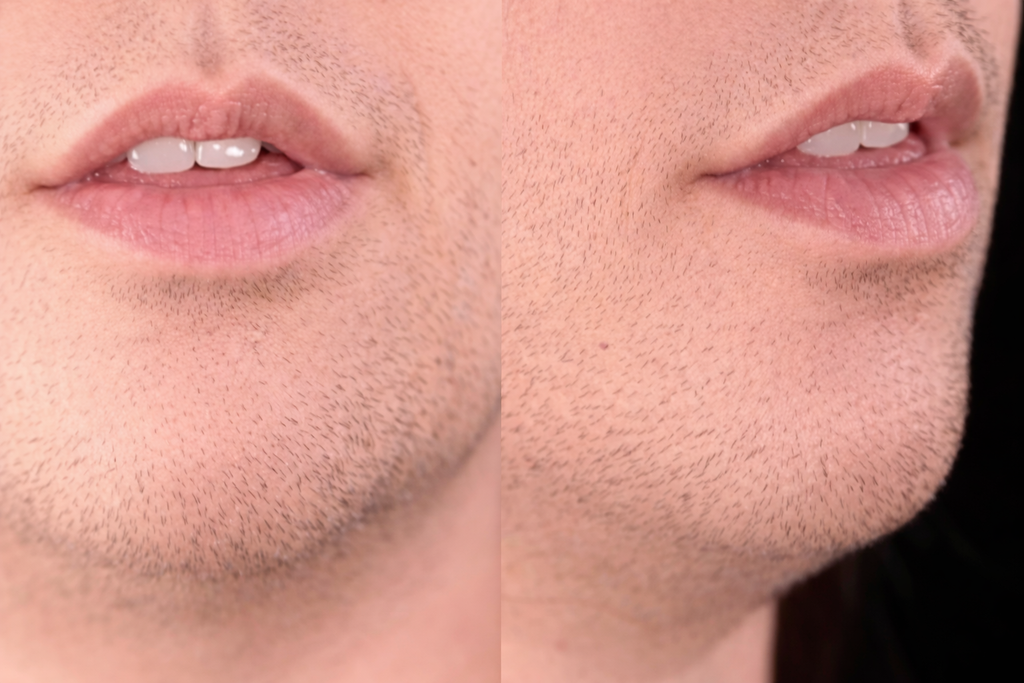
Now you try.
Record yourself saying "Think" and "This" a few times. Listen back — your own ear is the best feedback for nailing the contrast.
Words that change with one sound.
Every pair below differs by exactly one sound: flip /θ/ to /ð/ and the meaning flips with it. Tap any word for its full breakdown.
If your ear blurs them, here's why.
These two are confusing not because they're hard to tell apart from each other (the voicing difference is loud and obvious if you put your fingers on your throat), but because most languages don't have either of them. Many languages lack both TH sounds, so learners typically substitute /s/, /z/, /t/, /d/, /f/, or /v/. Result: think becomes sink, tink, or fink; this becomes dis, zis, or vis. Spanish is a partial exception, almost all Spanish dialects use a soft [ð] sound between vowels (like the 'd' in nada), but Spanish speakers still struggle to produce TH at the start of words and to make /θ/ at all in Latin American varieties. Confusion between /θ/ and /ð/ specifically is actually pretty rare. Once a learner can make either one, getting the other is just toggling the voicing. The hard part is making the TH at all: getting the tongue forward enough to touch the teeth, with enough relaxation to let the air flow softly.
Train the muscle, then the ear.
4 short drills. Do them out loud: feel the change inside your mouth before you try to hear it.
The voicing toggle: say thigh /θaɪ/, voiceless. Now say thy /ðaɪ/, voiced. Place your fingertips on your throat and switch back and forth. Thigh, thy, thigh, thy. You should feel the buzz turn on and off. The mouth shape stays identical, only the vocal cords change.
Mirror check: say this. The tongue tip should peek slightly between your teeth. If you can't see your tongue at all, you've pulled it back behind the teeth and you're making /z/ or /d/, not /ð/.
Practice pairs that toggle on voicing only: thigh / thy, ether / either, teeth / teethe, loath / loathe. The mouth doesn't move between the two, only the voicing switches.
Notice the function-word pattern: words starting with /ð/ (the, this, that, they, them, those, there, then, though) are almost all grammar words. Words starting with /θ/ (think, three, thanks, throw, throat, thirsty) are almost all content words. This is a useful default when you're not sure.
Common questions about Think vs This.
Are /θ/ and /ð/ really different sounds, or is it just spelling?
Why do most function words like "the" use the voiced /ð/?
Is it OK to use /d/ instead of /ð/ in casual speech?

Master Think vs This with an AI coach.
SayWaader is the AI pronunciation coach for American English. Practice 5 minutes a day. Get a 5-axes accent assessment. Sound like you live here.