Here's the rare-bird story: zh /ʒ/ is the rarest consonant in American English. It only shows up in a handful of words, vision, measure, treasure, pleasure, beige, genre, many borrowed from French, others from older yod-coalescence (where older /zj/ clusters collapsed into /ʒ/, giving us words like vision and measure). J /dʒ/ is its much more common affricate cousin. The mouth shape for both is similar: tongue pulled back, lips slightly puckered, vocal cords humming. The difference is movement: /ʒ/ is a continuous fricative, air flows the whole time. /dʒ/ starts with a quick stop where the tongue blocks the air, then releases into the same /ʒ/ shape. Speakers of Spanish and German often substitute /ʃ/ or /j/ for /ʒ/ because the sound doesn't exist in their language; Portuguese speakers usually have /ʒ/ already (it's the standard sound for J) and handle it fine.
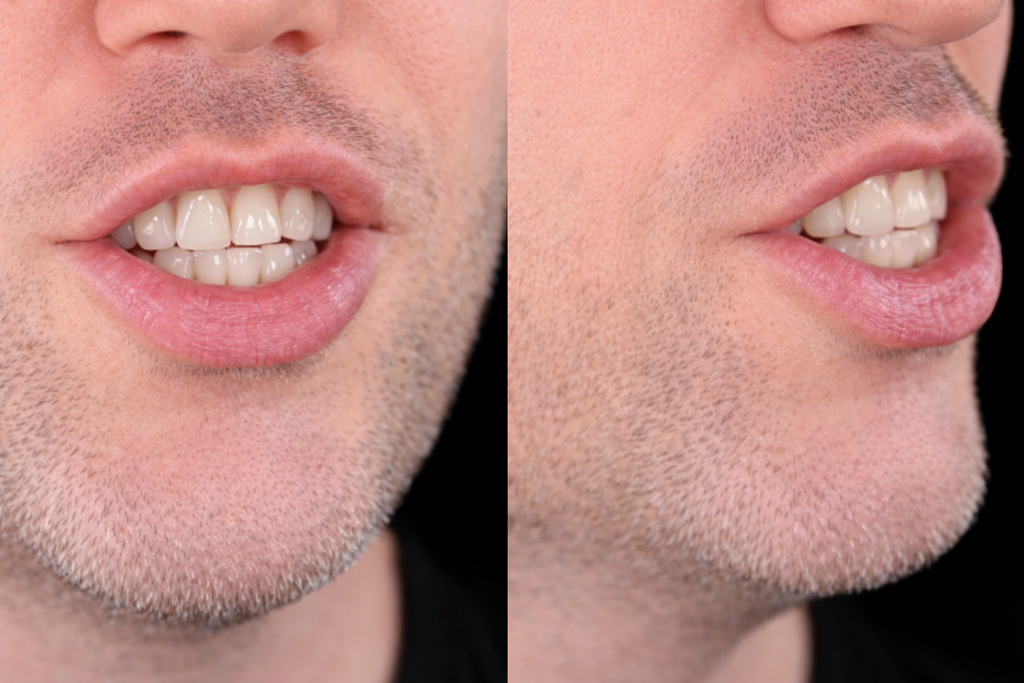
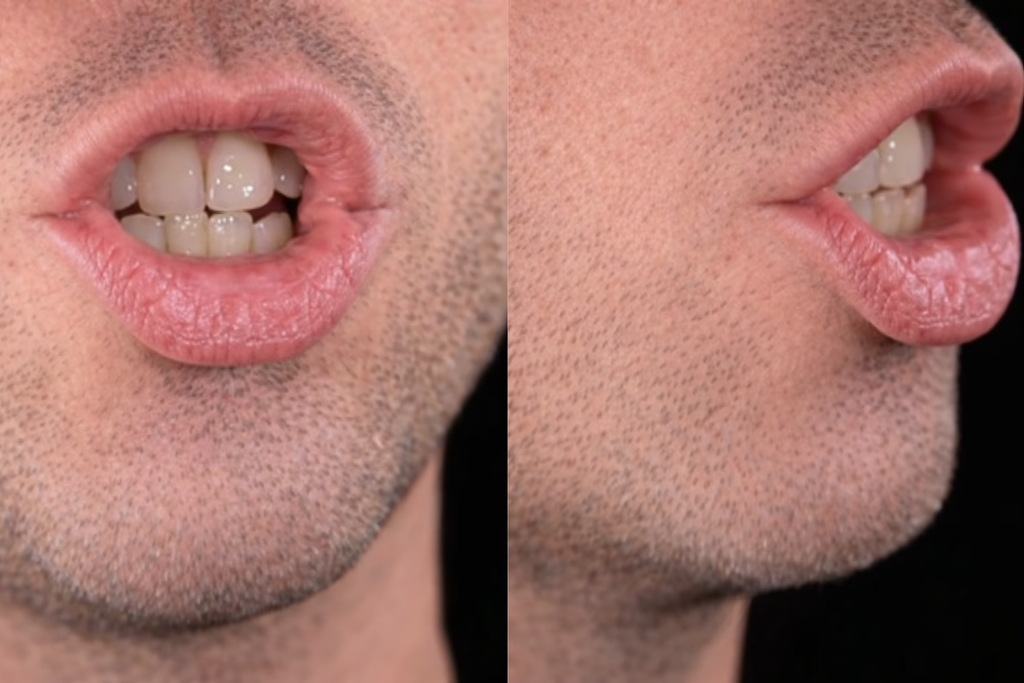
How the two sounds differ.
4 small mouth adjustments. Get any one of them wrong and the sound slides into its neighbor.
Now you try.
Record yourself saying "Vision" and "Job" a few times. Listen back — your own ear is the best feedback for nailing the contrast.
Words that change with one sound.
Every pair below differs by exactly one sound: flip /ʒ/ to /dʒ/ and the meaning flips with it. Tap any word for its full breakdown.
If your ear blurs them, here's why.
/ʒ/ is so rare in English that most learners never encounter it long enough to nail it. Spanish and German don't have /ʒ/ in their native phoneme inventories at all, so speakers default to whatever they have that's close. Spanish speakers often substitute /ʃ/ for /ʒ/ (turning vision into vish-on) or use /j/ for /dʒ/ (turning job into yob). Portuguese speakers already have a clean /ʒ/ (it's the standard pronunciation of J in jogo), though they often struggle with words that end in /ʒ/ like beige or garage by adding an extra vowel sound at the end. The /dʒ/ side is much easier for most learners, since most languages have an affricate close to it. Spelling is also a major trap: the letter 'g' usually makes the /dʒ/ sound (gem, page, magic), but in newer French loanwords, that same 'g' makes the rare /ʒ/ sound (genre, beige, garage). The most practical strategy is to memorize the small set of /ʒ/-words and practice them in isolation: measure, treasure, pleasure, vision, decision, garage, beige, genre, mirage, regime, casual, usual, version. There aren't many. If you nail twenty words, you've got the phoneme.
Train the muscle, then the ear.
4 short drills. Do them out loud: feel the change inside your mouth before you try to hear it.
Start from /ʃ/ and add voicing: hold a long shhhhh, then turn on your voice without moving anything else. The buzz that joins the hiss is /ʒ/. Practice the toggle: shhh / zhhh / shhh / zhhh. Same mouth, just voicing on or off.
Practice the /dʒ/ vs /ʒ/ contrast in real word pairs: lesion / legion, pleasure / pledger. The /dʒ/ side has a clear stop-release at the start; the /ʒ/ side flows continuously. Or break /dʒ/ down into its two phases: a brief tongue-tip stop (/d/) then the release into the /ʒ/ shape, that release IS the /ʒ/ you're trying to isolate.
Drill the small set of /ʒ/ words: measure, treasure, pleasure, vision, decision, casual, usual, garage, beige, genre, regime, version, conclusion, illusion, division. These cover most of the /ʒ/ phoneme's appearances in English.
For the /dʒ/ side, drill words that use J or soft G: job, judge, jam, jump, gem, giant, jelly, juice, page. Make sure each one starts with the brief tongue-on-ridge stop before the /ʒ/-shape release. If your tongue doesn't touch the ridge first, you're producing /ʒ/ instead of /dʒ/.
Common questions about Vision vs Job.
Why is the ZH sound so rare in English?
Are /ʒ/ and /dʒ/ ever interchangeable in American English?
How do Americans pronounce "garage"?

Master Vision vs Job with an AI coach.
SayWaader is the AI pronunciation coach for American English. Practice 5 minutes a day. Get a 5-axes accent assessment. Sound like you live here.