If you're a Spanish, German, or Slavic-language speaker, this is a classic confusion: y /j/ and j /dʒ/. American /j/ is a glide, the tongue lifts close to the roof of the mouth and slides smoothly into the next vowel. Yes, year, young. American /dʒ/ is an affricate, a hard tongue-on-ridge stop followed by a /ʒ/ release. Jet, job, jump. The mouths are completely different: /j/ has no stop and no contact; /dʒ/ has both. Many native Spanish speakers grew up with a /ʝ/ that splits the difference between the two and end up saying yes as jess or jet as yet.
How the two sounds differ.
4 small mouth adjustments. Get any one of them wrong and the sound slides into its neighbor.
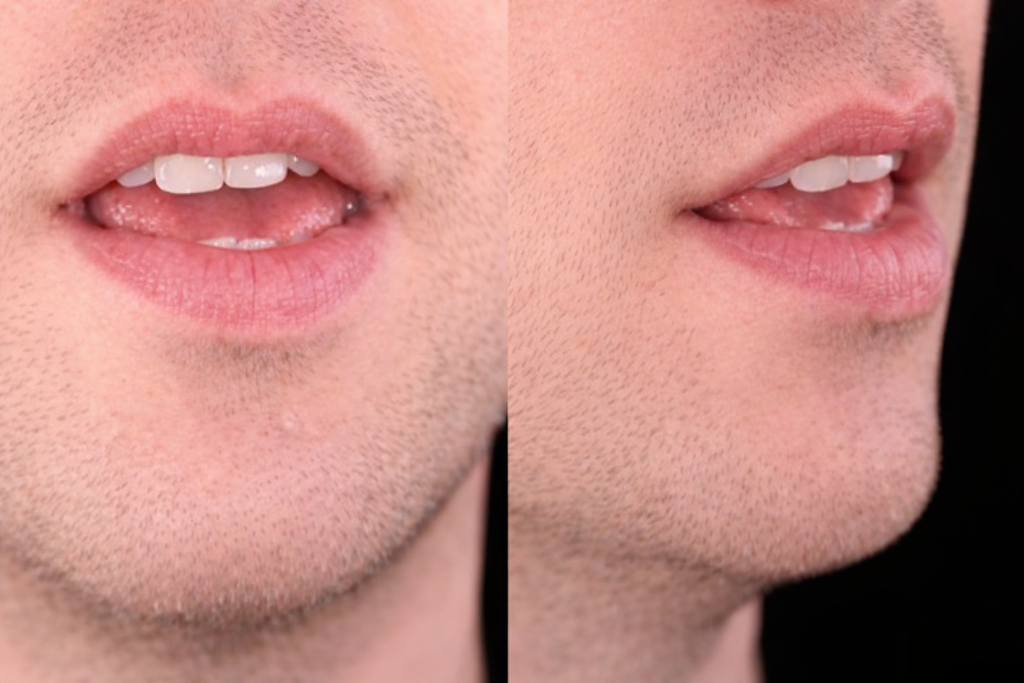
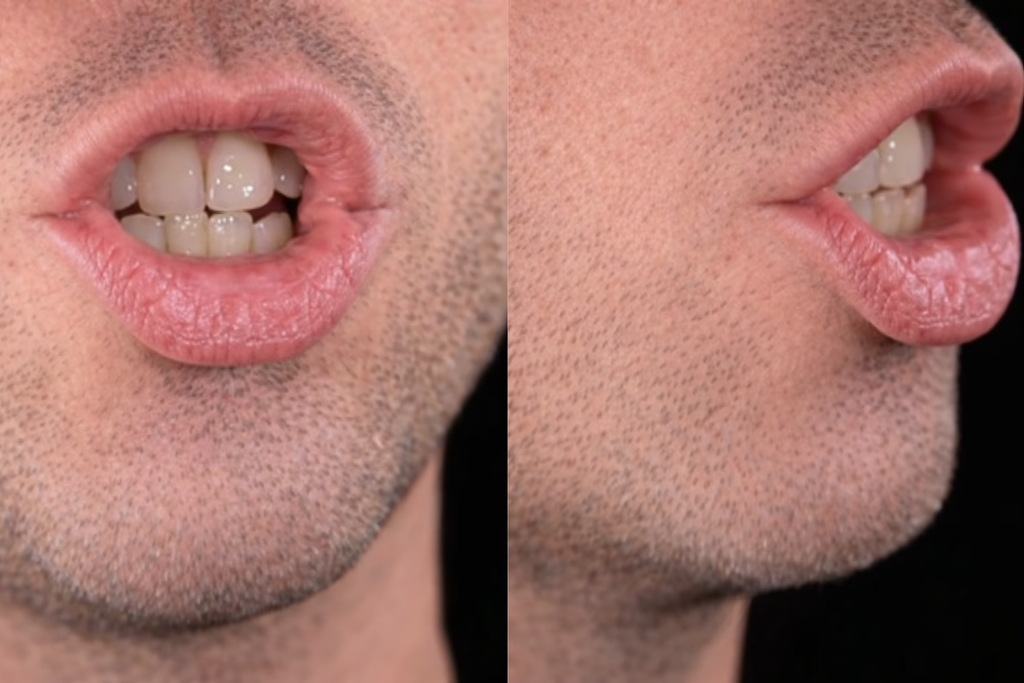
Now you try.
Record yourself saying "Yet" and "Jet" a few times. Listen back — your own ear is the best feedback for nailing the contrast.
Words that change with one sound.
Every pair below differs by exactly one sound: flip /j/ to /dʒ/ and the meaning flips with it. Tap any word for its full breakdown.
If your ear blurs them, here's why.
Two different forces pull learners in different directions here. For Spanish speakers, the issue is phonetic: the native Spanish Y or LL sound is often a fricative /ʝ/ that sits halfway between American /j/ and /dʒ/, which causes yes to come out as jess, or jet to come out as yet. Argentine Spanish even uses /ʃ/ or /ʒ/ for the same letters. For Polish, Russian, and German speakers, the confusion is orthographic: in their alphabets, the letter J is pronounced as the /j/ glide, so when reading English, the brain sees jet and automatically says yet. They aren't hunting for a phonetic match, they're just reading the letter using their native alphabet. The fix is binary: for /j/, the tongue NEVER touches anything. For /dʒ/, the tongue ALWAYS makes a hard contact at the ridge before releasing.
Train the muscle, then the ear.
4 short drills. Do them out loud: feel the change inside your mouth before you try to hear it.
The tongue-contact test: say yes very slowly. Your tongue should glide upward toward the roof but never touch anything. Now say jess, the tongue should slam hard against the bumpy ridge before releasing. The two motions are completely different.
Pair drill at speed: yes / Jess, yet / jet, year / jeer, yacht / jot, yam / jam. Watch your tongue in your mind's eye. If it's making contact for yes, you're saying Jess.
For /dʒ/, exaggerate the stop: think of jet as d-zhet (a quick D sound followed by /ʒ/). The hard tongue-on-ridge stop is the giveaway that you're producing /dʒ/ correctly. Without that initial stop, the sound slides toward /j/ or /ʒ/.
Pay attention to phrase-initial position: yesterday, you know, yeah, yes, year. The /j/ comes up constantly in casual speech as a glide. Make sure none of these accidentally become /dʒ/-words (you don't want jesterday).
Common questions about Yet vs Jet.
Why does my Y sound like J in English?
Is /j/ a vowel or a consonant?
Why is the letter J pronounced /dʒ/ in English when it's /j/ or /h/ in other languages?

Master Yet vs Jet with an AI coach.
SayWaader is the AI pronunciation coach for American English. Practice 5 minutes a day. Get a 5-axes accent assessment. Sound like you live here.