How to pronounce body in American English

IPA /ˈbɑdi/ Syllables 2 · bah·dee Stress 1st syllable
BAH·dee
Start here

Americans pronounce body as BAH-dee (/ˈbɑdi/). In "body", the "t" between vowels sounds like a quick "d" — the tongue briefly taps the ridge behind the upper teeth. This is called the Flap T, and it's why Americans sound more relaxed than the textbook. So instead of BAH·tee, you get BAH·dee. Stress falls on the first syllable — keep everything else short and quick. You'll hear it in sentences like "The weightlifter lifted twice his body weight" or "She rests one day a week to allow her body to recover" — more examples below.

Now you try.

Record yourself saying "body" and play it back. The mic stays on your device — nothing's uploaded.

Ready when you are
Tap the mic to start
Preview your accent profile

Get your accent profile and 5-axes assessment.

Sounds
75%
Clarity
68%
Stress
78%
Intonation
65%
Fluency
62%

Overall assessment

Our AI coach listens to your recording and grades 5 dimensions of pronunciation — then tells you exactly what to fix next.

72% Noticeable accent

Common mistakes

Saying a hard "T" in the middle.

In "body", the "t" between vowels sounds like a quick "d" — the tongue briefly taps the ridge behind the upper teeth. /t/ or /d/ becomes a quick tap [ɾ] — sounds like a soft D. The tongue briefly taps the ridge behind the upper teeth.

Stressing the wrong syllable.

Stress falls on the first syllable, not the others. Stretch BAH — keep everything else short and quick.

Unlock the full report in the app
Sound by sound

Every sound in "body".

2 syllables, 4 sounds. Tap a syllable to jump to its row, then explore each sound's mouth shape and how it's made.

b/b/

Press your lips together, add vocal cord vibration, then release.
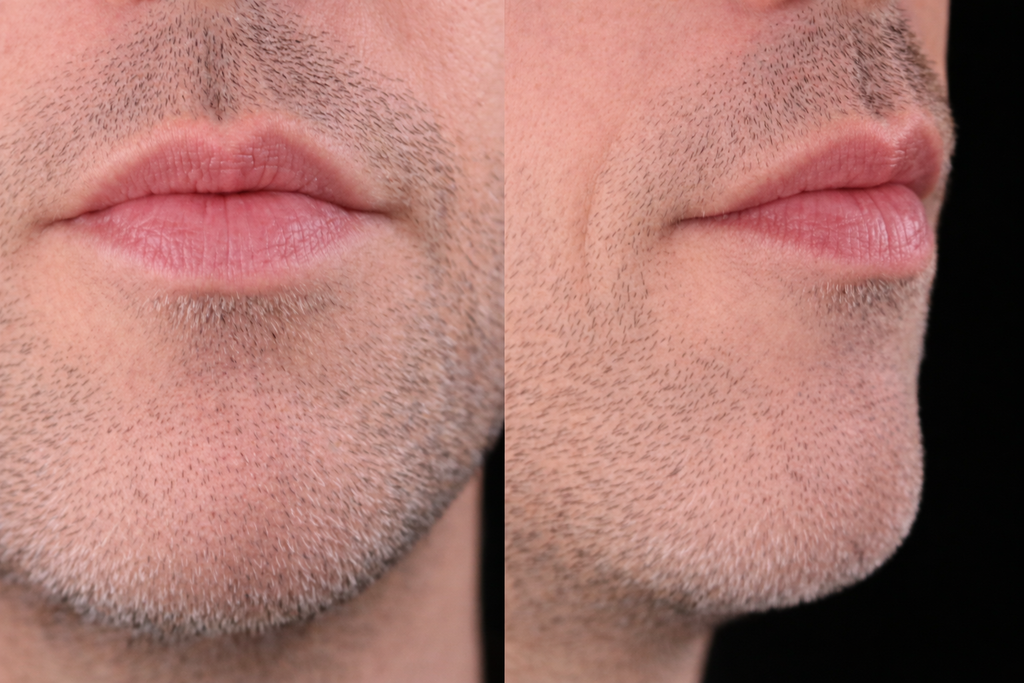
Mouth position for /b/ as in BED
ah/ɑ/

Relax your lips and drop your jaw significantly. The tongue tip lightly touches behind the bottom front teeth and the back part of the tongue presses down a little to create more dark space in the back of the mouth.
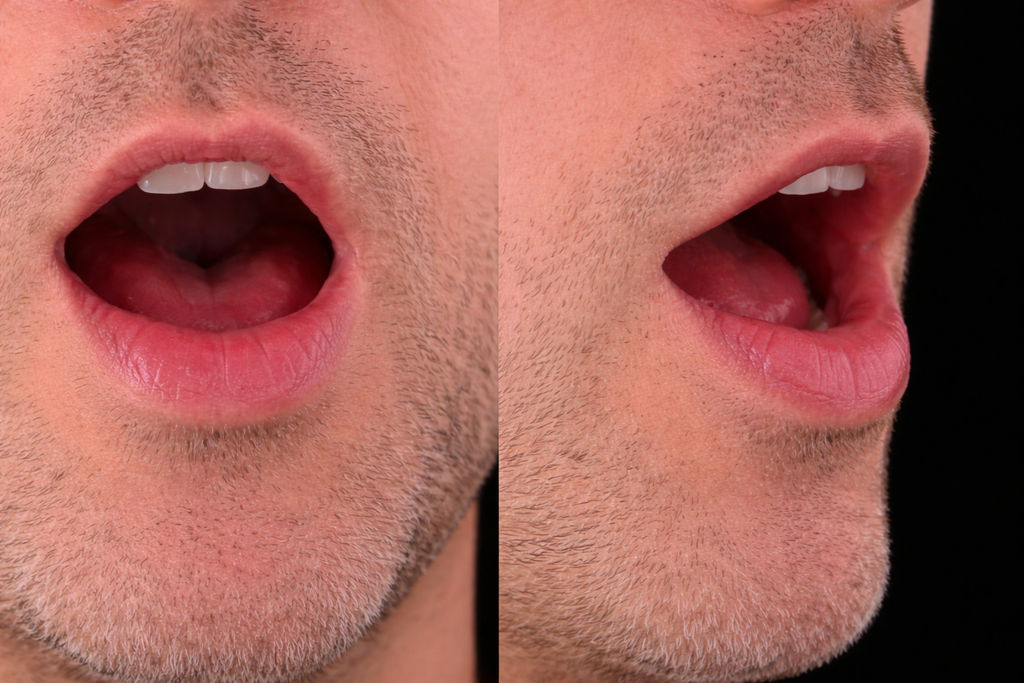
Mouth position for FATHER Vowel
d/d/
Flap

Quickly bounce the front of your tongue against the roof of your mouth. Same as Flap T — a quick tap without stopping airflow.
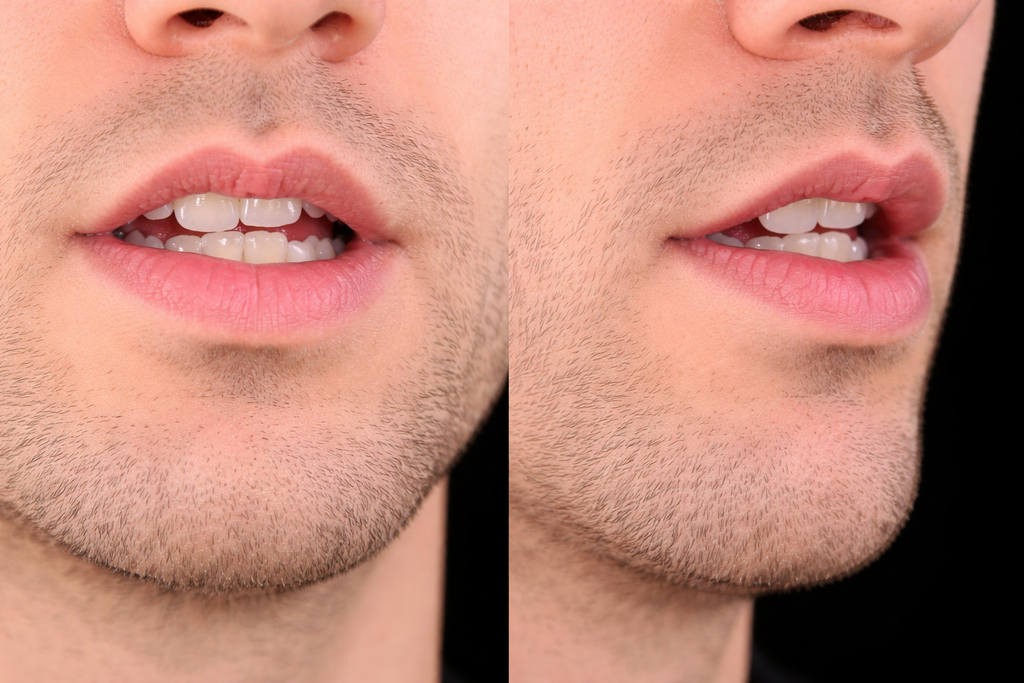
Mouth position for /d/ as in DEN
ee/i/

Pull the corners of your lips back slightly. Arch the middle-front of your tongue high toward the roof of the mouth.
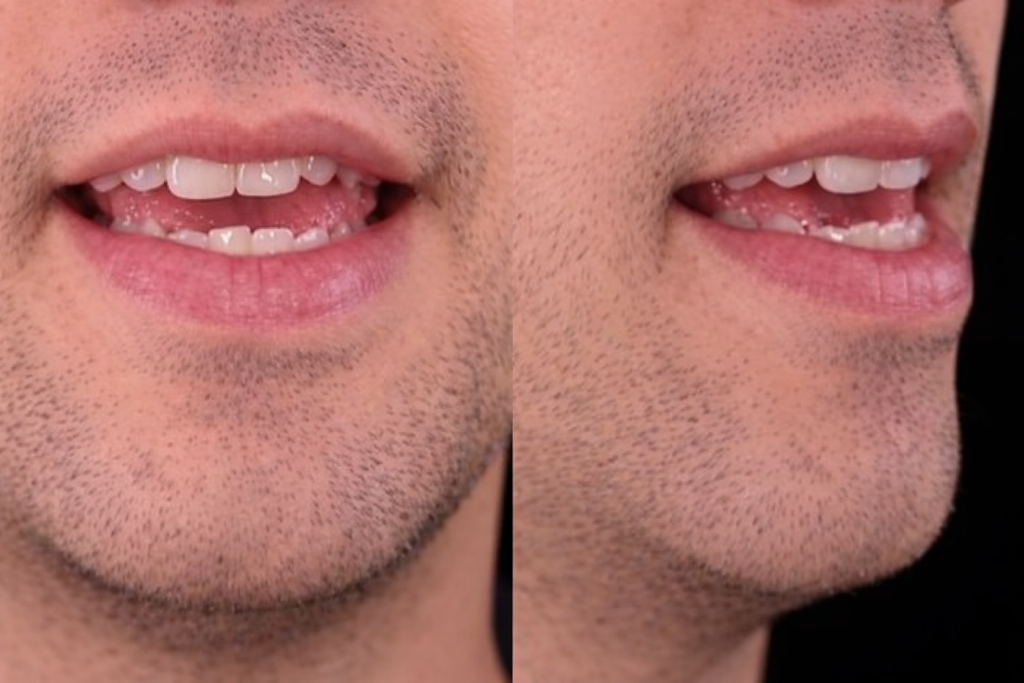
Mouth position for SEE Vowel
In real conversation

Hear "body" in the wild.

Click any sentence to see the full breakdown — every link, every reduction, every flap-T.

"Anatomy is the study of the structure of the human body."
uh·NA·tuh·mee ihz dhuh STUH·dee uhv dhuh STRUHK·cher uhv dhuh HYOO·muhn BAH·dee
"Enzymes act as catalysts to speed up chemical reactions in the body."
EHN·zahymz AKT uhz KA·duh·luhsts tuh SPEED UHP KEH·muh·kuhl ree·AK·shuhnz ihn dhuh BAH·dee
"She rests one day a week to allow her body to recover."
shee REHSTS wuhn DAY uh WEEK tuh uh·LOW her BAH·dee tuh ruh·KUH·ver
"The body paragraphs should each focus on a single main idea."
dhuh BAH·dee PAIR·uh·grafs shuud EECH FOH·kuhs ahn uh SIHNG·guhl MAYN ahy·DEE·uh
"The department is implementing body cameras for all officers."
dhuh duh·PART·muhnt ihz IHM·pluh·mehn·tuhng BAH·dee KA·muh·ruhz fer AHL AH·fuh·serz
"The weightlifter lifted twice his body weight."
dhuh WAYT·lihf·ter LIHF·tuhd TWAHYS hihz BAH·dee WAYT
Find another

Looking for a different word or sentence?

Search the entire library
/
Press / anywhere to focus the search box.
Watch out

Common pronunciation mistakes in American English.

The textbook way isn't wrong — it's just not how anyone actually says it.

01

Saying a hard "T" in the middle.

In "body", the "t" between vowels sounds like a quick "d" — the tongue briefly taps the ridge behind the upper teeth. /t/ or /d/ becomes a quick tap [ɾ] — sounds like a soft D. The tongue briefly taps the ridge behind the upper teeth.

BAH-teeBAH·dee
02

Stressing the wrong syllable.

Stress falls on the first syllable, not the others. Stretch BAH — keep everything else short and quick.

bah·DEEBAH·dee
Questions

Questions people ask about this.

How is "body" stressed in American English?
Stress falls on the first syllable — say "BAH" with a longer, fuller vowel and keep every other syllable short and quick. The respell "BAH-dee" marks the stressed syllable in capitals so the rhythm is easy to read at a glance.
Why doesn't the T sound like a T in "body"?
In American English, when /t/ sits between two vowels with the second one unstressed, it turns into a quick D-like flap. So "body" sounds closer to "BAH-dee" than to a crisp-T pronunciation. This is the flap-T rule, one of the most distinctive sounds of casual American speech.
Is the American pronunciation of "body" different from British English?
American English uses different vowel shapes, a relaxed retroflex R, and connected-speech tricks like flap-T and glottal-stop T that British Received Pronunciation generally avoids. The respell "BAH-dee" reflects the casual American form; British dictionaries typically print a citation form with crisper consonants and different vowel choices.

Stop reading about "body". Start saying it.

SayWaader is the AI pronunciation coach for American English. Practice 5 minutes a day. Get a 5-axes accent assessment. Sound like you live here.