To hear the difference between bet /ɛ/ and but /ʌ/, focus on the front-to-back position of your tongue. For /ɛ/, the front of the tongue lifts to mid height, and the corners of your lips pull back slightly. For /ʌ/, the tongue stays low and floats in the middle of the mouth, lips relax, mouth feels emptier inside even though the jaw barely moves. Many learners miss the exact target for these sounds, making /ɛ/ too tense and /ʌ/ too low. The fix is moving the tongue body forward for /ɛ/ and letting it slide back to neutral for /ʌ/. Try the pair dead /dɛd/ vs dud /dʌd/. Same consonants, different vowel. Your mouth only has to do one thing.
How the two sounds differ.
4 small mouth adjustments. Get any one of them wrong and the sound slides into its neighbor.
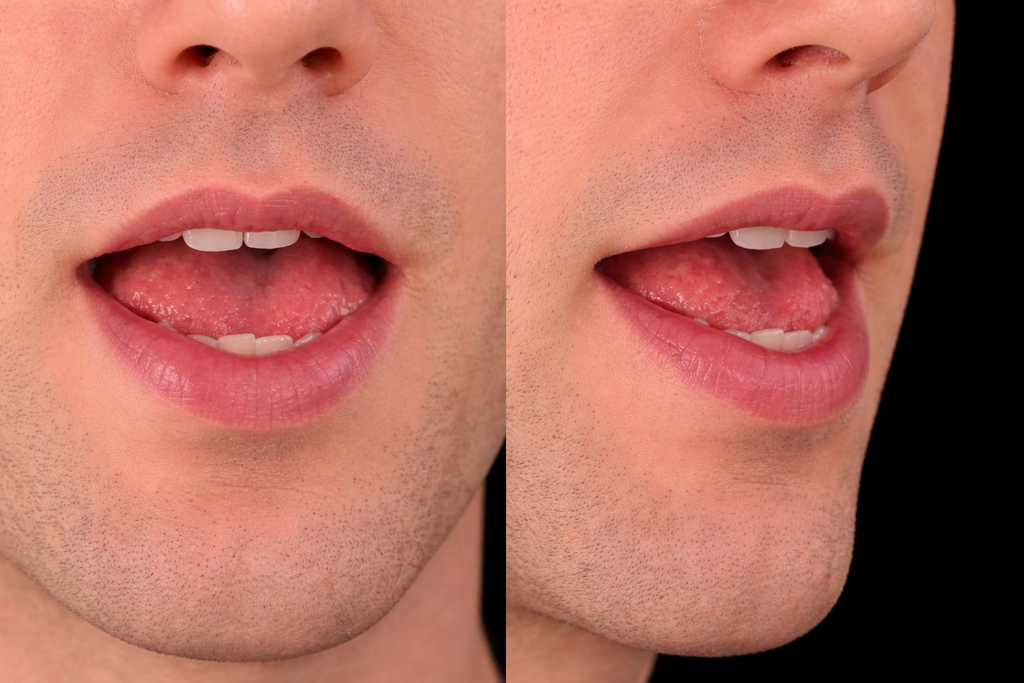
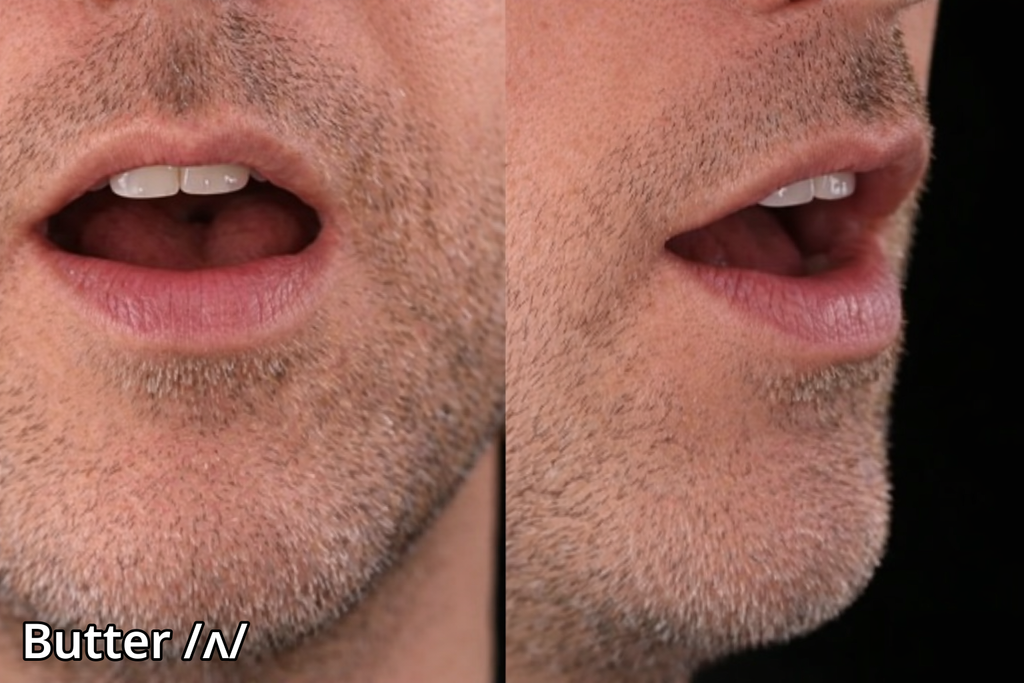
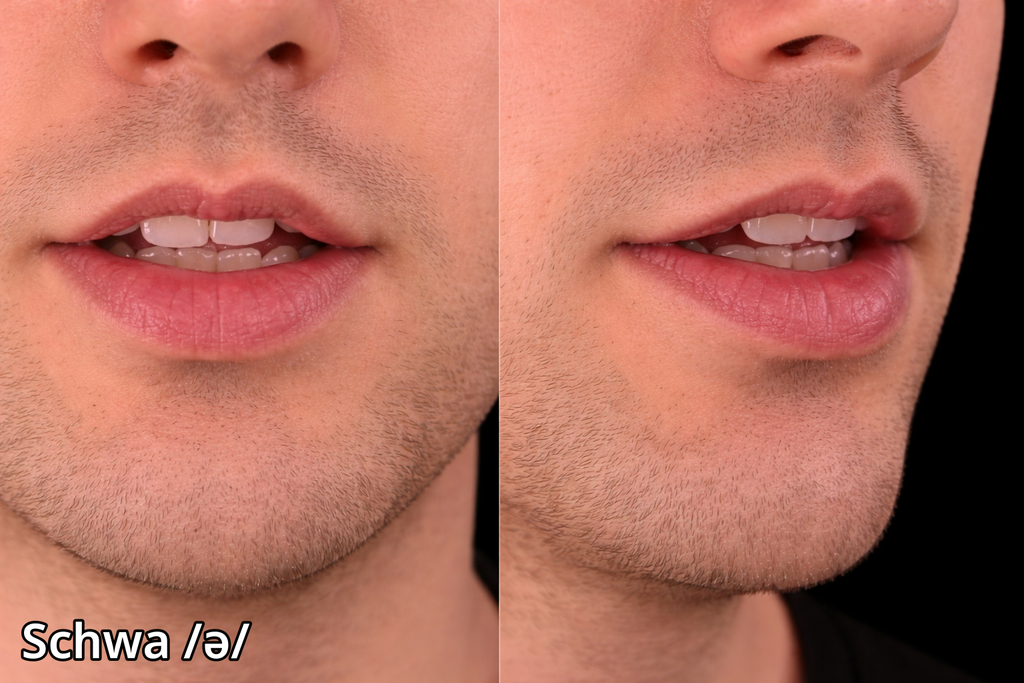
Now you try.
Record yourself saying "Bet" and "But" a few times. Listen back — your own ear is the best feedback for nailing the contrast.
Words that change with one sound.
Every pair below differs by exactly one sound: flip /ɛ/ to /ʌ/ and the meaning flips with it. Tap any word for its full breakdown.
If your ear blurs them, here's why.
Because many languages don't have these exact vowels, learners tend to substitute sounds they already know. Instead of merging them, they often make /ɛ/ too tense (closer to an 'ay') and /ʌ/ too low (closer to a broad 'ah'). The trick is that English /ɛ/ has a distinct front quality (the front of the tongue does the work) while /ʌ/ is centrally hollow (the tongue body just sits there).
Train the muscle, then the ear.
4 short drills. Do them out loud: feel the change inside your mouth before you try to hear it.
Mirror check on minimal pairs: say bed, bud, bed, bud. Watch your lips. For bed, the corners of your mouth should pull back into a tiny, subtle smile. For bud, your lips should relax completely. If your lips aren't changing, you are likely collapsing the two sounds.
The 'forward vs center' tongue cue: say a long eh and feel where it resonates, behind your top teeth, forward. Now slide to a long uh and feel the resonance pull back to the middle of your mouth. Practice the slide both directions until you feel the move.
Pair-record with a sentence frame: I said "dead", not "dud". Listen back. The two words must sound clearly different. If they don't, exaggerate the front-lift on /ɛ/ and the central-drop on /ʌ/.
Stretch /ʌ/ in casual phrases like love, cup, nut. Americans use this vowel constantly in casual speech. Getting the central, hollow quality is a fast way to sound less 'over-articulated'.
Common questions about Bet vs But.
Why do "bed" and "bud" sound the same when I say them?
Is the "fun" vowel just a stressed schwa?
How do I know if I'm making the /ɛ/ (bet) vowel correctly?

Master Bet vs But with an AI coach.
SayWaader is the AI pronunciation coach for American English. Practice 5 minutes a day. Get a 5-axes accent assessment. Sound like you live here.