Most younger Americans say collar (the part on a shirt) and caller (someone on the phone) with the same vowel — one open back /ɑ/. Linguists call this the cot-caught merger, and it covers the western US, the Pacific Northwest, much of the Midwest, and Canada. Where the distinction survives (older speakers in New York, Boston, Philadelphia), collar /ɑ/ has totally relaxed lips and a wide-open jaw, while caller /ɔ/ adds slight lip rounding and a slightly closer jaw. If you're learning American English today, you can collapse the two into one vowel and most listeners won't even notice.
How the two sounds differ.
3 small mouth adjustments. Get any one of them wrong and the sound slides into its neighbor.
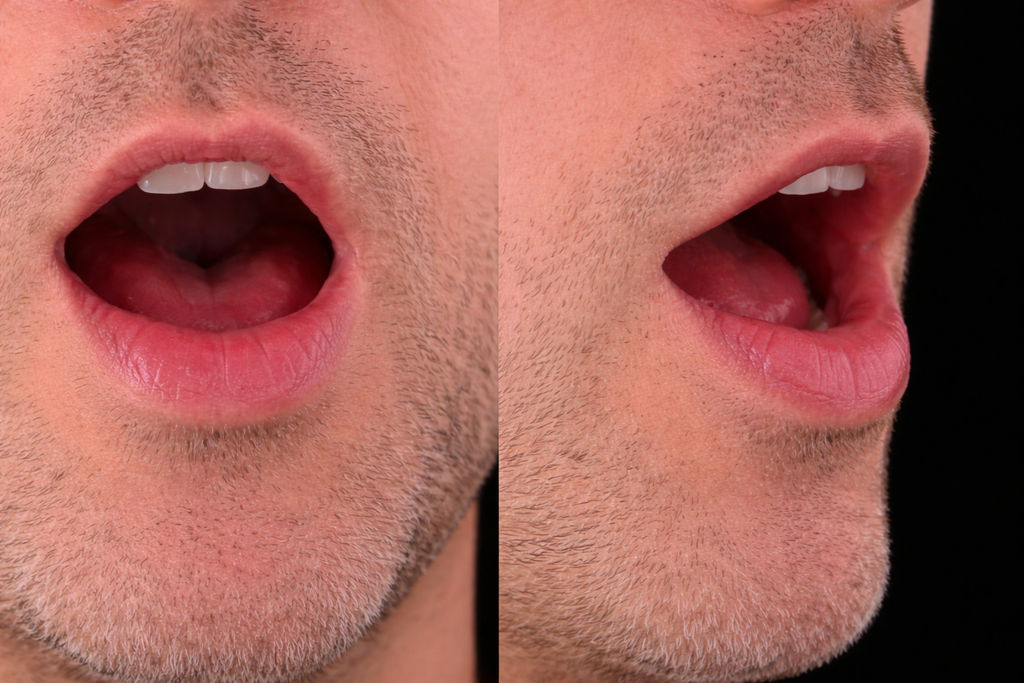
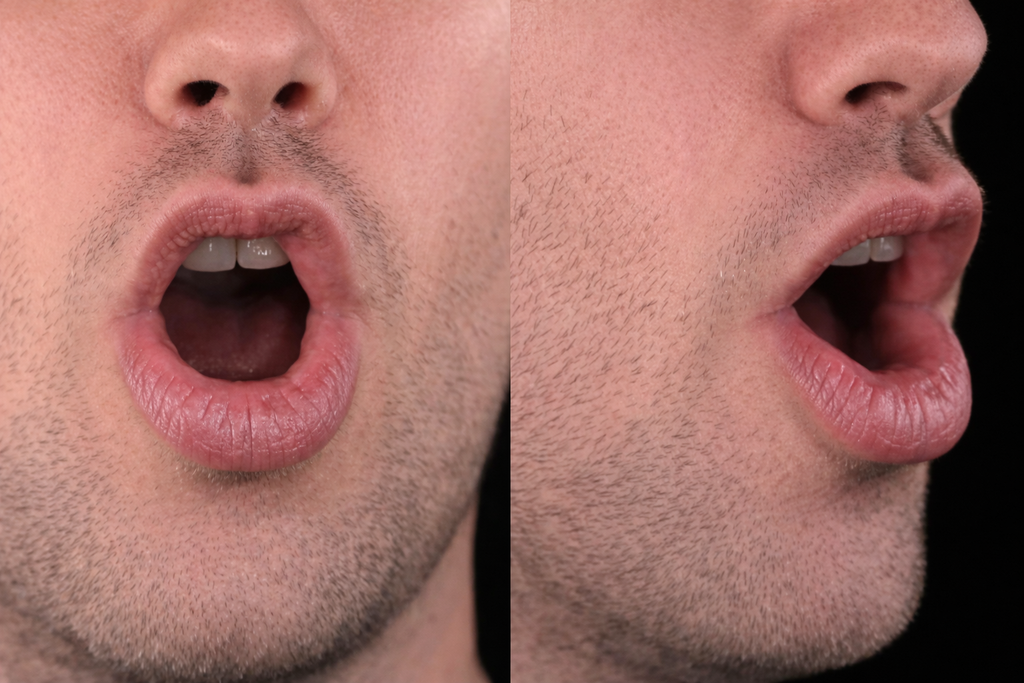
Now you try.
Record yourself saying "Collar" and "Caller" a few times. Listen back — your own ear is the best feedback for nailing the contrast.
Words that change with one sound.
Every pair below differs by exactly one sound: flip /ɑ/ to /ɔ/ and the meaning flips with it. Tap any word for its full breakdown.
If your ear blurs them, here's why.
The cot-caught merger (the linguists' name; it covers any /ɑ/-vs-/ɔ/ pair, including collar vs caller) has spread across most of the country over the last century. Roughly 60% of American speakers under 50 don't distinguish collar from caller, cot from caught, or stock from stalk. The merger is dominant in California, the Pacific Northwest, the Midwest, and Canada. It's preserved in older speakers in the Northeast (New York, Boston, Philadelphia) and the Inland North around the Great Lakes. So when an English learner can't tell collar apart from caller, the answer is often that most Americans can't either, and you can use one vowel for both in casual speech without anyone noticing.
Train the muscle, then the ear.
4 short drills. Do them out loud: feel the change inside your mouth before you try to hear it.
Test which dialect you're targeting. Ask a few American friends whether collar and caller sound the same to them. If they say yes, you can safely use one vowel for both. If they say no, you're probably learning a Northeastern or Inland North accent and the next drills are worth the effort.
For the unmerged distinction: round your lips just a touch on /ɔ/ words. Caller, caught, law, dawn, taught, feel the corners of your lips pull in slightly. Collar, cot, hot, stock, keep the lips totally neutral. The mouth-position change is small but consistent.
Drill the canonical pairs: collar/caller, cot/caught, stock/stalk, hock/hawk, Don/Dawn. Slowly, with the lip difference exaggerated. These are classic minimal pairs, the words are identical except for this single vowel adjustment.
Skip this distinction if you're aiming at a general American or western accent. The energy is better spent on flap-T, function-word reductions, and other features Americans actually use every day. Defaulting to /ɑ/ for both vowels is what most younger Americans do anyway.
Common questions about Collar vs Caller.
Are "collar" and "caller" really pronounced the same in American English?
Should I learn the unmerged pronunciation if I'm studying American English?
What about words like "more", "core", and "store", do those still need /ɔ/?

Master Collar vs Caller with an AI coach.
SayWaader is the AI pronunciation coach for American English. Practice 5 minutes a day. Get a 5-axes accent assessment. Sound like you live here.