Low /loʊ/ and law /lɔ/ overlap in lip shape but split on movement. /oʊ/ is a diphthong: tongue and lips start in one position and glide to a tighter, more forward shape (oh-oo). /ɔ/ is a monophthong: one steady position, no glide, no movement. If your /oʊ/ doesn't move, it lands halfway between low and law, and neither word lands cleanly to American ears. The fix is letting the lips and tongue actually move through the vowel instead of holding still.
How the two sounds differ.
4 small mouth adjustments. Get any one of them wrong and the sound slides into its neighbor.
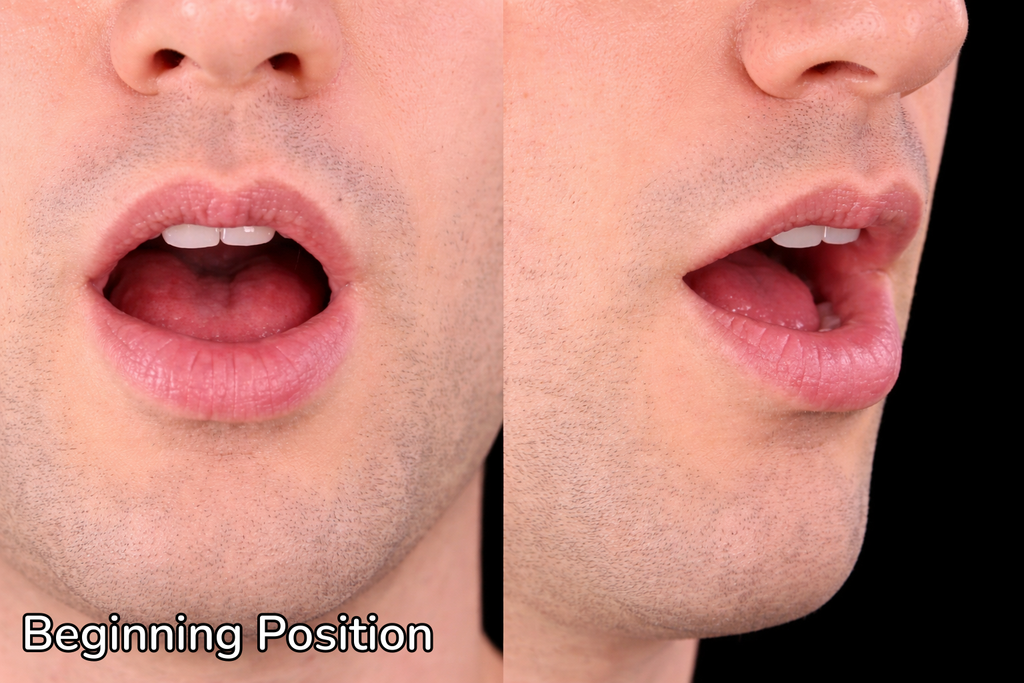
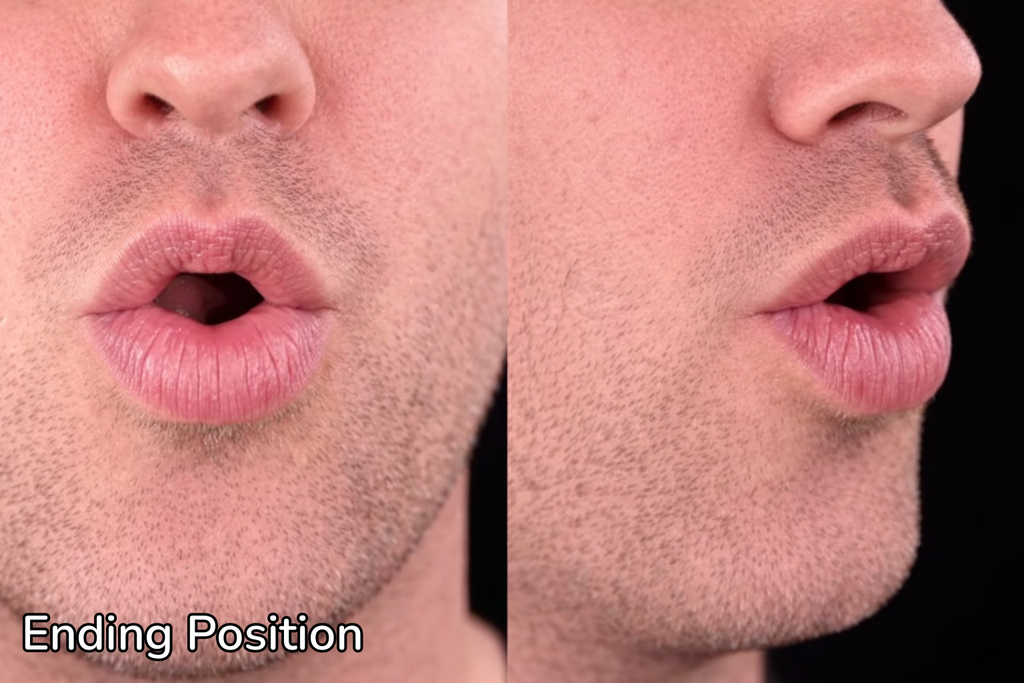
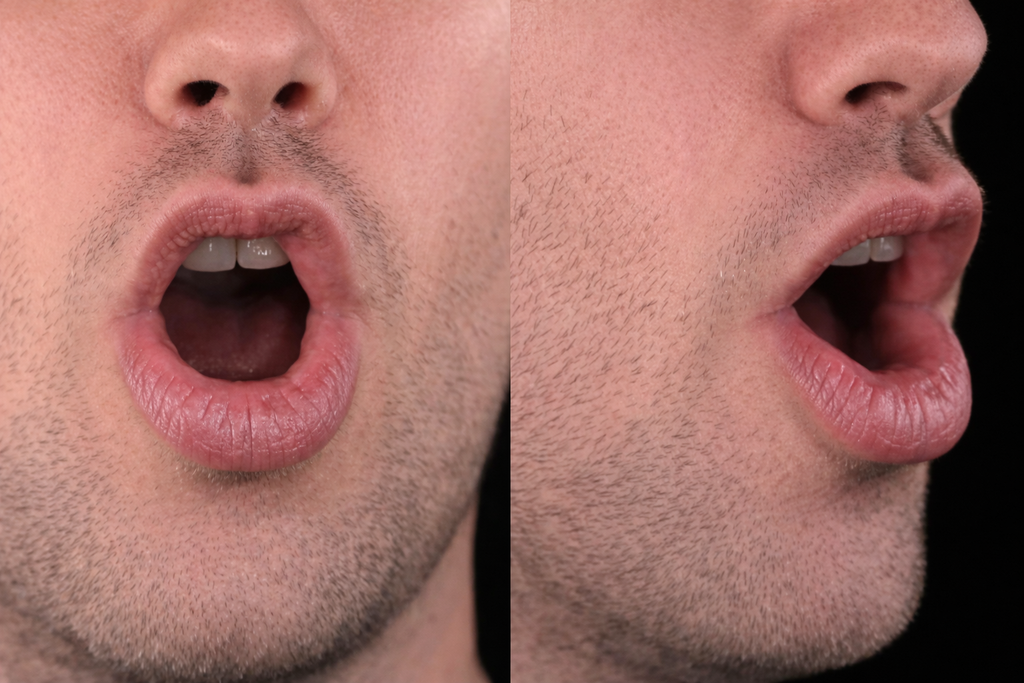
Now you try.
Record yourself saying "Low" and "Law" a few times. Listen back — your own ear is the best feedback for nailing the contrast.
Words that change with one sound.
Every pair below differs by exactly one sound: flip /oʊ/ to /ɔ/ and the meaning flips with it. Tap any word for its full breakdown.
If your ear blurs them, here's why.
Many languages, including Spanish, Italian, Greek, and Japanese, have a single /o/ that doesn't move, like the O in Spanish foto. When learners apply that habit to English /oʊ/, the diphthong glide disappears. The result: boat comes out as a flat monophthong [bot], which sounds dangerously close to bought (/bɔt/) to American ears. Many younger Americans have also merged /ɑ/ and /ɔ/ (the cot-caught merger), so learners often get confused about which back vowels actually matter. As a result, many rely on a single, L1-style 'o' vowel to cover low, law, and lot all at once. The cleanest fix is to make sure /oʊ/ ends with the lips noticeably tighter and more forward than they started. That ending glide is what tells Americans you said low, not law.
Train the muscle, then the ear.
4 short drills. Do them out loud: feel the change inside your mouth before you try to hear it.
Slow-motion drill: say low at one-tenth speed. Feel your lips tighten into a smaller, more forward circle as you finish. The glide should be obvious, almost like saying l-OH-OO. Speed up gradually but keep the movement.
Mirror check: say boat and watch your lips. They should visibly change shape, opening loosely at first, then tightening at the end. If your lips look still through the whole vowel, you're saying it as a monophthong, the way Spanish or Japanese would.
Drill the canonical pairs: low/law, so/saw, no/gnaw, boat/bought, bowl/ball. The first word in each pair should have visible lip movement, the second should be one steady held vowel. If both sound the same to you, you're flattening the diphthong.
Pay attention to phrase-final /oʊ/: I have to go, I think so, let me know. At the end of phrases the diphthong stretches noticeably, and that's where the glide is most audible in casual American speech.
Common questions about Low vs Law.
Why does the "low" vowel sound like two vowels in American English?
Is the difference between /oʊ/ and /ɔ/ a real distinction in American English?
How can I tell if my /oʊ/ has the right glide?

Master Low vs Law with an AI coach.
SayWaader is the AI pronunciation coach for American English. Practice 5 minutes a day. Get a 5-axes accent assessment. Sound like you live here.