The diphthongs in pay /eɪ/ and pie /aɪ/ both end in the exact same place, but they start with completely different jaw drops. For /aɪ/, the jaw opens wide and the tongue drops low before gliding up. For /eɪ/, the jaw only drops halfway, starting from a more relaxed mid-level position. When speakers don't open their mouths wide enough for /aɪ/, words like time can accidentally sound like tame. The fix is physical: get that wide, open start to /aɪ/ and the two vowels stop blurring.
How the two sounds differ.
3 small mouth adjustments. Get any one of them wrong and the sound slides into its neighbor.
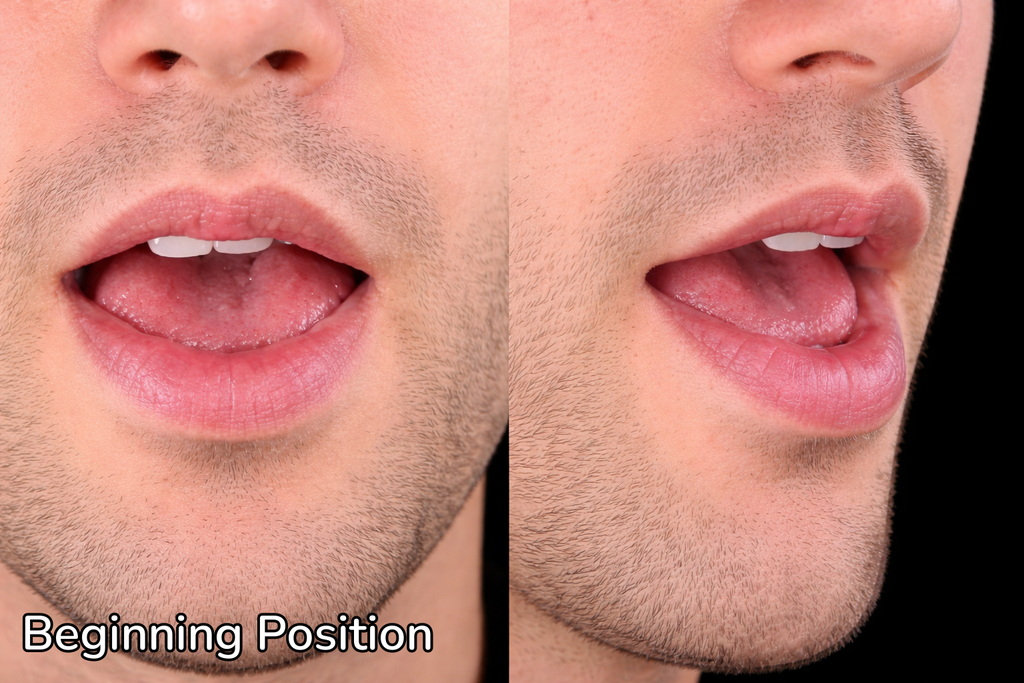
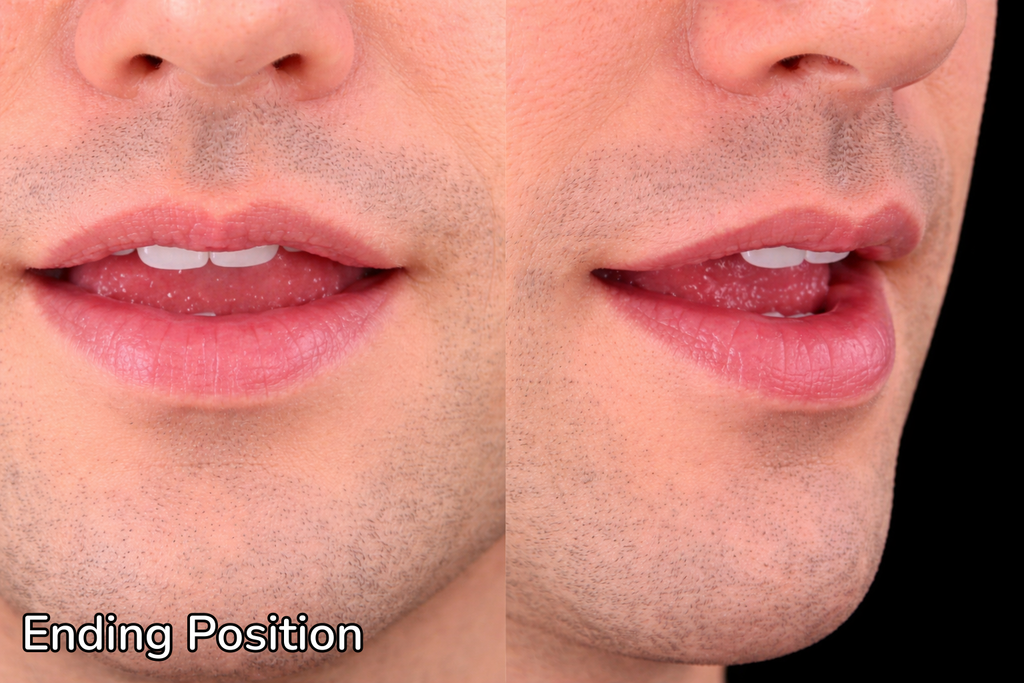
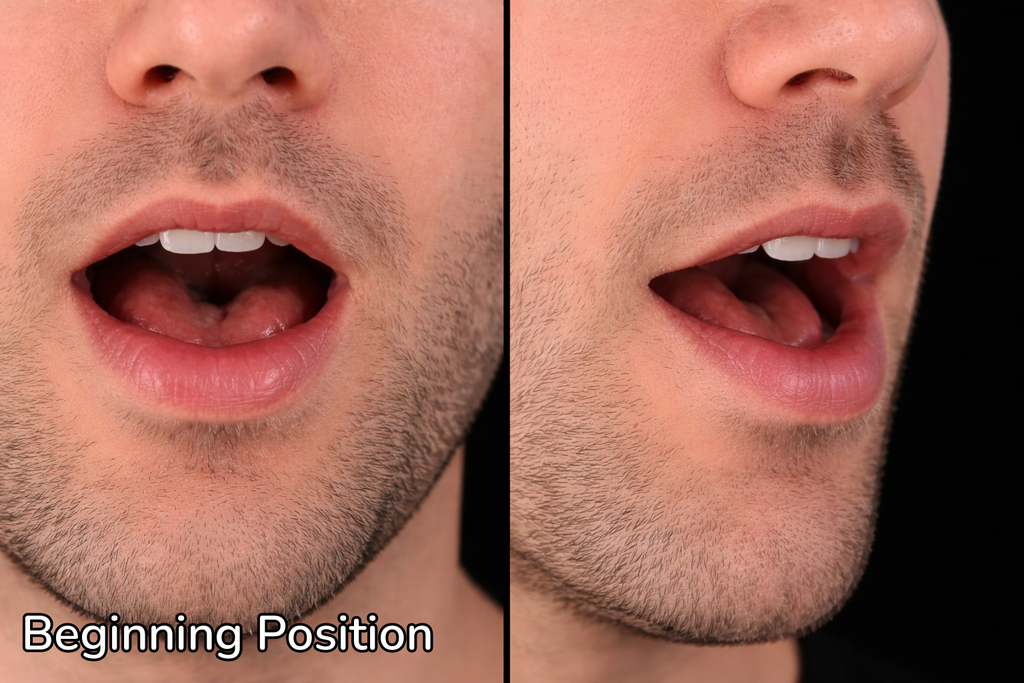
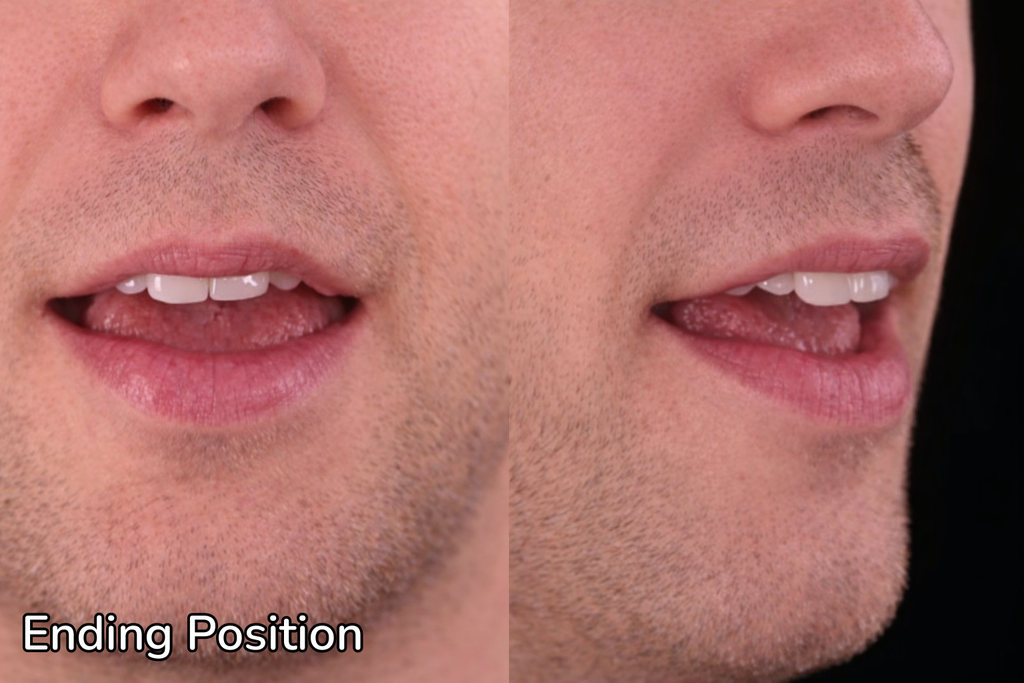
Now you try.
Record yourself saying "Pay" and "Pie" a few times. Listen back — your own ear is the best feedback for nailing the contrast.
Words that change with one sound.
Every pair below differs by exactly one sound: flip /eɪ/ to /aɪ/ and the meaning flips with it. Tap any word for its full breakdown.
If your ear blurs them, here's why.
Many learners blur these two sounds together because they don't open their jaws wide enough for the start of /aɪ/. In American English, /aɪ/ requires a real, physical jaw drop, much bigger than what's needed for /eɪ/. If you try to say time with a tight, slightly closed jaw, the vowel gets trapped and comes out sounding like tame. Spelling also causes confusion. In most languages, the letter 'a' represents a wide-open sound, while 'e' or 'i' represents tighter sounds. But in English, the letter 'a' frequently makes the tighter /eɪ/ sound (like make), while 'i' makes the wide-open /aɪ/ sound (like bike). The fix isn't trusting the spelling. Trust your jaw.
Train the muscle, then the ear.
3 short drills. Do them out loud: feel the change inside your mouth before you try to hear it.
Use the two-finger test: stack two fingers and place them between your teeth. That's how wide your jaw should drop for the start of my /aɪ/. For day /eɪ/, the jaw only drops enough for one finger.
Read minimal pairs out loud, exaggerating the jaw drop on the second word: tame / time, lane / line, fail / file, pay / pie.
Slow down the glide. Say ahhhhh-ee and smoothly connect them to feel the /aɪ/ diphthong. Then say ehhhhh-ee to feel the /eɪ/ diphthong. Notice how much further your jaw travels for /aɪ/.
Common questions about Pay vs Pie.
Why does my "time" sound like "tame"?
Do the /eɪ/ and /aɪ/ sounds end in the same mouth position?
Why is English spelling so confusing for the /eɪ/ and /aɪ/ sounds?

Master Pay vs Pie with an AI coach.
SayWaader is the AI pronunciation coach for American English. Practice 5 minutes a day. Get a 5-axes accent assessment. Sound like you live here.