Sh /ʃ/ and s /s/ split on tongue position and lip shape. For /s/, the tongue tip rests near your teeth (either pointing up behind the top teeth or down behind the bottom teeth) and a narrow groove down the middle creates a sharp hiss. The lips stay neutral. For /ʃ/, the tongue pulls back further, forming a wider, shallower groove, and the lips push forward into a slight pucker, like you're saying shhh to quiet someone. The puckered lips and reshaped tongue swap the sharp hiss for a wider, hushed sound. Spanish, Japanese, and Korean speakers often blur these because their native /s/ and /ʃ/ use less lip movement than the American versions. Watch out for English spelling too: the letter 's' often makes the /ʃ/ sound before 'u' (sugar, sure) and in suffixes like '-sion' (passion).
How the two sounds differ.
4 small mouth adjustments. Get any one of them wrong and the sound slides into its neighbor.
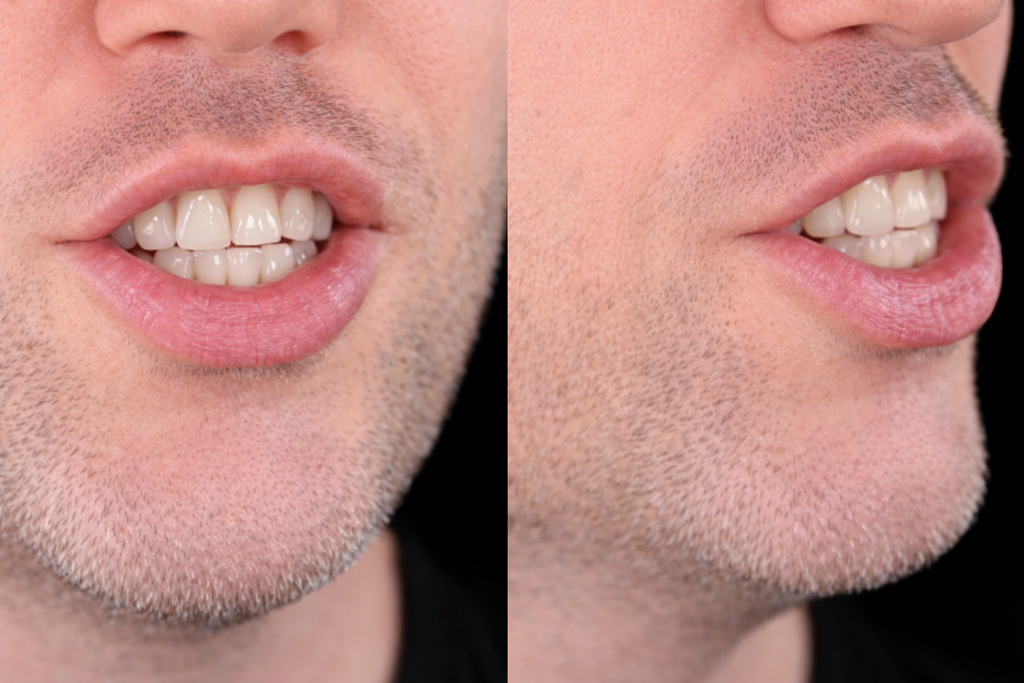
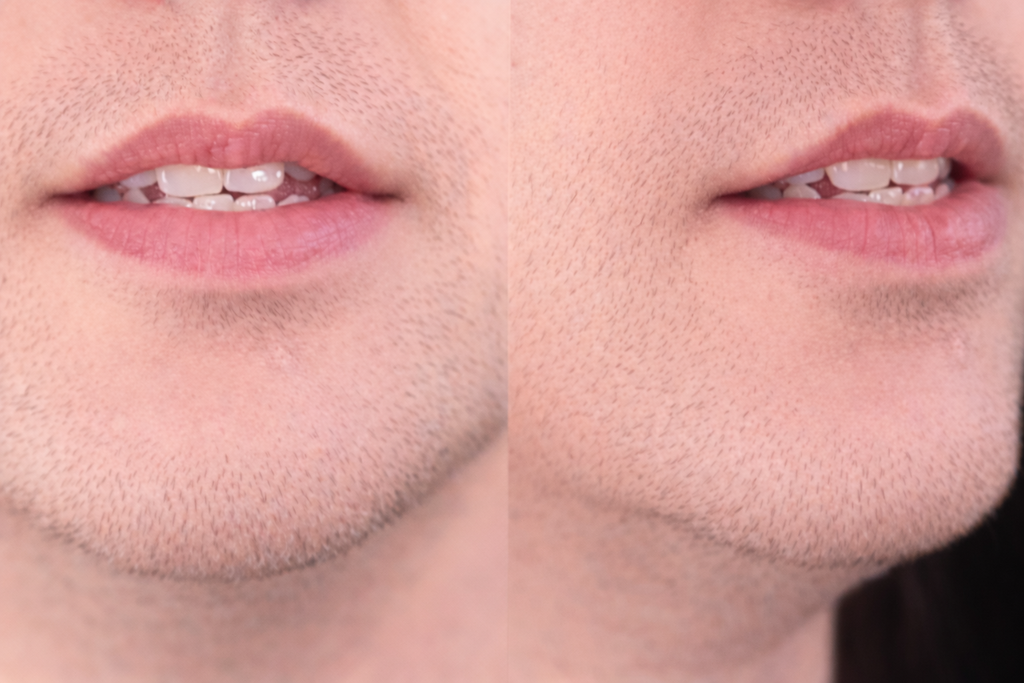
Now you try.
Record yourself saying "Sheet" and "Seat" a few times. Listen back — your own ear is the best feedback for nailing the contrast.
Words that change with one sound.
Every pair below differs by exactly one sound: flip /ʃ/ to /s/ and the meaning flips with it. Tap any word for its full breakdown.
If your ear blurs them, here's why.
Spanish, Japanese, and Korean treat /s/ and /ʃ/ with different lip and tongue habits than American English. Standard Spanish doesn't use /ʃ/ at all. Speakers usually substitute their native /tʃ/ (turning shoe into chew) or a softer /s/. Japanese /sh/ before /i/ uses a palatalized /ɕi/ that lands somewhere between American /ʃ/ and a softer hiss; Japanese speakers also tend to merge the two before that vowel specifically (see and she both heading toward /ɕi/). Korean speakers often substitute one for the other because their native /s/ has both sharp and palatalized variants depending on the following vowel. The American /ʃ/ leans hard on the lip pucker. Push the lips forward and the sound character changes right away, even before the tongue moves.
Train the muscle, then the ear.
4 short drills. Do them out loud: feel the change inside your mouth before you try to hear it.
The lip-push test: say see. Lips neutral, no rounding. Now say she. Push your lips forward like you're starting a kiss. The sound will immediately lower in pitch. Your tongue still needs to pull back slightly for a true /ʃ/, but exaggerating the lip pucker trains the most common missing piece for learners.
Hold each sound for three seconds: ssssss (sharp, narrow, high) then shhhhhh (broad, hushed, low). The tongue and lips should both move when you switch. If only the tongue moves, you're missing the lip-pucker that makes /ʃ/ distinctly American.
Read minimal-pair sentences: She sees the sea, Sue went to the shoe shop, I sip the ship. Exaggerate the lip pucker on every /ʃ/ word. Listen back. If the /s/ and /ʃ/ words sound similar, the lips aren't moving enough.
For sentence-level practice, try common phrases that hit both rapidly: she sells seashells, shoot some hoops, shake some hands. Muscle memory builds faster when you switch between the two sounds rapidly.
Common questions about Sheet vs Seat.
Why do my SH sounds sound like S to Americans?
Is /ʃ/ just a 'softer' version of /s/?
Why are words like "machine" and "chef" pronounced with an SH sound instead of a CH sound?

Master Sheet vs Seat with an AI coach.
SayWaader is the AI pronunciation coach for American English. Practice 5 minutes a day. Get a 5-axes accent assessment. Sound like you live here.