Z /z/ and S /s/ are identical in the mouth. Your tongue hovers just behind your upper teeth to push air through a narrow gap. The difference lives in your throat. /z/ is voiced, meaning your vocal cords vibrate to create a buzz, while /s/ is voiceless, using just a quiet hiss of air. Speakers of Spanish, Mandarin, and German often replace /z/ with /s/ at the ends of words, turning eyes into ice and his into hiss.
How the two sounds differ.
3 small mouth adjustments. Get any one of them wrong and the sound slides into its neighbor.
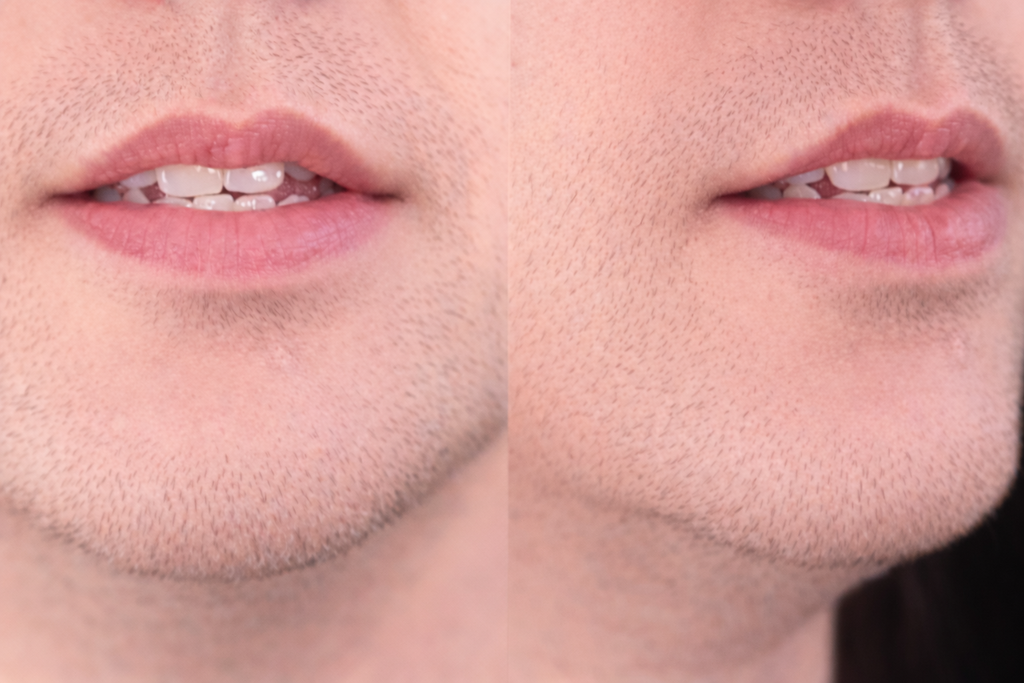
Now you try.
Record yourself saying "Zip" and "Sip" a few times. Listen back — your own ear is the best feedback for nailing the contrast.
Words that change with one sound.
Every pair below differs by exactly one sound: flip /z/ to /s/ and the meaning flips with it. Tap any word for its full breakdown.
If your ear blurs them, here's why.
The biggest trap with these two sounds is spelling, not anatomy. In American English, the letter S is pronounced as a buzzing /z/ almost as often as it's pronounced as a hissing /s/. Every time you make a word plural after a voiced sound (dogs, shoes), or use basic verbs like is, was, has, and does, you need a /z/. Many languages, like Spanish and Mandarin, either don't use the /z/ sound at all or never allow it at the ends of words. German speakers actively swap them, turning an initial S into /z/ and a final Z into /s/. When learners trust the spelling, they end up using a sharp /s/ for words like please and boys, which sounds abrupt and confusing to American ears.
Train the muscle, then the ear.
4 short drills. Do them out loud: feel the change inside your mouth before you try to hear it.
Place two fingers on your throat and say a long ssssss. You shouldn't feel anything. Now switch to zzzzzz without moving your tongue. You should instantly feel a strong vibration. Switch back and forth: sss-zzz-sss-zzz.
Use the vowel length trick: vowels are always slightly longer before a voiced consonant like /z/. Say eyes and stretch out the vowel, then finish with a gentle buzz. Now say ice with a short, clipped vowel and a sharp hiss.
Read minimal pairs out loud, focusing on the endings: eyes / ice, bus / buzz, plays / place, laws / loss. Make sure the words with /z/ have a distinct throat vibration at the end.
Practice common sight words where S makes a /z/ sound. Say out loud: is, was, has, does, these, those, because. Getting the buzz right on these everyday words is a simple way to make your connected speech sound much more fluid.
Common questions about Zip vs Sip.
Why does the letter S sometimes sound like Z?
Do I really need to pronounce the /z/ at the end of words like "is" and "was"?
How can I tell if a word ends in /s/ or /z/ just by looking at it?

Master Zip vs Sip with an AI coach.
SayWaader is the AI pronunciation coach for American English. Practice 5 minutes a day. Get a 5-axes accent assessment. Sound like you live here.