g/g/
Raise the back of your tongue to touch the soft palate. Add vocal cord vibration, then release.
Americans pronounce gloves as GLUHVZ (/glʌvz/). You'll hear it in sentences like "The batting gloves help him grip the bat better".
Record yourself saying "gloves" and play it back. The mic stays on your device — nothing's uploaded.
1 syllable, 5 sounds. Explore each sound's mouth shape and how it's made.
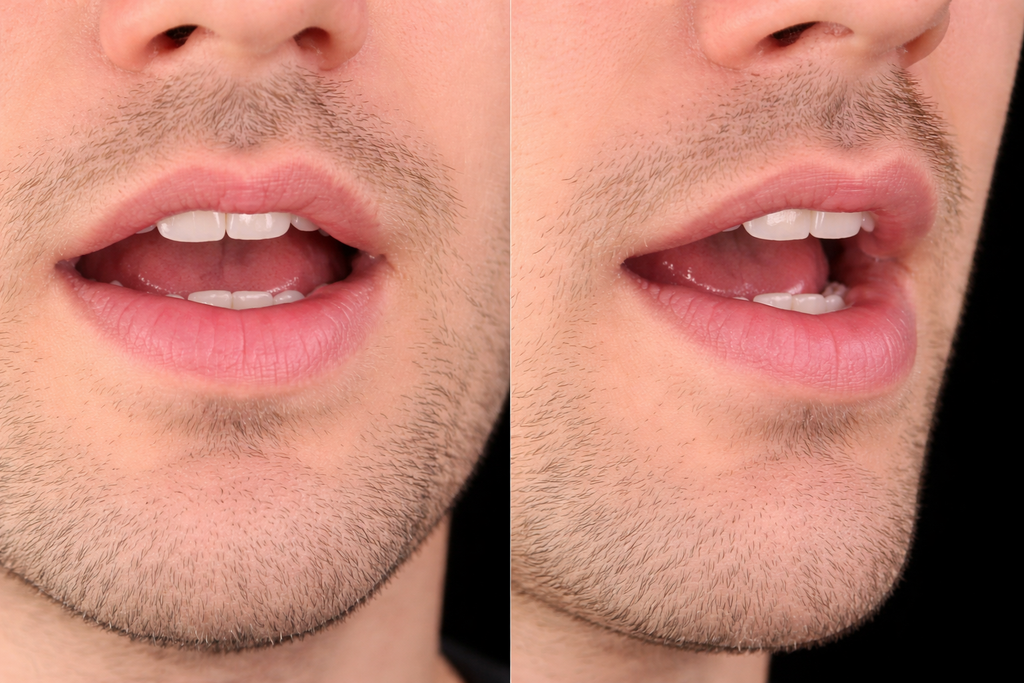
Raise the back of your tongue to touch the soft palate. Add vocal cord vibration, then release.
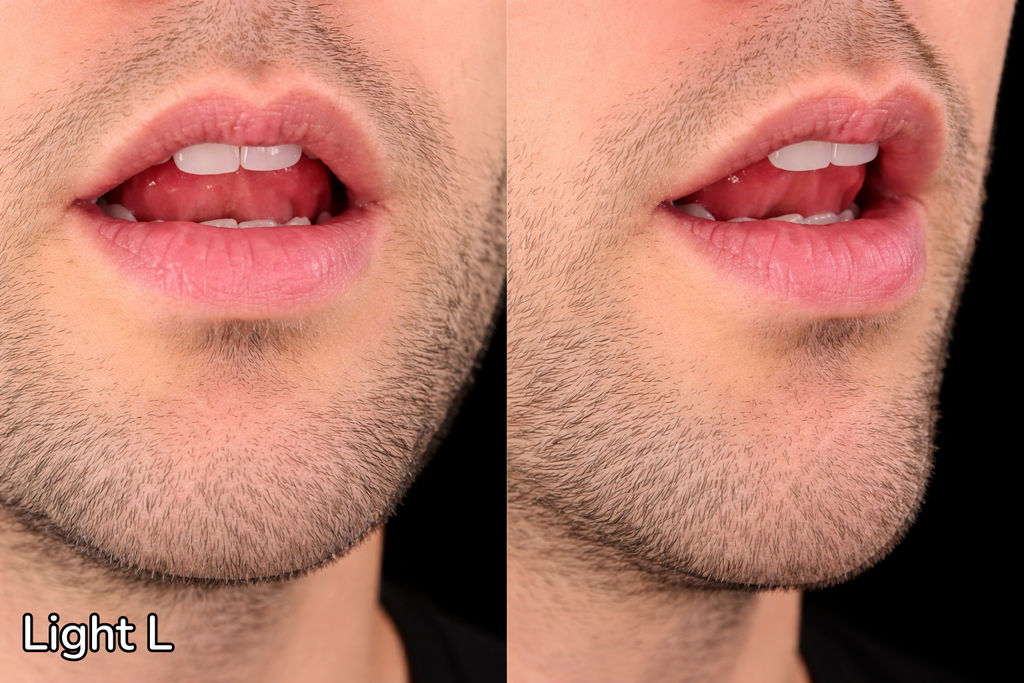
Place the tip of your tongue against the alveolar ridge just behind your top front teeth, the same contact point as /t/, /d/, and /n/. The difference is what happens to the air: for /l/, you let it flow continuously around the <em>sides</em> of the tongue (that's why /l/ is called a lateral). Turn your voice on the whole time. Lips stay relaxed, no rounding or flaring. For the Dark L variant at the end of a syllable, also pull the back of the tongue up and back toward the soft palate.
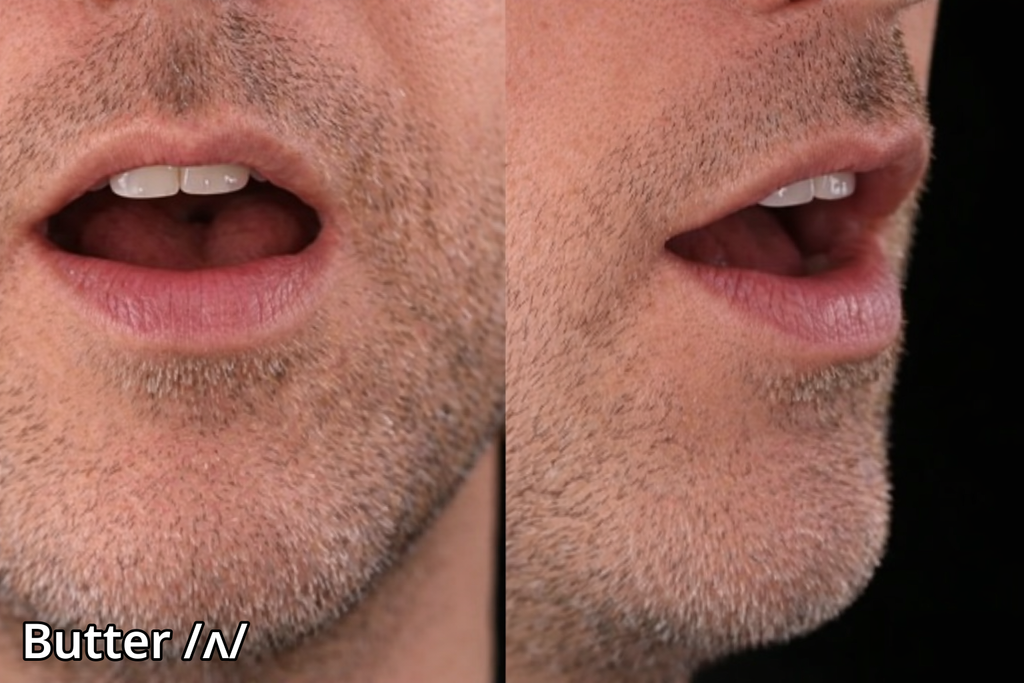
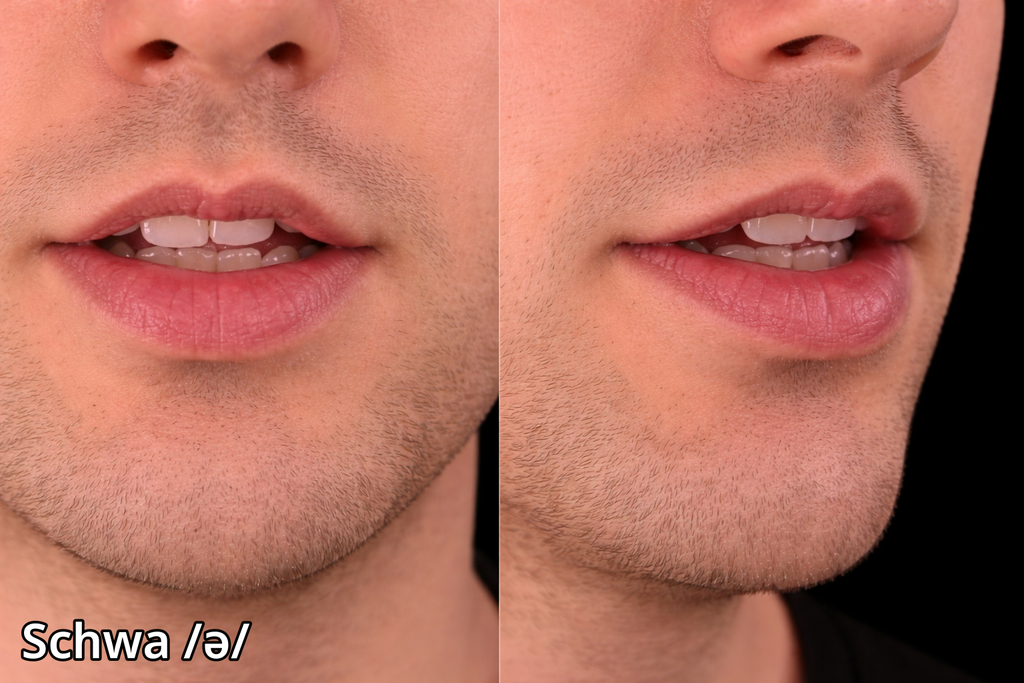
Relax your lips, jaw, and tongue completely. Drop your jaw slightly and keep the tongue neutral.
Lift your bottom lip so its inner edge (where the wet part meets the dry part) touches the very bottom of your top front teeth. Add vocal cord vibration as you blow air through.
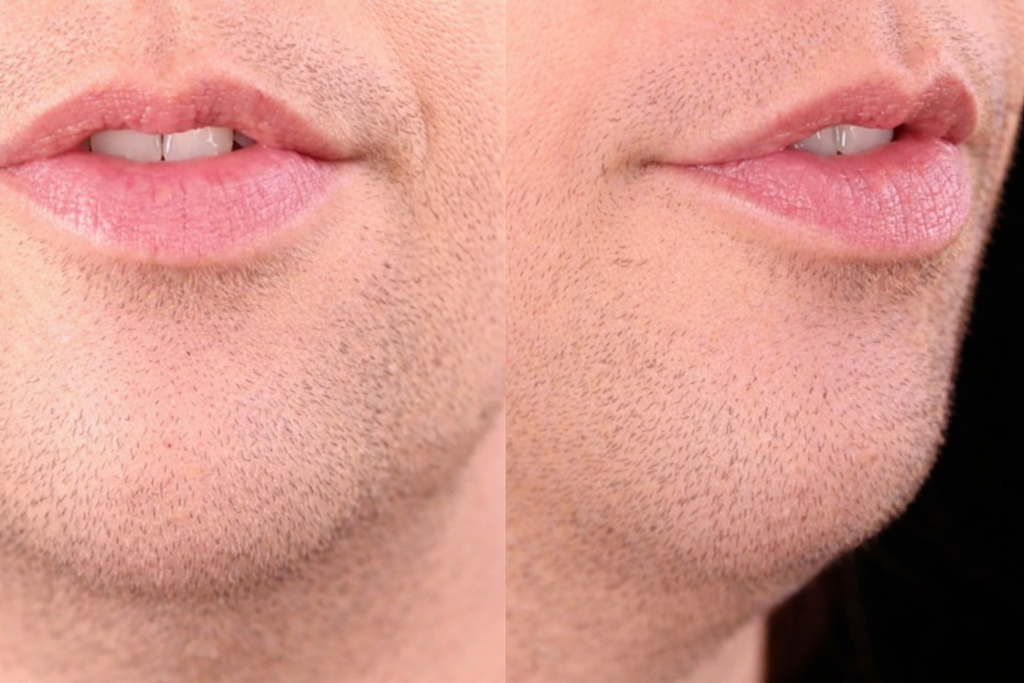
Same position as S, but add vocal cord vibration. Feel the buzz.

SayWaader is the AI pronunciation coach for American English. Practice 5 minutes a day. Get a 5-axes accent assessment. Sound like you live here.