D /d/ and T /t/ are made with exactly the same tongue position. The flat part of your tongue presses against the ridge behind your upper teeth. The difference is voicing: /d/ vibrates your vocal cords, while /t/ is voiceless (only air passes through). In American English, a starting /t/ gets a strong burst of breath (aspiration), making ten sound like t-hen. In the middle of words, Americans often pronounce both as the same quick tap, which is why metal and medal sound identical.
How the two sounds differ.
4 small mouth adjustments. Get any one of them wrong and the sound slides into its neighbor.
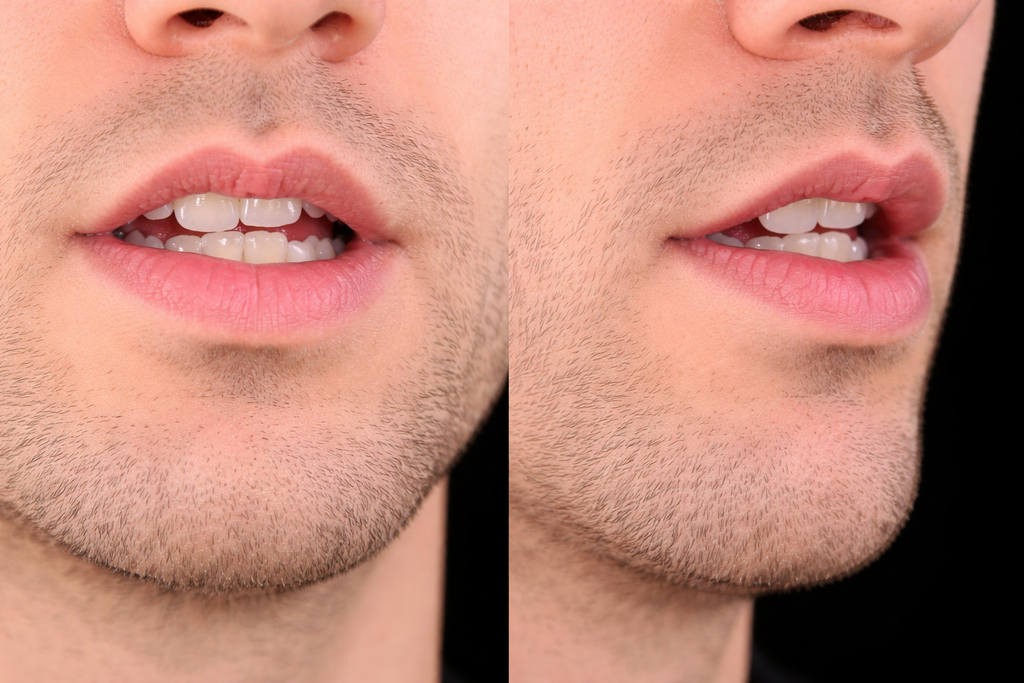
Now you try.
Record yourself saying "Dip" and "Tip" a few times. Listen back — your own ear is the best feedback for nailing the contrast.
Words that change with one sound.
Every pair below differs by exactly one sound: flip /d/ to /t/ and the meaning flips with it. Tap any word for its full breakdown.
If your ear blurs them, here's why.
American English changes how these sounds are pronounced depending on where they sit in a word, and that's where most of the confusion comes from. Languages like Spanish or French don't aspirate /t/ with a puff of air. When a non-native speaker says ten without that puff, an American actually hears den. Casual American speech also turns both /t/ and /d/ into the same sound, the flap, when they sit between two vowels. To an American ear, latter and ladder are pronounced identically. If you try to clearly articulate the /t/ in water, it sounds overly formal or British. At the end of words, Americans rarely release either sound fully and lean on vowel length to tell bad (longer vowel) from bat (shorter vowel).
Train the muscle, then the ear.
3 short drills. Do them out loud: feel the change inside your mouth before you try to hear it.
Hold a piece of paper an inch from your mouth. Say ten, top, time. The paper should visibly flutter from the puff of air. Now say den, dog, down. The paper should barely move.
Practice the American flap by saying ladder and matter with the exact same quick tongue tap. Don't build up air pressure, just let your tongue lightly bounce off the roof of your mouth.
Record yourself reading minimal pairs at the end of words: sad / sat, bed / bet. Focus on making the vowel noticeably longer before the /d/ and shorter before the /t/. Don't pop the final consonant.
Common questions about Dip vs Tip.
What is the flap T in American English?
Why do my Ts sound like Ds to Americans?
How do I pronounce T and D at the end of a word?

Master Dip vs Tip with an AI coach.
SayWaader is the AI pronunciation coach for American English. Practice 5 minutes a day. Get a 5-axes accent assessment. Sound like you live here.