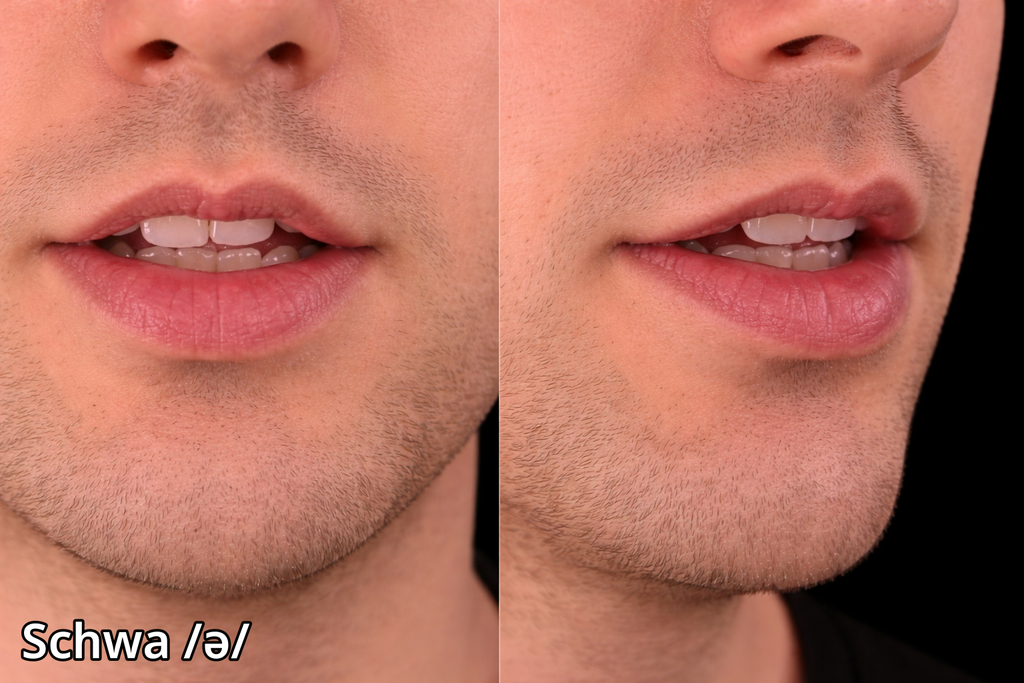
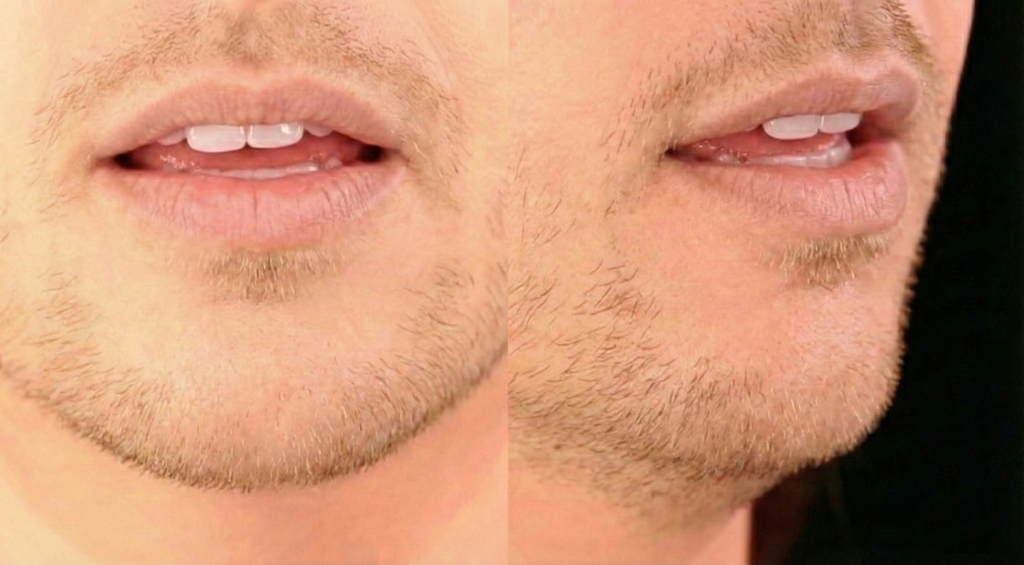
2 syllables, 5 sounds.
Tap a syllable to jump to its row, then explore each sound's mouth shape and how it's made.
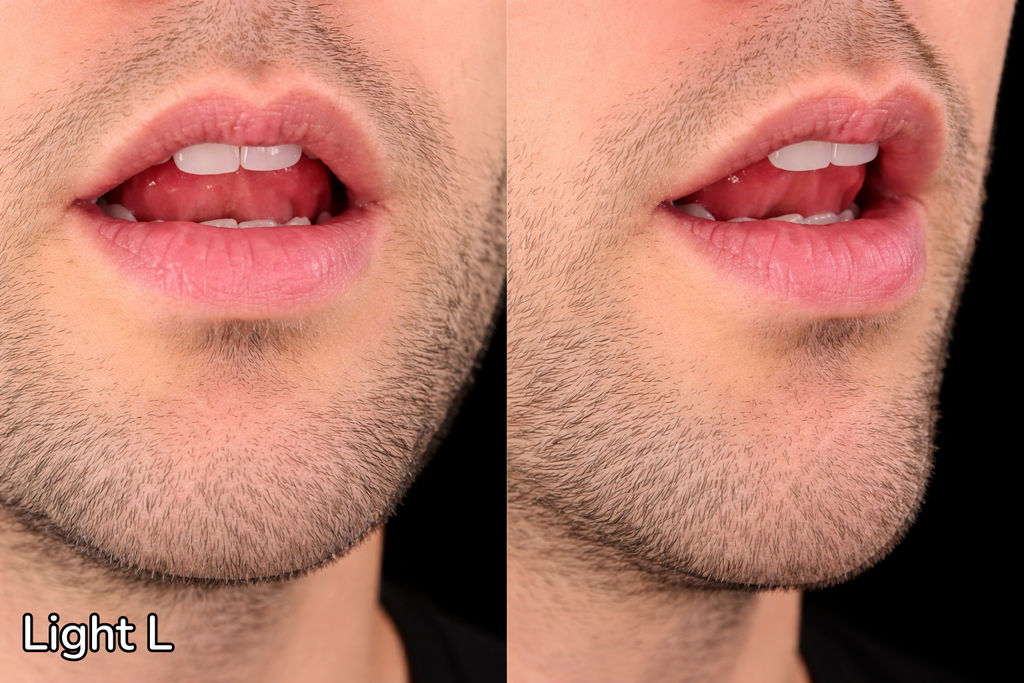
l/l/
Place the tip of your tongue against the alveolar ridge just behind your top front teeth, the same contact point as /t/, /d/, and /n/. The difference is what happens to the air: for /l/, you let it flow continuously around the <em>sides</em> of the tongue (that's why /l/ is called a lateral). Turn your voice on the whole time. Lips stay relaxed, no rounding or flaring. For the Dark L variant at the end of a syllable, also pull the back of the tongue up and back toward the soft palate.
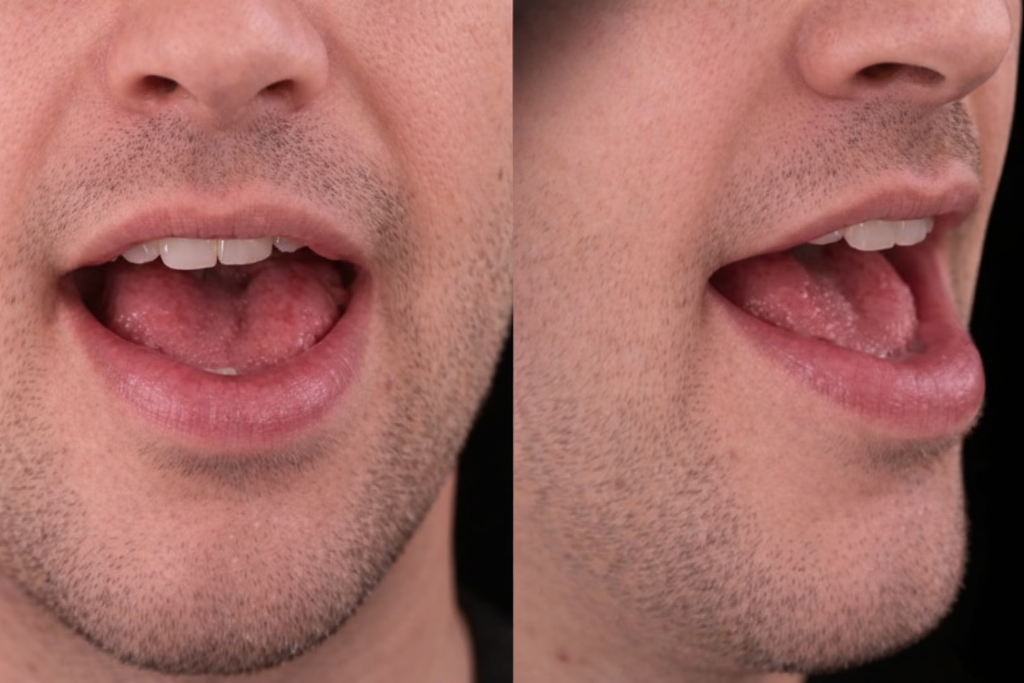
a/æ/
Drop the jaw noticeably. Keep the body of the tongue low and forward, and don't let the back of the tongue raise toward the soft palate. Pull the lip corners back slightly, almost a starting smile.
k/k/
Raise the back of your tongue to touch the soft palate (velum). Stop the air, then release.
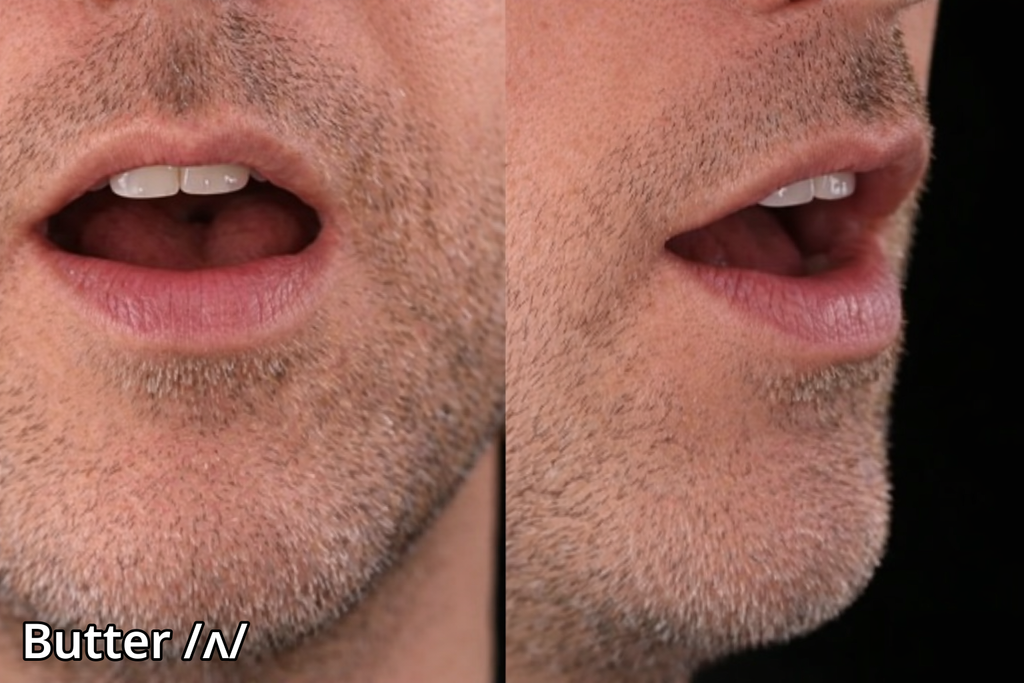
uh/ʌ/
Relax your lips, jaw, and tongue completely. Drop your jaw slightly and keep the tongue neutral.
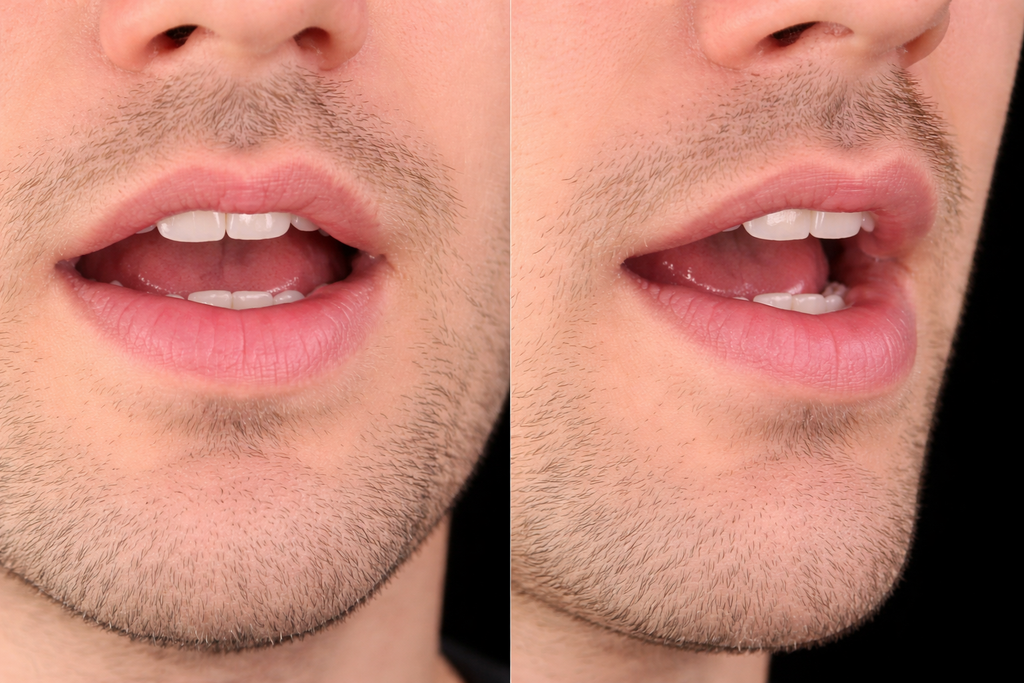
ng/ŋ/
Lift the back of your tongue to the soft palate. Lower your soft palate to let air flow through your nose.
In real conversation
Hear "lacking" in the wild.
Click any sentence to see the full breakdown — every link, every reduction, every flap-T.
"I criticize the piece for lacking emotional depth or meaning."
Common pronunciation mistakes in American English.
The textbook way isn't wrong — it's just not how anyone actually says it.
01
Stressing the wrong syllable.
Stress falls on the first syllable, not the others. Stretch LA — keep everything else short and quick.
la·KUHNG→LA·kuhng
02
Pronouncing the unstressed syllable too fully.
Don't pronounce the first syllable too fully. The unstressed syllable reduces to a schwa — the lazy "uh" sound — in casual speech.
LA·KUHNG→LA·kuhng
Questions
Questions people ask about this.
How is "lacking" stressed in American English?
Stress falls on the first syllable — say "LA" with a longer, fuller vowel and keep every other syllable short and quick. The respell "LA-kuhng" marks the stressed syllable in capitals so the rhythm is easy to read at a glance.
Why does the second syllable in "lacking" reduce to "uh"?
Unstressed syllables in American English collapse toward a schwa — a lazy, neutral "uh" sound. The full vowel is what textbooks teach, but in actual American speech every unstressed vowel reduces. The respell "LA-kuhng" shows the reduced form so you can hear the casual rhythm directly.
Is the American pronunciation of "lacking" different from British English?
American English uses different vowel shapes, a relaxed retroflex R, and connected-speech tricks like flap-T and glottal-stop T that British Received Pronunciation generally avoids. The respell "LA-kuhng" reflects the casual American form; British dictionaries typically print a citation form with crisper consonants and different vowel choices.
Stop reading about "lacking". Start saying it.
SayWaader is the AI pronunciation coach for American English. Practice 5 minutes a day. Get a 5-axes accent assessment. Sound like you live here.