Record yourself saying "leadership" and play it back. The mic stays on your device — nothing's uploaded.
Ready when you are
Tap the mic to start
Preview your accent profile
Get your accent profile and 5-axes assessment.
Sounds
75%
Clarity
68%
Stress
78%
Intonation
65%
Fluency
62%
Overall assessment
Our AI coach listens to your recording and grades 5 dimensions of pronunciation —
then tells you exactly what to fix next.
72%Noticeable accent
Common mistakes
Saying a hard "T" in the middle.
In "leadership", the "t" between vowels sounds like a quick "d" — the tongue briefly taps the ridge behind the upper teeth. /t/ or /d/ becomes a quick tap [ɾ] — sounds like a soft D. The tongue briefly taps the ridge behind the upper teeth.
Releasing the final consonant with a puff of air.
In "leadership", the "p" is not released — the articulators get into position but hold without the burst of air. Air stops but there's no release burst — the articulators hold position.
3 syllables, 7 sounds.
Tap a syllable to jump to its row, then explore each sound's mouth shape and how it's made.
l/l/
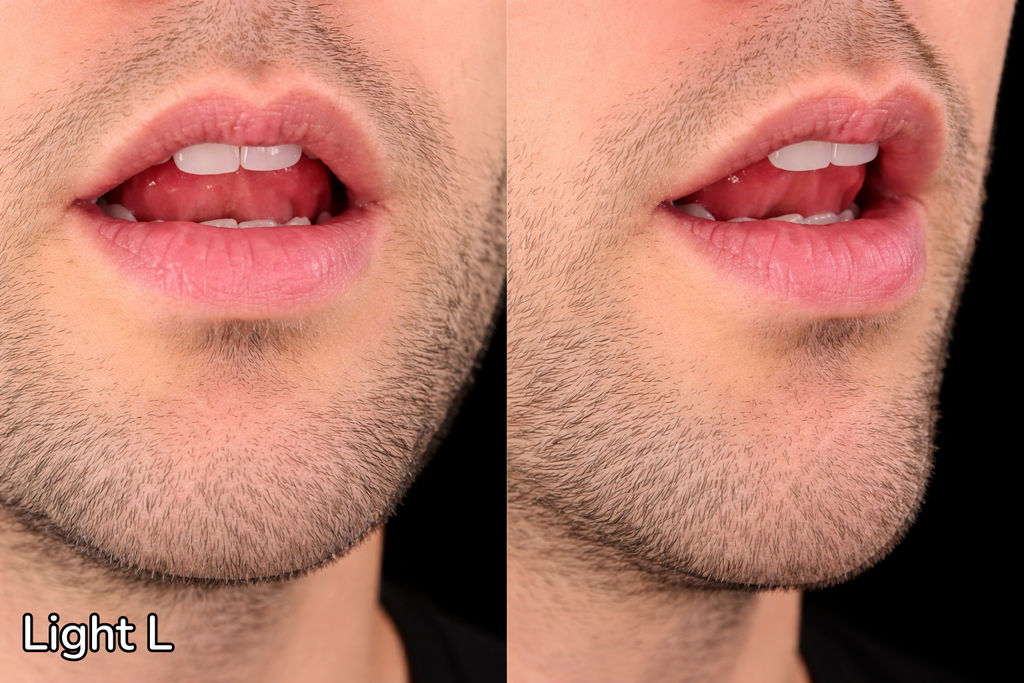
Place the tip of your tongue against the alveolar ridge just behind your top front teeth, the same contact point as /t/, /d/, and /n/. The difference is what happens to the air: for /l/, you let it flow continuously around the <em>sides</em> of the tongue (that's why /l/ is called a lateral). Turn your voice on the whole time. Lips stay relaxed, no rounding or flaring. For the Dark L variant at the end of a syllable, also pull the back of the tongue up and back toward the soft palate.
ee/i/
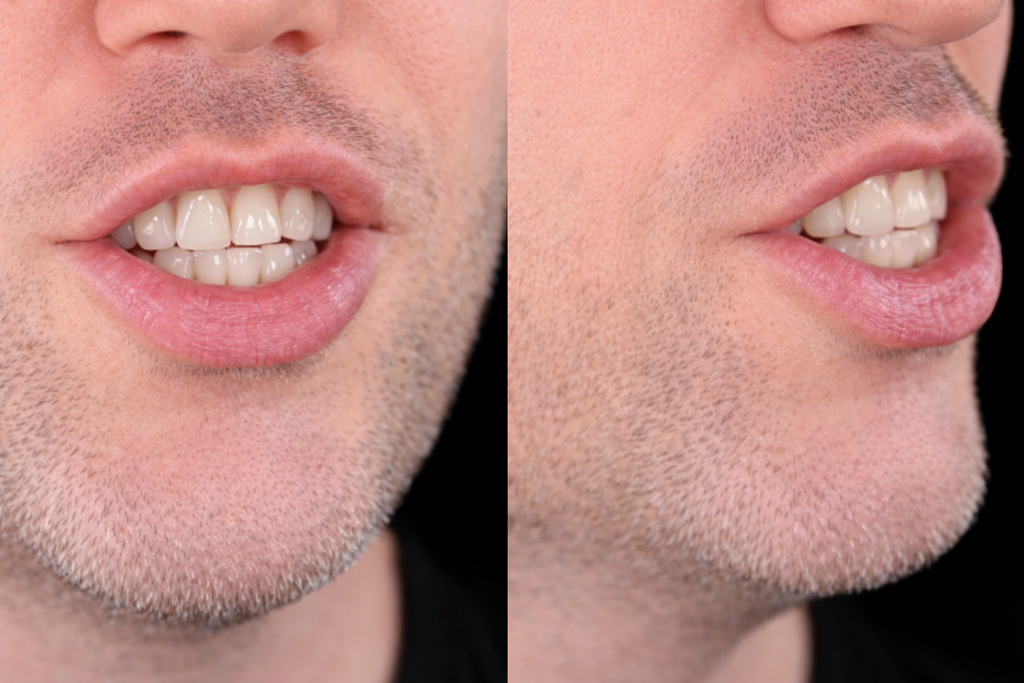
Pull the corners of your lips back slightly. Arch the middle-front of your tongue high toward the roof of the mouth.
d/d/
Flap
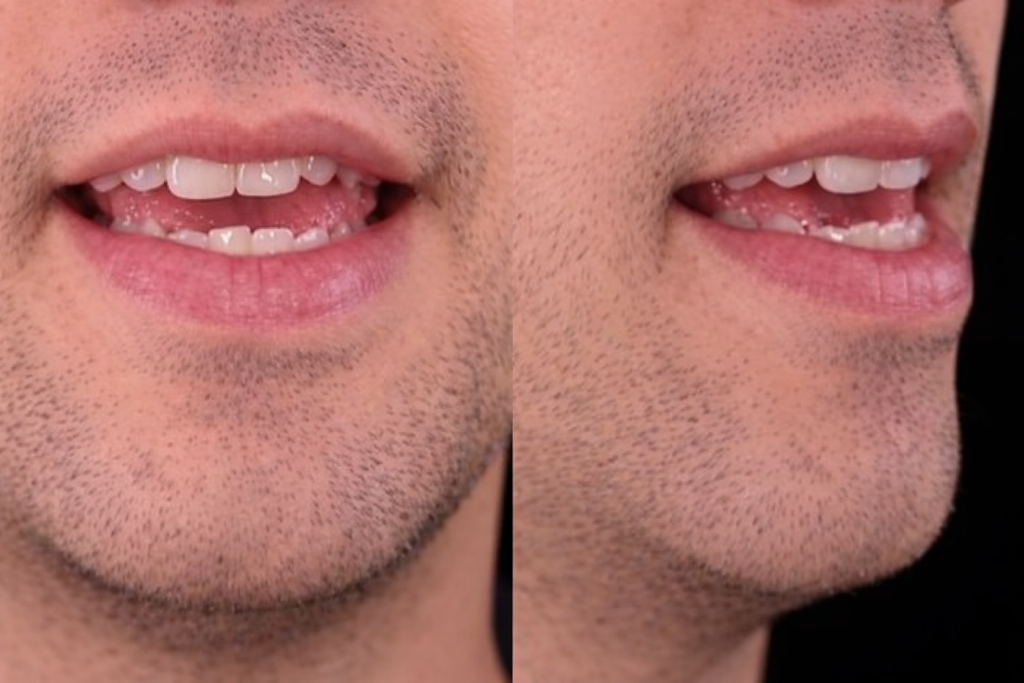
Quickly bounce the front of your tongue against the roof of your mouth. Same as Flap T — a quick tap without stopping airflow.
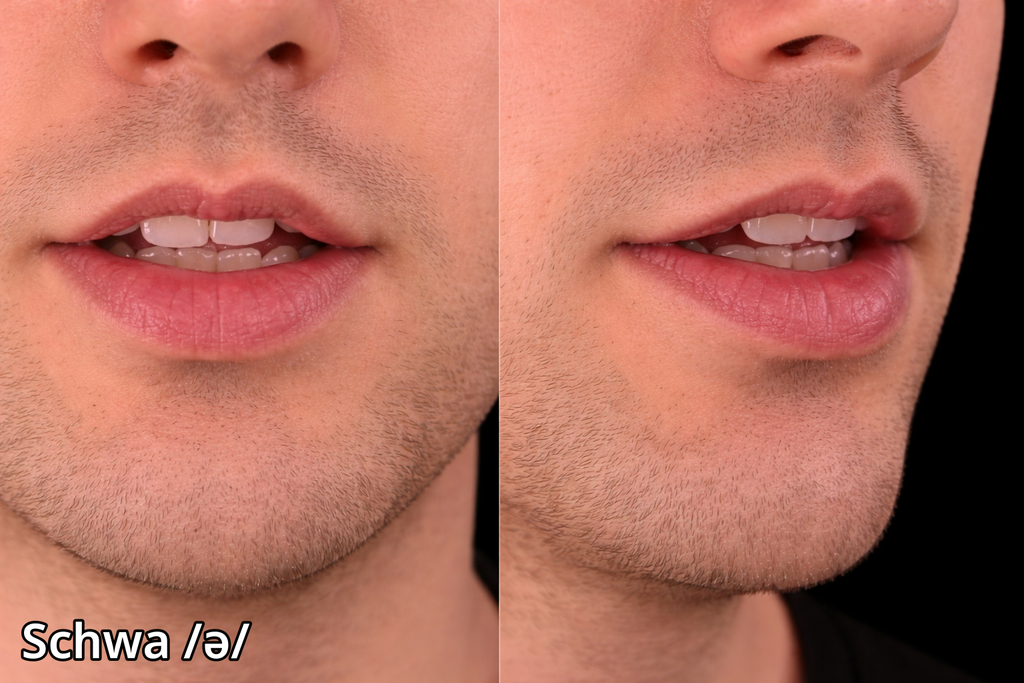
er/ər/
Relax your mouth and lift the tongue back and up. Keep the lips neutral.
sh/ʃ/
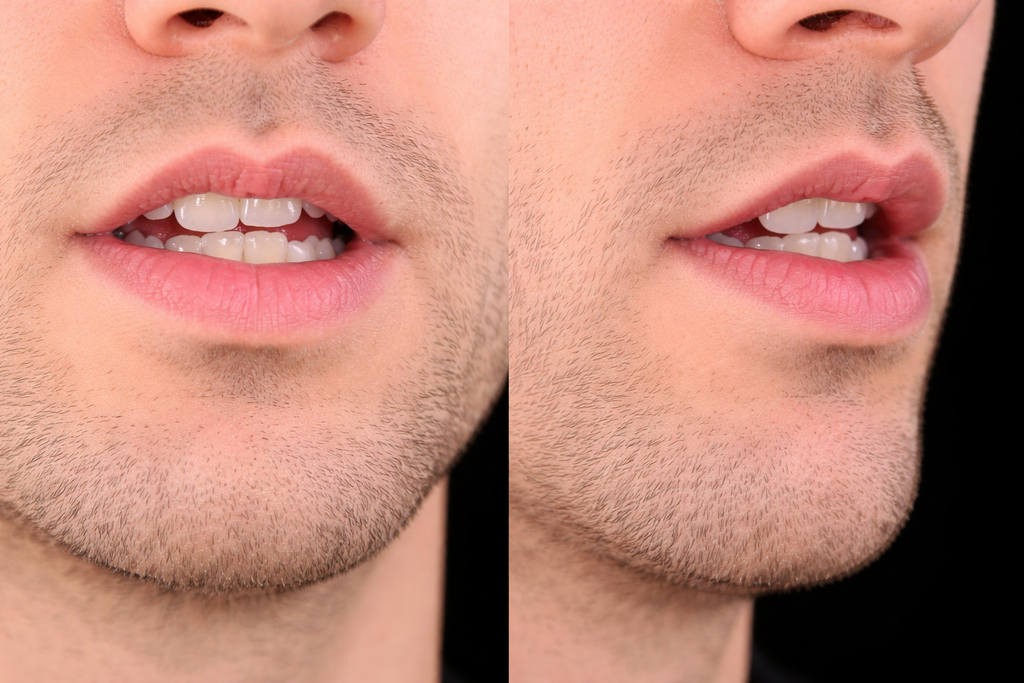
Flare your lips and lift the mid-front tongue close to the roof of your mouth. Blow air through without voicing.
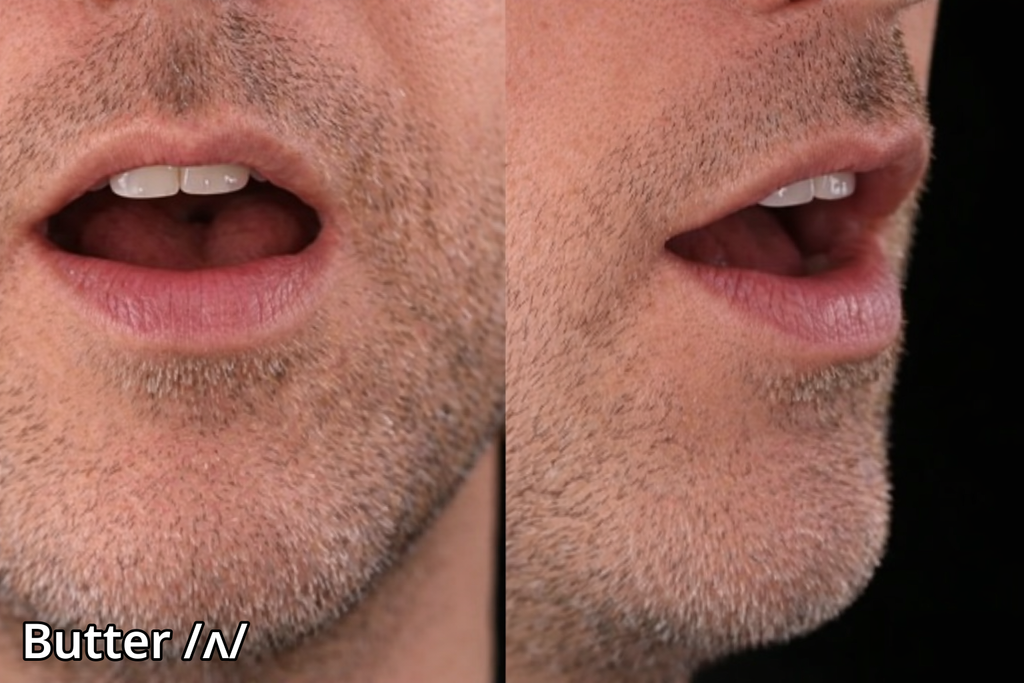
uh/ʌ/
Relax your lips, jaw, and tongue completely. Drop your jaw slightly and keep the tongue neutral.
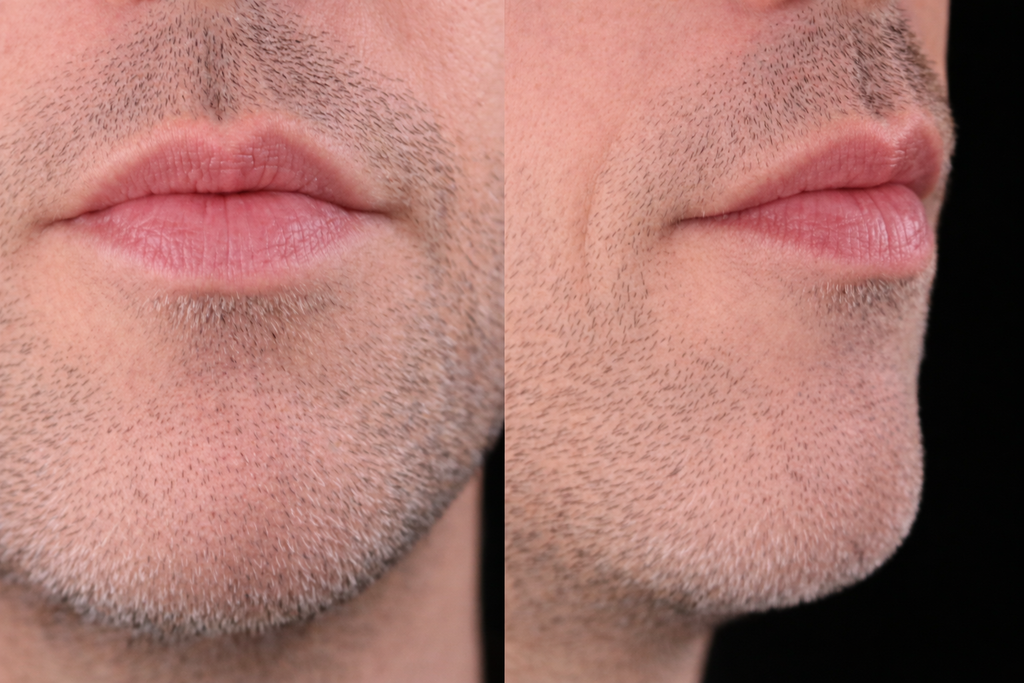
p/p/
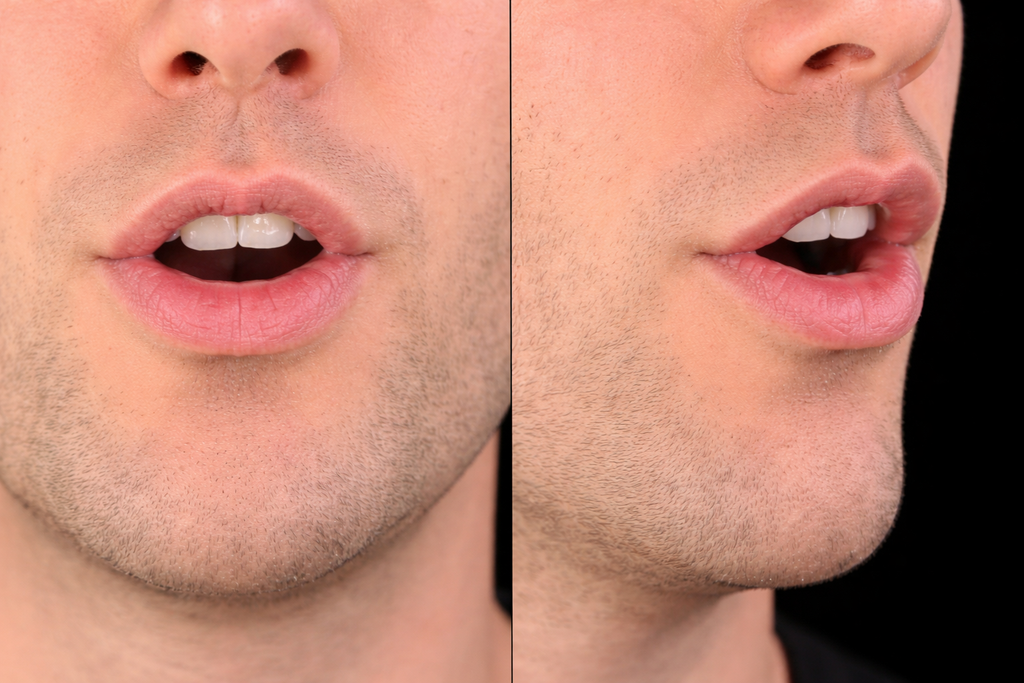
Press your lips together to stop the air, then release. No vocal cord vibration.
In real conversation
Hear "leadership" in the wild.
Click any sentence to see the full breakdown — every link, every reduction, every flap-T.
"Advocates are calling for greater diversity in leadership positions."
Common pronunciation mistakes in American English.
The textbook way isn't wrong — it's just not how anyone actually says it.
01
Saying a hard "T" in the middle.
In "leadership", the "t" between vowels sounds like a quick "d" — the tongue briefly taps the ridge behind the upper teeth. /t/ or /d/ becomes a quick tap [ɾ] — sounds like a soft D. The tongue briefly taps the ridge behind the upper teeth.
LEE-ter-shuhp→LEE·der·SHUHP
02
Releasing the final consonant with a puff of air.
In "leadership", the "p" is not released — the articulators get into position but hold without the burst of air. Air stops but there's no release burst — the articulators hold position.
leadership→LEE·der·SHUHP
03
Stressing the wrong syllable.
Stress falls on the first syllable, not the others. Stretch LEE — keep everything else short and quick.
lee·DER·SHUHP→LEE·der·SHUHP
04
Pronouncing the unstressed syllable too fully.
Don't pronounce the second syllable too fully. The unstressed syllable reduces to a schwa — the lazy "uh" sound — in casual speech.
LEE·der·SHUHP→LEE·der·SHUHP
Questions
Questions people ask about this.
How is "leadership" stressed in American English?
Stress falls on the first syllable — say "LEE" with a longer, fuller vowel and keep every other syllable short and quick. The respell "LEE-der-shuhp" marks the stressed syllable in capitals so the rhythm is easy to read at a glance.
Why doesn't the T sound like a T in "leadership"?
In American English, when /t/ sits between two vowels with the second one unstressed, it turns into a quick D-like flap. So "leadership" sounds closer to "LEE-der-shuhp" than to a crisp-T pronunciation. This is the flap-T rule, one of the most distinctive sounds of casual American speech.
Why does the third syllable in "leadership" reduce to "uh"?
Unstressed syllables in American English collapse toward a schwa — a lazy, neutral "uh" sound. The full vowel is what textbooks teach, but in actual American speech every unstressed vowel reduces. The respell "LEE-der-shuhp" shows the reduced form so you can hear the casual rhythm directly.
How do I pronounce the R in "leadership"?
Americans use a relaxed retroflex R: the tongue curls back rather than rolling, and the R is one continuous sound with the vowel before it — not two separate sounds. Don't try to pronounce a separate vowel followed by a separate R. Treat them as a single shape.
Stop reading about "leadership". Start saying it.
SayWaader is the AI pronunciation coach for American English. Practice 5 minutes a day. Get a 5-axes accent assessment. Sound like you live here.