How to pronounce exercises in American English

IPA /ˈɛksərˌsaɪzəz/ Syllables 4 · ehk·ser·sahy·zuhz Stress 1st syllable
EHK·ser·sahy·zuhz
Start here

Americans pronounce exercises as EHK-ser-sahy-zuhz (/ˈɛksərˌsaɪzəz/). Stress falls on the first syllable — keep everything else short and quick. You'll hear it in sentences like "The cool-down exercises help prevent muscle soreness" or "The barbell is used for heavy weightlifting exercises" — more examples below.

Now you try.

Record yourself saying "exercises" and play it back. The mic stays on your device — nothing's uploaded.

Ready when you are
Tap the mic to start
Preview your accent profile

Get your accent profile and 5-axes assessment.

Sounds
75%
Clarity
68%
Stress
78%
Intonation
65%
Fluency
62%

Overall assessment

Our AI coach listens to your recording and grades 5 dimensions of pronunciation — then tells you exactly what to fix next.

72% Noticeable accent

Common mistakes

Stressing the wrong syllable.

Stress falls on the first syllable, not the others. Stretch EHK — keep everything else short and quick.

Pronouncing the unstressed syllable too fully.

Don't pronounce the third syllable too fully. The unstressed syllable reduces to a schwa — the lazy "uh" sound — in casual speech.

Unlock the full report in the app
Sound by sound

Every sound in "exercises".

4 syllables, 9 sounds. Tap a syllable to jump to its row, then explore each sound's mouth shape and how it's made.

eh/ɛ/

Drop your jaw moderately. Touch the tongue tip behind the bottom front teeth and lift the mid-front part slightly toward the roof.
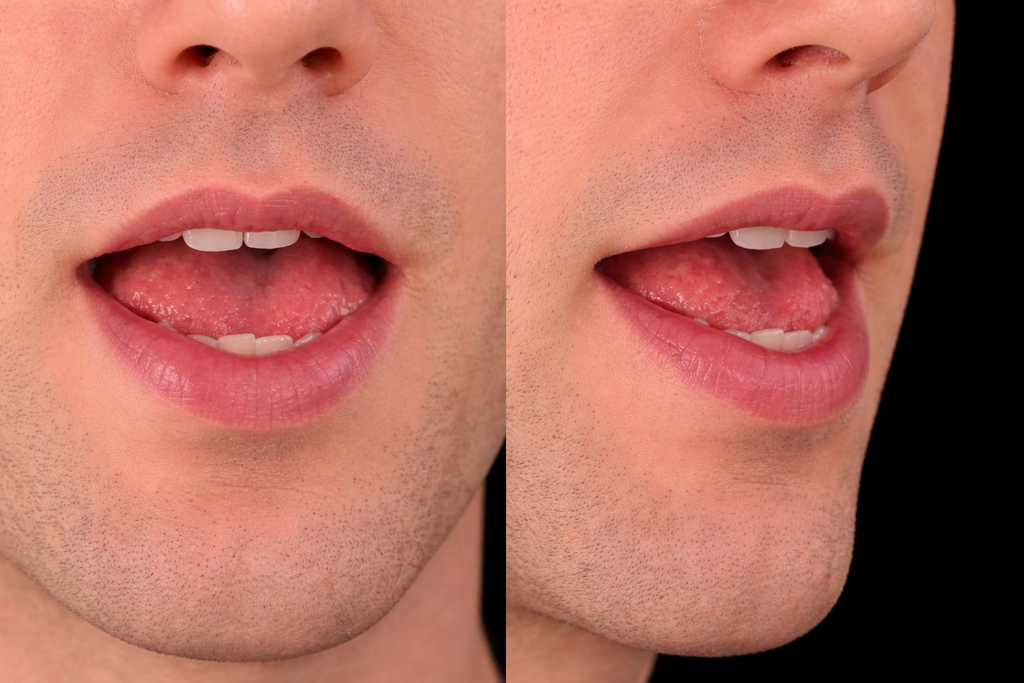
Mouth position for BED Vowel
k/k/

Raise the back of your tongue to touch the soft palate (velum). Stop the air, then release.
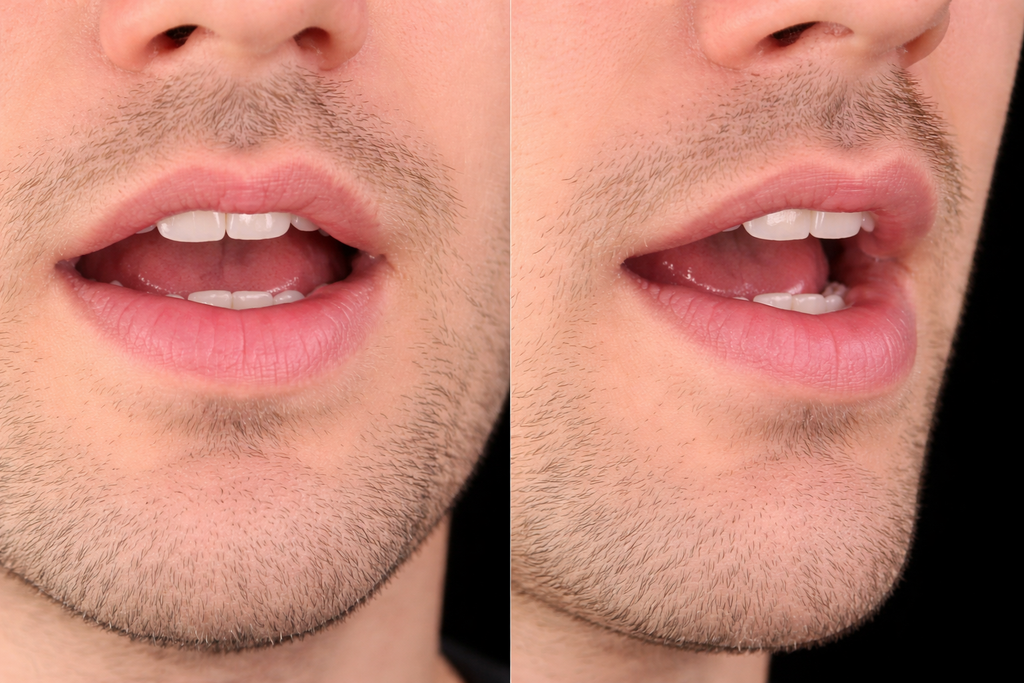
Mouth position for /k/ as in KEY
s/s/

Place your tongue tip near the roof of your mouth behind your top teeth. Push air through the narrow gap. No voicing.
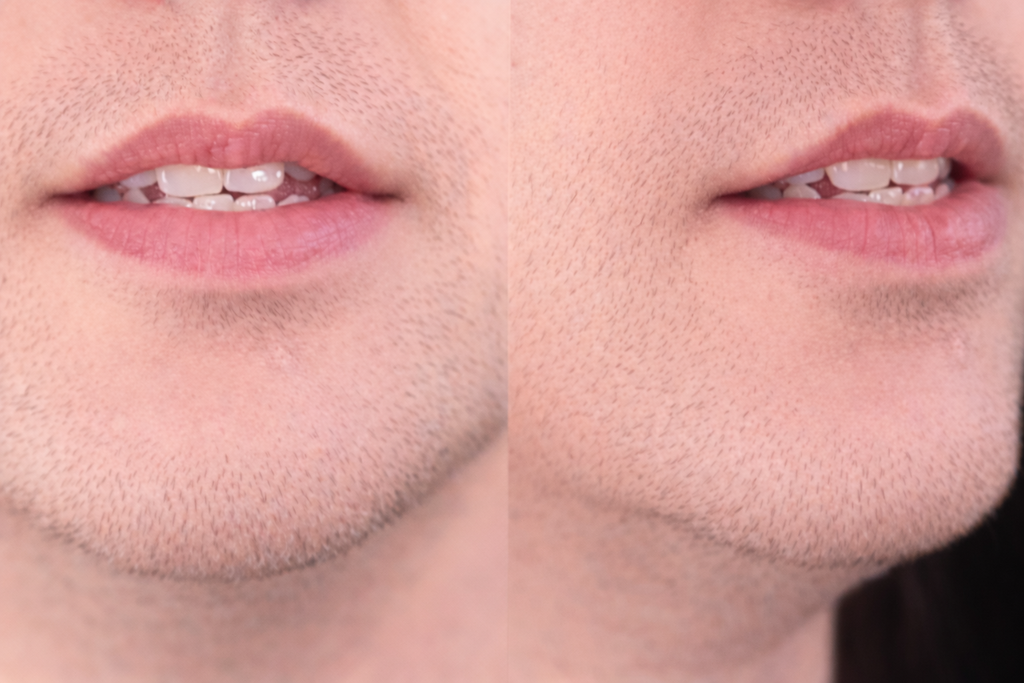
Mouth position for /s/ as in SUN
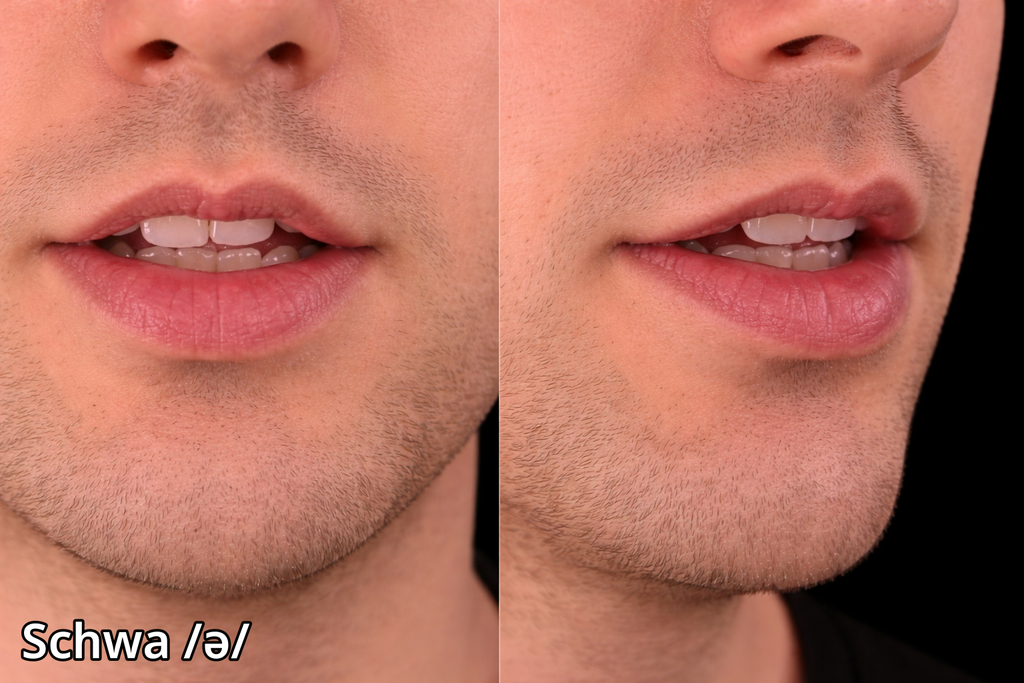
er/ər/

Relax your mouth and lift the tongue back and up. Keep the lips neutral.
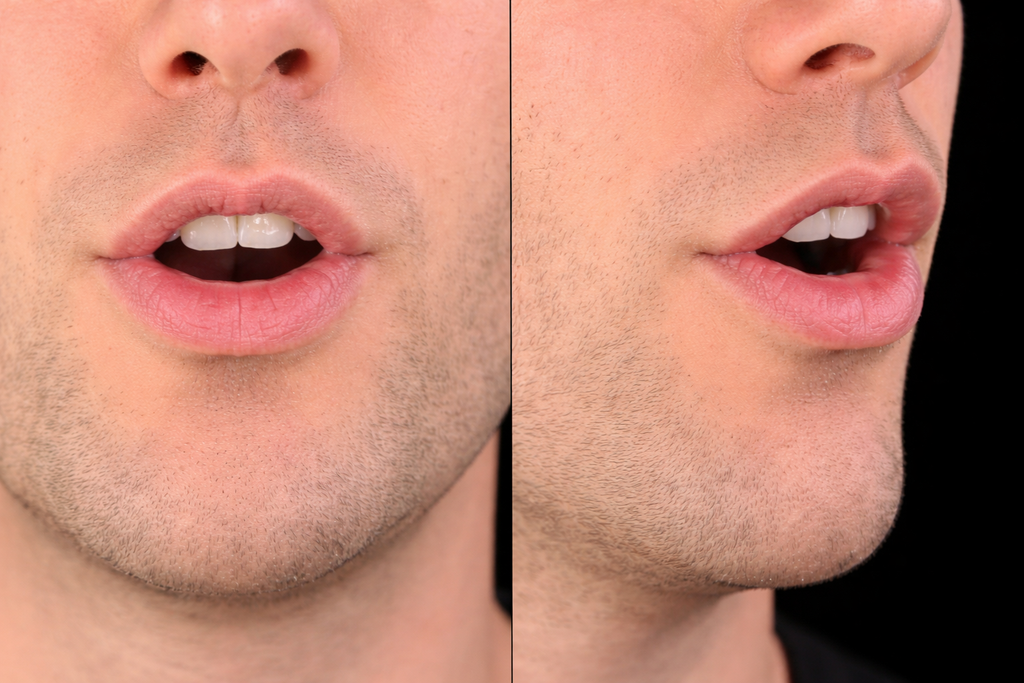
Mouth position for MOTHER R-Vowel
s/s/

Place your tongue tip near the roof of your mouth behind your top teeth. Push air through the narrow gap. No voicing.

Mouth position for /s/ as in SUN
ahy/aɪ/

Start with your jaw open wide and your tongue resting low and flat. Glide the front of your tongue up toward the roof of your mouth as your jaw closes halfway.
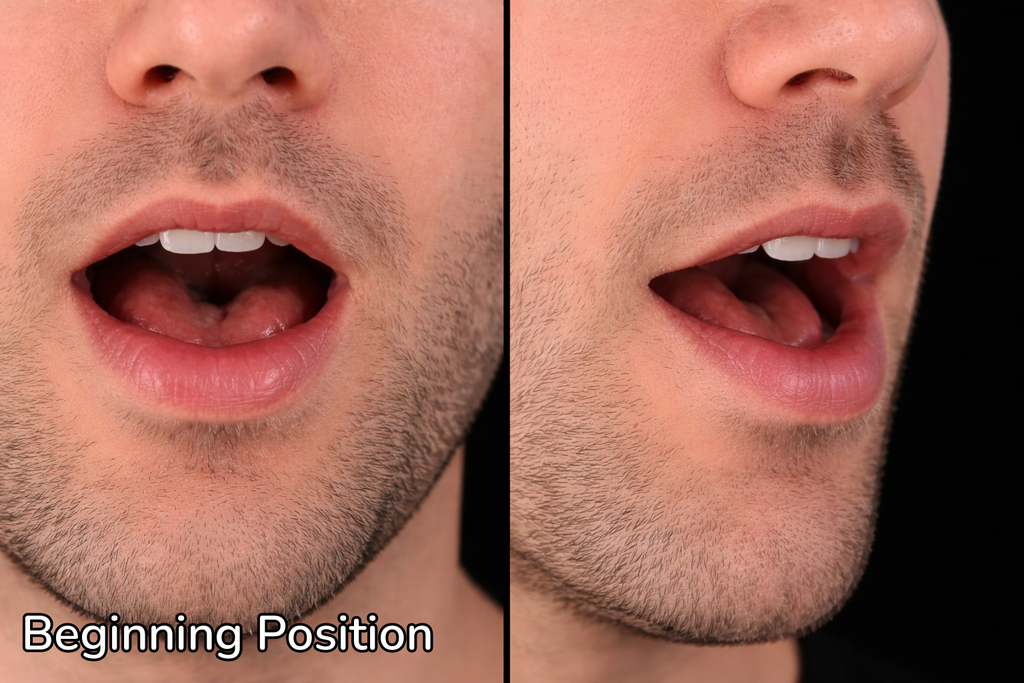
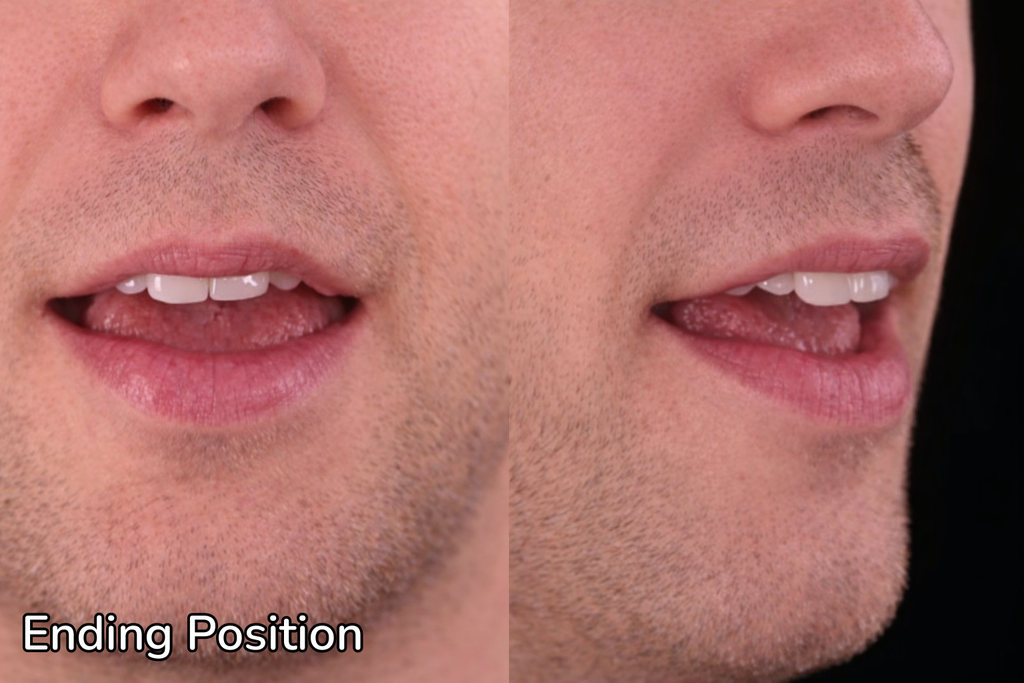
z/z/

Same position as S, but add vocal cord vibration. Feel the buzz.

Mouth position for /z/ as in ZOO
uh/ʌ/

Relax your lips, jaw, and tongue completely. Drop your jaw slightly and keep the tongue neutral.
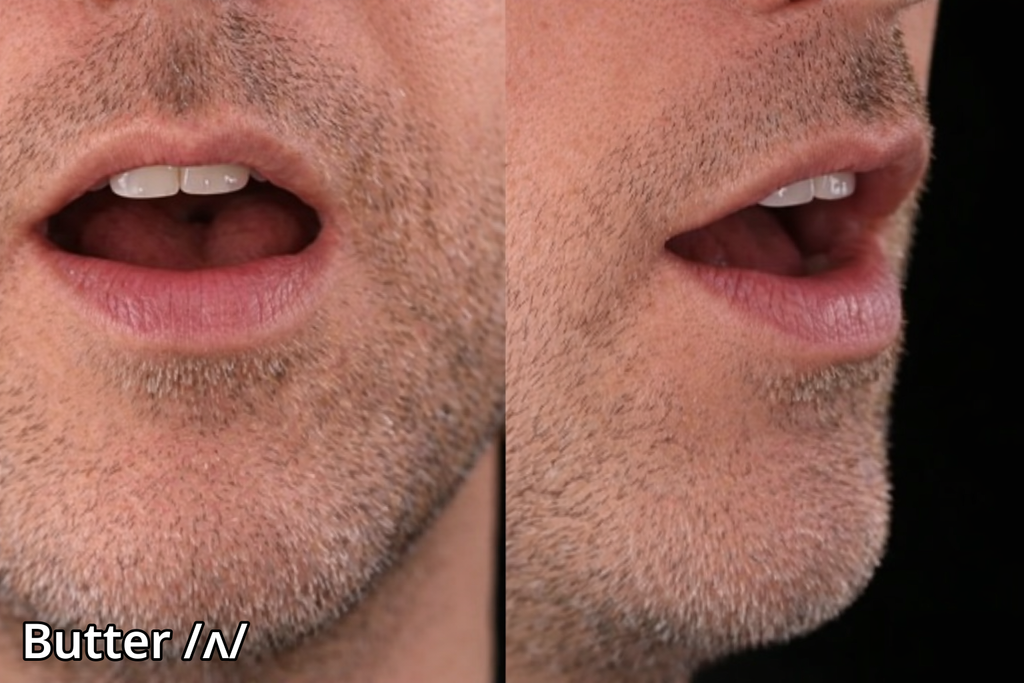
z/z/

Same position as S, but add vocal cord vibration. Feel the buzz.

Mouth position for /z/ as in ZOO
In real conversation

Hear "exercises" in the wild.

Click any sentence to see the full breakdown — every link, every reduction, every flap-T.

"She does some light stretching exercises every morning."
shee duhz suhm LAHYT STREH·chuhng EHK·ser·sahy·zuhz EHV·ree MOR·nuhng
"She practices breathing exercises every evening to reduce stress and anxiety."
shee PRAK·tuh·suhz BREE·dhuhng EHK·ser·sahy·zuhz EHV·ree EEV·nuhng tuh ruh·DOOS STREHS uhnd ang·ZAHY·uh·tee
"The barbell is used for heavy weightlifting exercises."
dhuh BAR·behl ihz YOOZD fer HEH·vee WAYT·lihf·tuhng EHK·ser·sahy·zuhz
"The cool-down exercises help prevent muscle soreness."
dhuh KOOL DOWN EHK·ser·sahy·zuhz HEHLP pruh·VEHNT MUH·suhl SOR·nuhs
"The training mat provides a soft surface for floor exercises."
dhuh TRAY·nuhng MAT pruh·VAHYDZ uh sahft SUR·fuhs fer flor EHK·ser·sahy·zuhz
Find another

Looking for a different word or sentence?

Search the entire library
/
Press / anywhere to focus the search box.
Watch out

Common pronunciation mistakes in American English.

The textbook way isn't wrong — it's just not how anyone actually says it.

01

Stressing the wrong syllable.

Stress falls on the first syllable, not the others. Stretch EHK — keep everything else short and quick.

ehk·SER·SAHY·ZUHZEHK·ser·SAHY·zuhz
02

Pronouncing the unstressed syllable too fully.

Don't pronounce the third syllable too fully. The unstressed syllable reduces to a schwa — the lazy "uh" sound — in casual speech.

EHK·ser·sahy·ZUHZEHK·ser·SAHY·zuhz
03

Pronouncing the "R" too clearly.

Americans use a relaxed retroflex R — the tongue curls back rather than rolling. The R is one continuous sound with the vowel before it, not two separate sounds.

… (no R)r (curl the tongue)
Questions

Questions people ask about this.

How is "exercises" stressed in American English?
Stress falls on the first syllable — say "EHK" with a longer, fuller vowel and keep every other syllable short and quick. The respell "EHK-ser-sahy-zuhz" marks the stressed syllable in capitals so the rhythm is easy to read at a glance.
Why does the fourth syllable in "exercises" reduce to "uh"?
Unstressed syllables in American English collapse toward a schwa — a lazy, neutral "uh" sound. The full vowel is what textbooks teach, but in actual American speech every unstressed vowel reduces. The respell "EHK-ser-sahy-zuhz" shows the reduced form so you can hear the casual rhythm directly.
How do I pronounce the R in "exercises"?
Americans use a relaxed retroflex R: the tongue curls back rather than rolling, and the R is one continuous sound with the vowel before it — not two separate sounds. Don't try to pronounce a separate vowel followed by a separate R. Treat them as a single shape.
Is the American pronunciation of "exercises" different from British English?
American English uses different vowel shapes, a relaxed retroflex R, and connected-speech tricks like flap-T and glottal-stop T that British Received Pronunciation generally avoids. The respell "EHK-ser-sahy-zuhz" reflects the casual American form; British dictionaries typically print a citation form with crisper consonants and different vowel choices.

Stop reading about "exercises". Start saying it.

SayWaader is the AI pronunciation coach for American English. Practice 5 minutes a day. Get a 5-axes accent assessment. Sound like you live here.