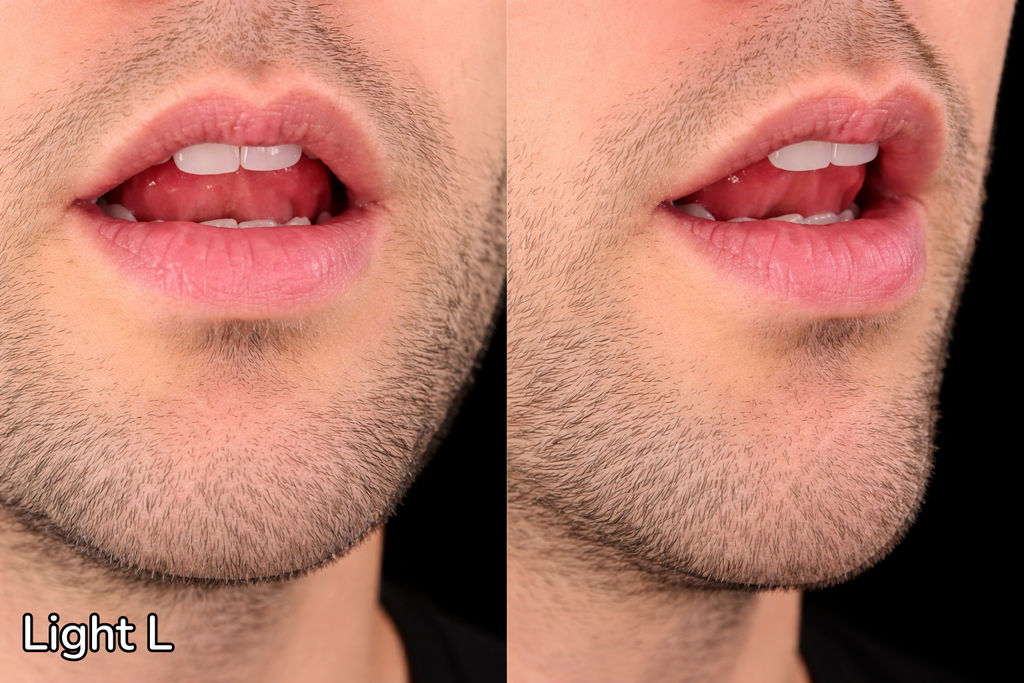
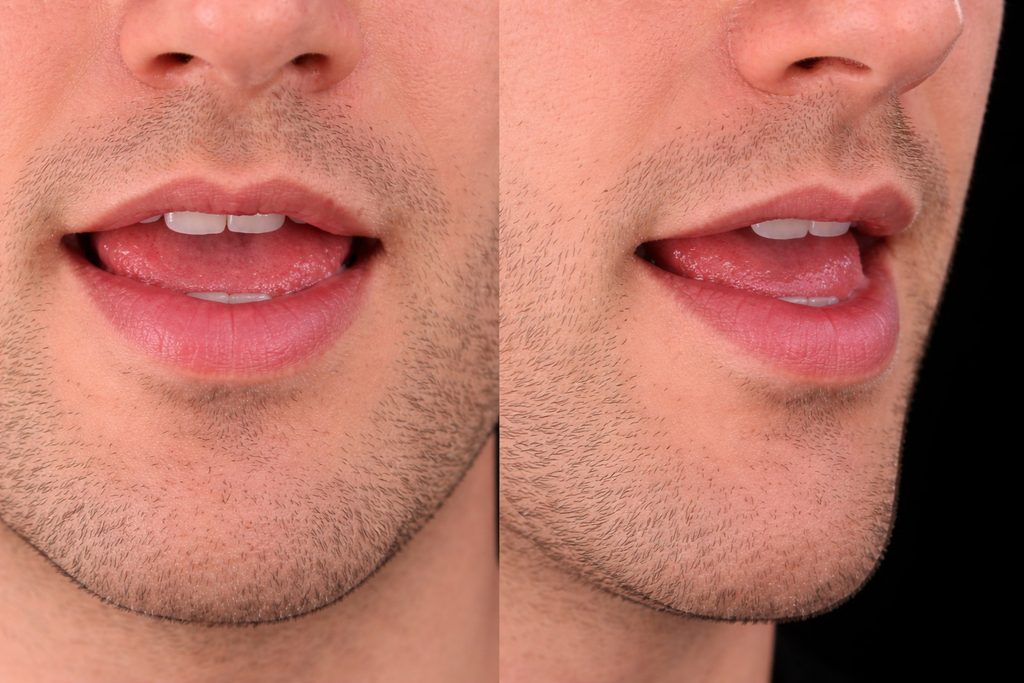
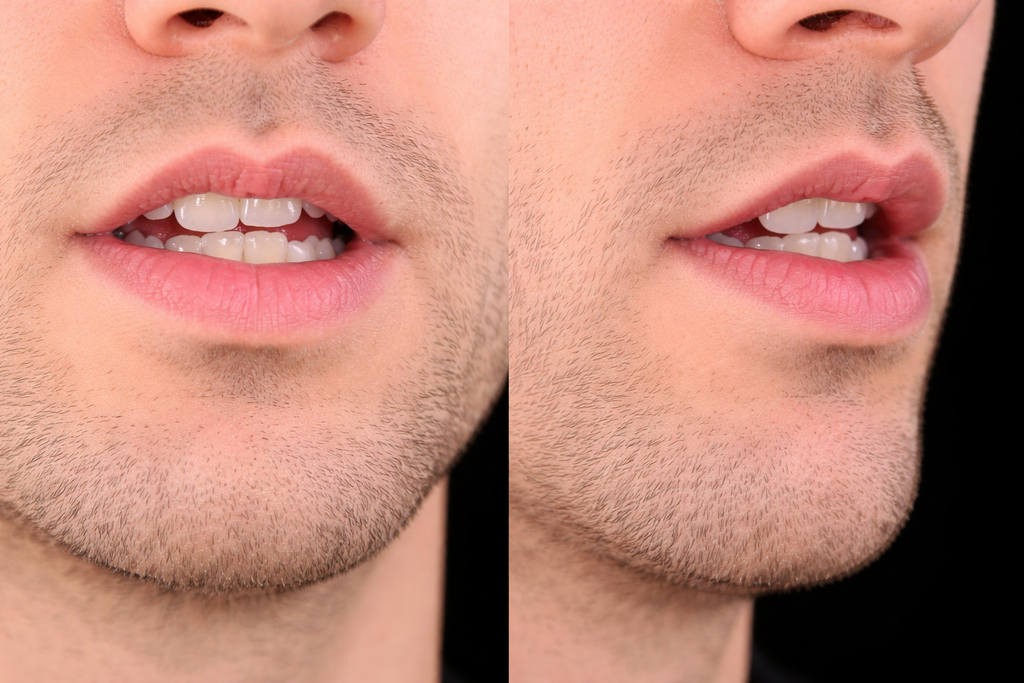
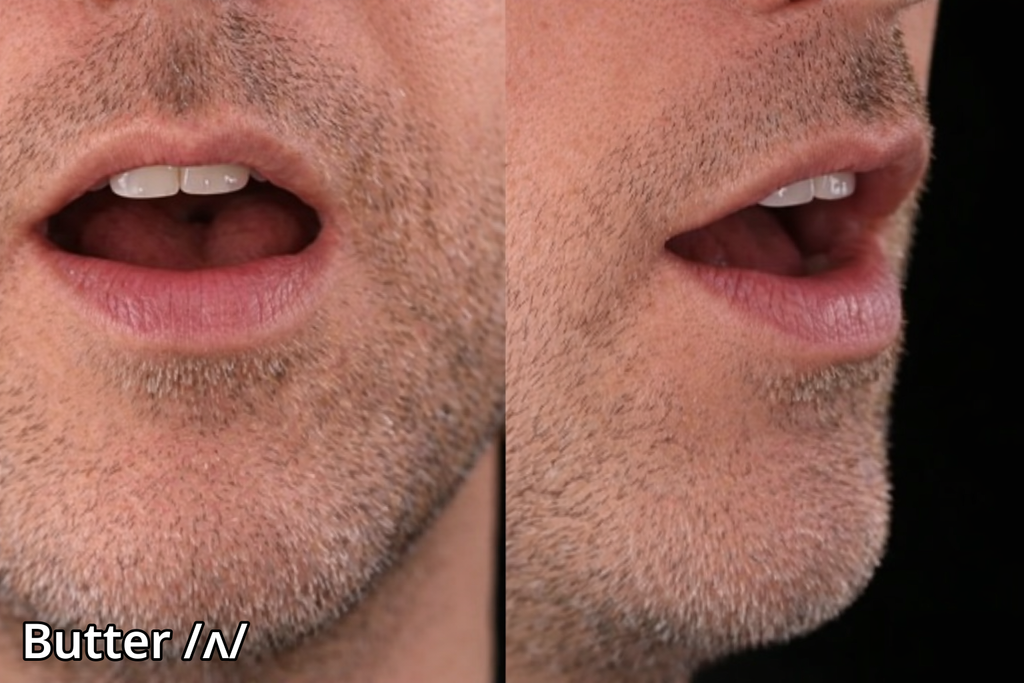
Americans pronounce literary as LIH-tuh-rair-ee (/ˈlɪɾəˌrɛri/). In "literary", the "t" between vowels sounds like a quick "d" — the tongue briefly taps the ridge behind the upper teeth. This is called the Flap T, and it's why Americans sound more relaxed than the textbook. It comes out as LIH·tuh·RAIR·ee. Stress falls on the first syllable — keep everything else short and quick. You'll hear it in sentences like "He writes book reviews for a local literary magazine".
Now you try.
Record yourself saying "literary" and play it back. The mic stays on your device — nothing's uploaded.
Ready when you are
Tap the mic to start
Preview your accent profile
Get your accent profile and 5-axes assessment.
Sounds
75%
Clarity
68%
Stress
78%
Intonation
65%
Fluency
62%
Overall assessment
Our AI coach listens to your recording and grades 5 dimensions of pronunciation —
then tells you exactly what to fix next.
72%Noticeable accent
Common mistakes
Saying a hard "T" in the middle.
In "literary", the "t" between vowels sounds like a quick "d" — the tongue briefly taps the ridge behind the upper teeth. /t/ or /d/ becomes a quick tap [ɾ] — sounds like a soft D. The tongue briefly taps the ridge behind the upper teeth.
Stressing the wrong syllable.
Stress falls on the first syllable, not the others. Stretch LIH — keep everything else short and quick.
4 syllables, 7 sounds.
Tap a syllable to jump to its row, then explore each sound's mouth shape and how it's made.
l/l/
Place the tip of your tongue against the alveolar ridge just behind your top front teeth, the same contact point as /t/, /d/, and /n/. The difference is what happens to the air: for /l/, you let it flow continuously around the <em>sides</em> of the tongue (that's why /l/ is called a lateral). Turn your voice on the whole time. Lips stay relaxed, no rounding or flaring. For the Dark L variant at the end of a syllable, also pull the back of the tongue up and back toward the soft palate.
ih/ɪ/
Drop your jaw slightly with relaxed lips. Touch the tongue tip behind the bottom front teeth and arch the top-front toward the roof.
t/t/
Flap
Quickly bounce the front of your tongue against the roof of your mouth. Don't stop the airflow — just a quick tap.
uh/ʌ/
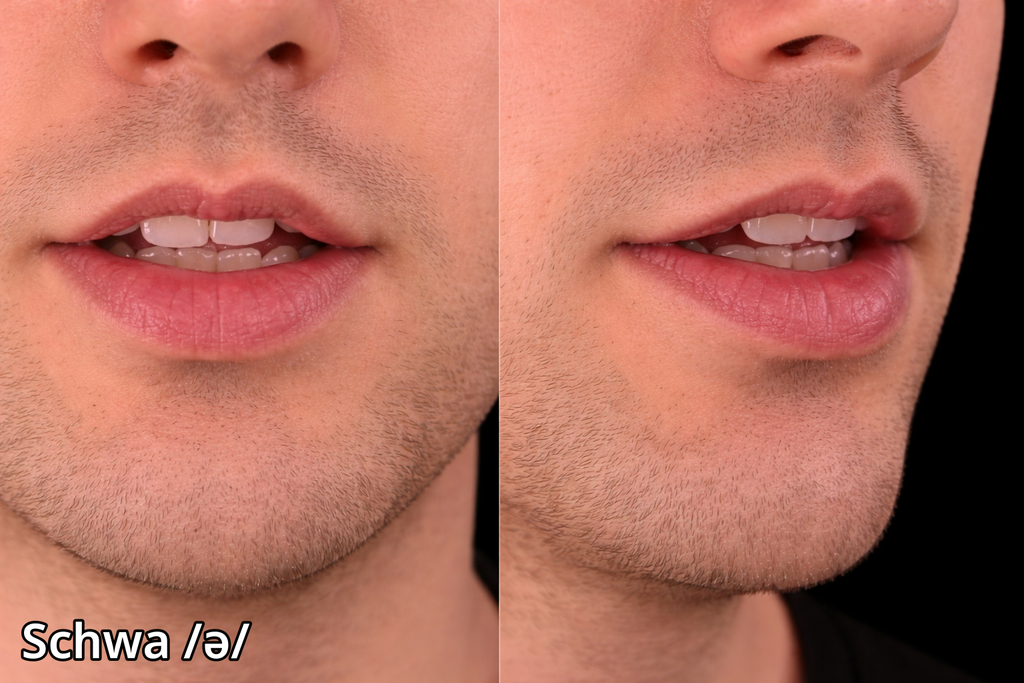
Relax your lips, jaw, and tongue completely. Drop your jaw slightly and keep the tongue neutral.
r/r/
Syllabic
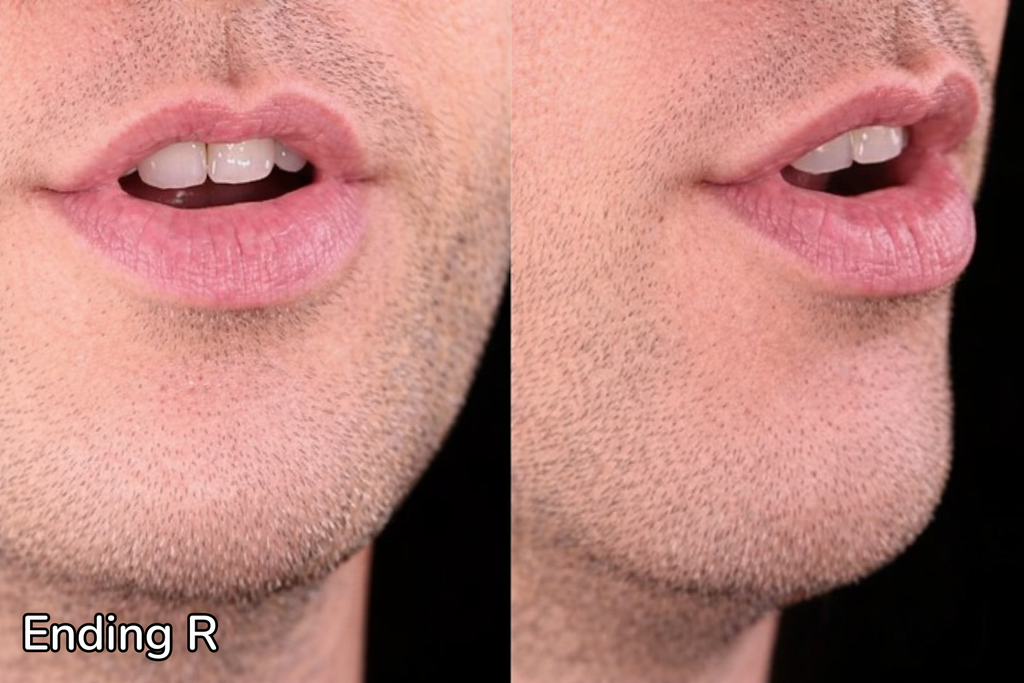
The schwa before R disappears — R becomes the vowel of the syllable. This is the 'er' sound without a distinct vowel before it.
air/ɛr/
Start with the 'eh' vowel mouth position. Pull the tongue back and up while flaring the lips for the 'r'.
ee/i/
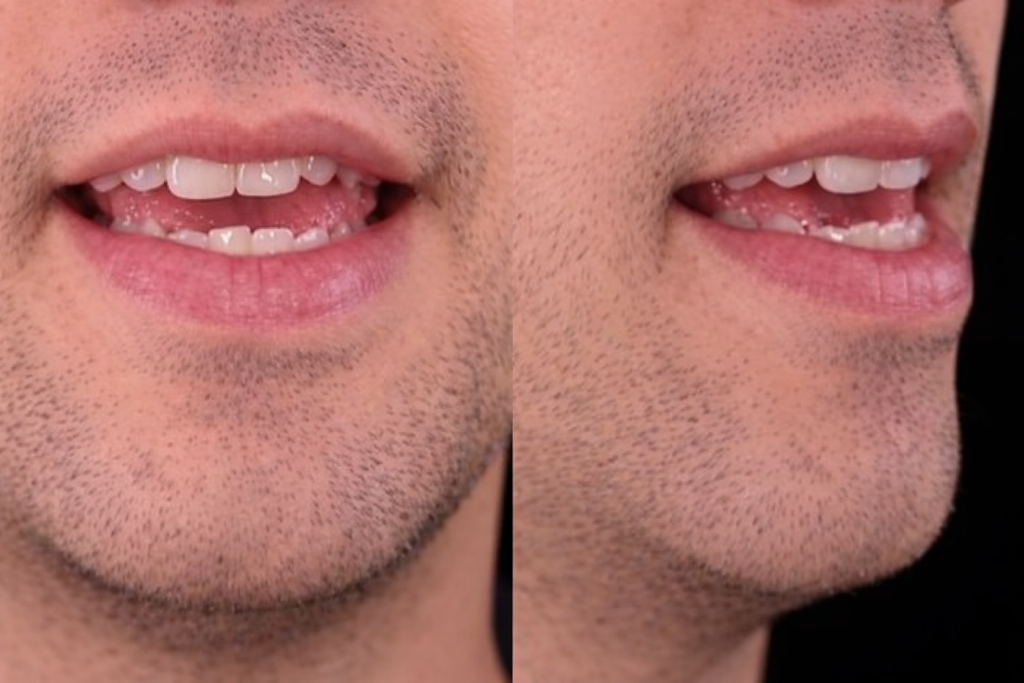
Pull the corners of your lips back slightly. Arch the middle-front of your tongue high toward the roof of the mouth.
In real conversation
Hear "literary" in the wild.
Click any sentence to see the full breakdown — every link, every reduction, every flap-T.
"He writes book reviews for a local literary magazine."
Common pronunciation mistakes in American English.
The textbook way isn't wrong — it's just not how anyone actually says it.
01
Saying a hard "T" in the middle.
In "literary", the "t" between vowels sounds like a quick "d" — the tongue briefly taps the ridge behind the upper teeth. /t/ or /d/ becomes a quick tap [ɾ] — sounds like a soft D. The tongue briefly taps the ridge behind the upper teeth.
LIH-tuh-rair-ee→LIH·tuh·RAIR·ee
02
Stressing the wrong syllable.
Stress falls on the first syllable, not the others. Stretch LIH — keep everything else short and quick.
lih·TUH·RAIR·EE→LIH·tuh·RAIR·ee
03
Pronouncing the unstressed syllable too fully.
Don't pronounce the first syllable too fully. The unstressed syllable reduces to a schwa — the lazy "uh" sound — in casual speech.
LIH·TUH·rair·ee→LIH·tuh·RAIR·ee
04
Pronouncing the "R" too clearly.
Americans use a relaxed retroflex R — the tongue curls back rather than rolling. The R is one continuous sound with the vowel before it, not two separate sounds.
… (no R)→… r(curl the tongue)
Questions
Questions people ask about this.
How is "literary" stressed in American English?
Stress falls on the first syllable — say "LIH" with a longer, fuller vowel and keep every other syllable short and quick. The respell "LIH-tuh-rair-ee" marks the stressed syllable in capitals so the rhythm is easy to read at a glance.
Why doesn't the T sound like a T in "literary"?
In American English, when /t/ sits between two vowels with the second one unstressed, it turns into a quick D-like flap. So "literary" sounds closer to "LIH-tuh-rair-ee" than to a crisp-T pronunciation. This is the flap-T rule, one of the most distinctive sounds of casual American speech.
Why does the second syllable in "literary" reduce to "uh"?
Unstressed syllables in American English collapse toward a schwa — a lazy, neutral "uh" sound. The full vowel is what textbooks teach, but in actual American speech every unstressed vowel reduces. The respell "LIH-tuh-rair-ee" shows the reduced form so you can hear the casual rhythm directly.
How do I pronounce the R in "literary"?
Americans use a relaxed retroflex R: the tongue curls back rather than rolling, and the R is one continuous sound with the vowel before it — not two separate sounds. Don't try to pronounce a separate vowel followed by a separate R. Treat them as a single shape.
Stop reading about "literary". Start saying it.
SayWaader is the AI pronunciation coach for American English. Practice 5 minutes a day. Get a 5-axes accent assessment. Sound like you live here.